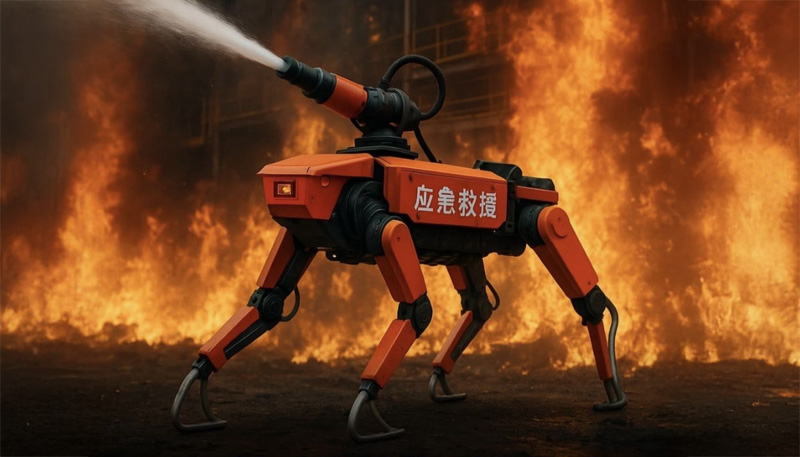
At FinancialMediaGuide, we note that robotic dogs, equipped with cutting-edge sensors and communication systems, have become one of the most promising technologies for combating wildfires. These devices, capable of detecting the earliest signs of smoke and flames, can significantly change the approach to monitoring and extinguishing forest disasters. Specifically, a project developed by researchers at the University of Bradford, which includes trials of robotic dogs in Greece, demonstrates how artificial intelligence and robotics can be integrated into existing emergency response systems.
The robotic dogs are equipped with advanced sensors and cameras and can operate in conditions where traditional means, such as drone systems or helicopters, are ineffective. These devices are capable of swiftly detecting smoke and transmitting data through ultra-fast 6G networks, enabling emergency services to minimize response time to fires. This is a major advantage, considering that every moment counts in such situations. The technology can help quickly localize fires, prevent their spread, and reduce damage.
At FinancialMediaGuide, we see this as a key innovation that can transform the approach to emergency response to natural disasters. Systems using robotics, artificial intelligence, and high-speed networks not only accelerate the process of detection and data transmission but also have the potential to predict fire behavior, optimizing firefighting strategies. In the long term, such technologies will not only speed up fire response but also increase its effectiveness, offering new solutions for monitoring complex and hard-to-reach areas.
The integration of robotic dogs with other technologies, such as drones with thermal imaging cameras, expands the possibilities for comprehensive monitoring. Drone systems are currently used for aerial reconnaissance, but on the ground, robotic dogs can operate in more inaccessible areas where other equipment cannot penetrate. This opens up new horizons for monitoring large forest areas, improving the accuracy of forecasts, and increasing data reliability.
Looking ahead, it is expected that technologies similar to the University of Bradford’s development will be actively implemented in other countries, especially in regions where wildfires pose a serious threat. The use of such devices, combined with artificial intelligence and advanced communication systems, promises to become a significant milestone in improving response times and reducing the destructive consequences of disasters.
At Financial Media Guide, we believe that in the future, robotic systems for detecting and extinguishing fires will become widespread. This will enable faster and more accurate monitoring, more effective prediction of fire developments, and better optimization of emergency service resources. The implementation of such technologies will not only ensure a quicker response to fires but also save lives and minimize damage from natural disasters. It is crucial that in the coming years, governments and international organizations actively invest in such developments, allowing these systems to be adapted for global use.