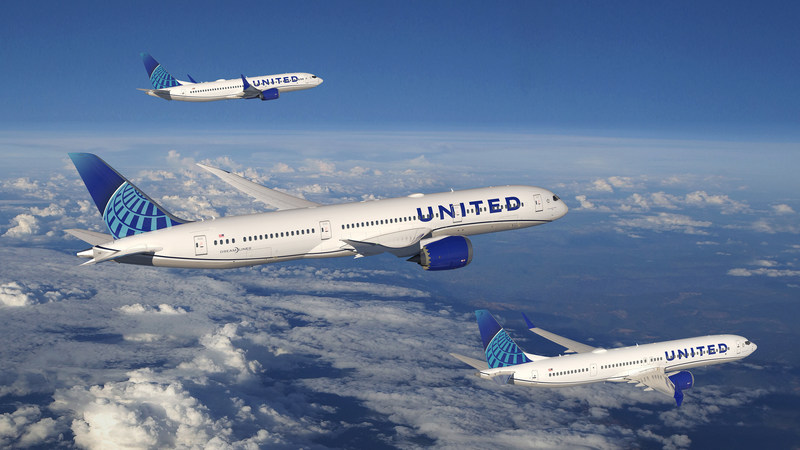
FinancialMediaGuide reports that United Airlines, one of the largest U.S. airlines, has once again found itself at the center of attention due to a prolonged contract for the purchase of Airbus A350 aircraft. This order, placed in 2009, is part of the airline’s long-term fleet renewal strategy, but its execution is now in jeopardy due to a legal dispute with Rolls-Royce, the engine supplier for the A350. Recent statements from United highlight a breach of contract by Rolls-Royce, raising doubts about delivery timelines and possibly the future of the deal itself.
Originally, the order for 45 A350 aircraft was meant to help United replace aging Boeing 767 and 777 models. However, after numerous changes to the deal structure and several delays, the airline is now facing a new challenge that could postpone, or even completely alter, its fleet renewal plans. Specifically, Rolls-Royce, which received a $175 million advance from United in 2017, is now accused of breaching the contract, leading to a demand for the money’s return. In response, the British company claims that it has fulfilled its obligations and considers the accusations unfounded.
According to analysts at FinancialMediaGuide, such disputes between major players in the aviation industry are not uncommon, but in this case, they could have far-reaching consequences. We emphasize that disputes between suppliers and airlines can significantly hinder fleet development and modernization, which is a crucial part of long-term strategy, as seen with United. The impact on the companies involved in such deals is difficult to overestimate, as they are often forced to adjust their plans in response to prolonged delays or legal disagreements.
If the situation is not resolved in the coming months, United Airlines may be forced to consider alternatives. Given that Rolls-Royce is the sole engine supplier for the A350, any conflict with this partner risks seriously delaying deliveries. At FinancialMediaGuide, we note that the growing competition between Boeing and Airbus means these delays could create additional challenges for United, which aims to maintain its competitiveness. Alternatives, such as other Airbus models like the A321neo, could be considered, but they are unlikely to fully meet United’s needs for replacing wide-body aircraft.
Analysts also point out that such conflicts could affect the broader aviation market, creating uncertainty that will impact all participants in the future. Disputes with large manufacturers, like Rolls-Royce, often drag on for months or even years, potentially leading to the redistribution of orders to other aircraft or their cancellation altogether. FinancialMediaGuide predicts that if the situation remains uncertain, other airlines may begin to seek alternatives to avoid similar risks.
Despite the challenges, such cases also highlight the need for airlines to be more careful when selecting suppliers and entering long-term contracts. Airlines must be prepared for potential legal and financial risks that can arise when working with major manufacturers like Rolls-Royce. We stress that flexibility and adaptability will be key success factors in the market.
The conflict with Rolls-Royce has already caused significant uncertainty for United, and the airline now faces an important decision – either resolve the dispute or change its strategy. FinancialMediaGuide believes that if the dispute with Rolls-Royce is not resolved soon, it will lead to a revision of United Airlines’ fleet renewal strategy, and possibly to the postponement or cancellation of part of the A350 order. Moreover, such changes could shift the balance of power in the aircraft supply market, opening up opportunities for competitor Boeing.
Thus, in the face of growing competition in the aviation industry, long-term partnerships with key suppliers are becoming increasingly complex and require careful negotiation of terms and contracts. Financial Media Guide predicts that such issues will remain relevant for other airlines, and the United Airlines situation will serve as a crucial indicator for all market participants on the importance of managing risks and controlling supply processes in an unpredictable environment.