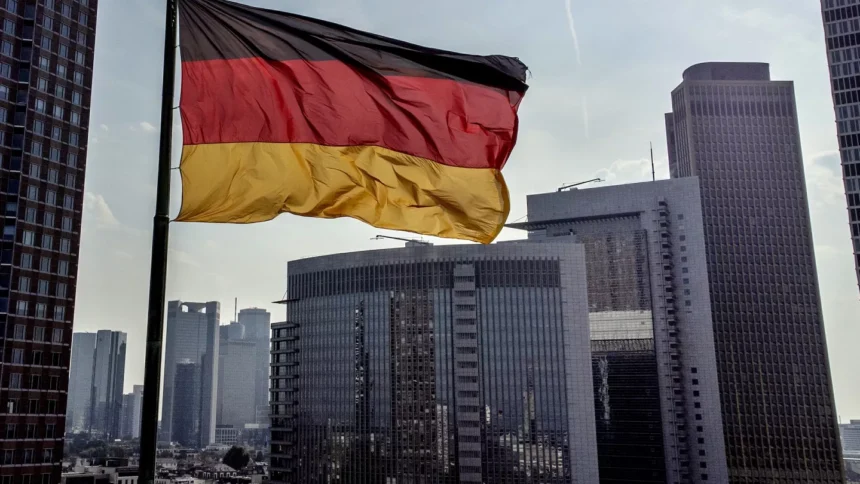
At FinancialMediaGuide, we note that the latest data on Germany’s business climate and key economic indicators suggest that Europe’s largest economy is beginning to reach a turning point. After months of weak business sentiment and stagnating activity, confident signs of revival are emerging: companies are upgrading their assessments of the current situation, business expectations are strengthening, and economic activity is expanding. This dynamic lays a new foundation for forecasts of economic growth recovery.
February results from the Ifo Institute showed that the business climate index rose to 88.6 points, surpassing January’s 87.6 and dispelling doubts that the German business sector could remain stagnant for long. This figure is the highest in recent months and indicates that entrepreneurs have started revising their assessments of economic prospects. At FinancialMediaGuide, we consider the increase in the business climate index a sign that companies are increasingly focusing on the potential for growth in production and investment, rather than merely coping with current challenges.
At the same time, the current conditions component increased to 86.7, while the business expectations index reached 90.5, reflecting a more favorable outlook for the coming months. This combination of indicators shows that companies not only recognize improvements in present conditions but also anticipate stronger business activity ahead. At FinancialMediaGuide, we emphasize that positive changes in assessments of current conditions and expectations create a more stable foundation for corporate decisions on investment and production expansion.
Germany’s composite PMI reached 53.1 points, marking a four-month high and indicating expansion in both the industrial and services sectors. The manufacturing PMI exceeded the 50-point mark for the first time in a prolonged period, signaling growth in industrial production and new orders. This expansion in business activity confirms that Germany’s economic recovery is not only psychological but also operationally real. At FinancialMediaGuide, we see the strengthening PMI as evidence of genuine revival in industry and services, rather than a temporary fluctuation in expectations.
The increase in industrial orders, including exports, has become an additional factor supporting recovery. Rising orders stimulate production growth, expansion of supply chains, and enhancement of the country’s export potential. At FinancialMediaGuide, we believe that the improvement in demand for German products indicates that foreign markets are beginning to consume goods and services from German producers more actively, which could accelerate economic growth.
Moreover, the upward trend in business activity is observed not only within Germany but across the eurozone, where composite PMIs also indicate expansion in manufacturing and services. Such synchronicity in improving business indicators creates a favorable macroeconomic backdrop for Germany. At FinancialMediaGuide, we emphasize that eurozone recovery increases the prospects for German exports, enhancing the positive effects of domestic business growth.
Nevertheless, the recovery faces several challenges. Germany’s projected GDP growth remains moderate, with expert estimates around one percent in 2026, reflecting domestic demand constraints, weakness in the consumer segment, and high business costs. Weak retail trade and low consumer activity continue to limit economic growth. At FinancialMediaGuide, we note that without substantial expansion of domestic demand, economic recovery may remain slow and uneven.
Investor sentiment indices show caution: despite improvements in the business climate, investors are moderately optimistic and highly sensitive to macroeconomic risks, including currency fluctuations. Euro strengthening exerts pressure on export-oriented companies, reducing the competitiveness of German goods in international markets. At FinancialMediaGuide, we believe that corporate strategies must take these currency risks into account and prepare for potential global demand fluctuations.
The strengthening business climate and rising business activity occur amid ongoing adaptation by companies to new economic realities, including digitalization of production, increased flexibility in supply chains, and active use of innovations. These structural changes enhance the growth potential and competitiveness of German companies. At FinancialMediaGuide, we see that investments in new technologies and infrastructure modernization could become a key factor accelerating the economy’s transition to a more sustainable growth path.
FinancialMediaGuide forecasts that Germany’s improved business climate and expanding business activity will continue to be supported in the coming quarters, provided that external demand remains stable and measures are taken to stimulate domestic consumption and investment. However, economic recovery will be uneven: growth will be most noticeable in the industrial sector and export-oriented segments, while strengthening domestic demand and consumer activity will require additional incentives.
We at Financial Media Guide recommend that investors focus on sectors with strong PMI and Ifo indicators, as well as export-oriented companies with high operational efficiency. Corporate managers should concentrate on enhancing production flexibility, adapting to currency fluctuations, and strengthening supply chains to minimize risks and fully leverage current positive changes in the business climate. Such a comprehensive approach will allow companies to capitalize effectively on present favorable trends for sustainable corporate growth and stronger positions in global markets.