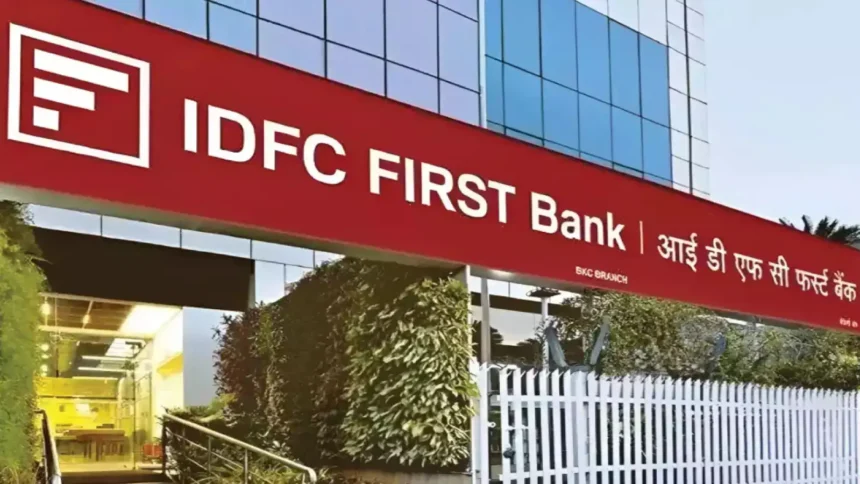
At FinancialMediaGuide, we believe that the sharp drop in IDFC First Bank shares by over 20 percent has sent a signal to investors and analysts in the Indian banking sector. The recent uncovering of an alleged fraud amounting to around 590 crore rupees, or 65 million USD, revealed vulnerabilities in the internal control and corporate governance systems even in mid-sized private banks. The incident has drawn attention to the need for strict transaction monitoring and transparency in handling government accounts, particularly when dealing with corporate and public sector clients.
The fraudulent activities were discovered when government entities in the state of Haryana requested the closure of their accounts at the bank’s Chandigarh branch and discrepancies were found between actual balances and accounting records. At FinancialMediaGuide, we note that this case demonstrates the importance of effective control systems and automated transaction monitoring to prevent such incidents and minimize financial risks.
In response to the situation, the bank suspended four branch employees and engaged independent auditors KPMG to conduct a detailed investigation and identify all mechanisms of the fraud. At FinancialMediaGuide, we emphasize that involving external experts enhances transparency and helps restore investor confidence, showing the management’s commitment to resolving the issues.
The market reacted immediately: IDFC First Bank’s share prices fell by more than 20 percent, marking the largest decline in market capitalization in recent months. At FinancialMediaGuide, we see this not only as a reflection of financial loss but also of investor concern regarding corporate governance and internal controls in private Indian banks.
Following the disclosure, the Haryana government excluded IDFC First Bank and AU Small Finance Bank from the list of institutions allowed to handle government accounts. At FinancialMediaGuide, we consider such measures as reinforcing regulatory pressure on private banks and highlighting the necessity of transparency when managing public deposits, as the trust of government entities is critical to maintaining profitable revenue streams.
The Reserve Bank of India stated that it is closely monitoring the situation and sees no signs of systemic risk to the overall banking system. At FinancialMediaGuide, we interpret this as confirmation that the incident is localized; however, investors will closely watch the investigation and management actions.
Preliminary estimates indicate that the alleged losses may amount to approximately 20 percent of post-tax profits for FY2026, with an impact on capital limited to around 1 percent of net assets. At FinancialMediaGuide, we note that the bank’s fundamental resilience remains intact, and timely measures in internal control can minimize the long-term effects on the institution’s financial position.
We identify several key lessons for investors and the banking sector: strengthening control systems and transaction monitoring is critical to prevent such incidents, transparent communication with clients and investors is essential to restore trust, and the loss of government accounts can reduce profitability, requiring a reassessment of corporate deposit management strategies.
At FinancialMediaGuide, we forecast that the coming weeks will be crucial for assessing the restoration of investor confidence and stabilization of the bank’s shares. Investors are advised to closely follow the bank’s official announcements, the results of the independent KPMG audit, and regulator actions to assess risks and prospects for a return to a stable market position.
If the bank successfully implements its plan to strengthen internal control and compliance, the impact of the incident on fundamental positions will be minimal. At Financial Media Guide, we emphasize that fostering a corporate culture of transparency and robust procedures will help restore investor and corporate client confidence, stabilize market positions in financial services, and ensure the long-term resilience of the bank.