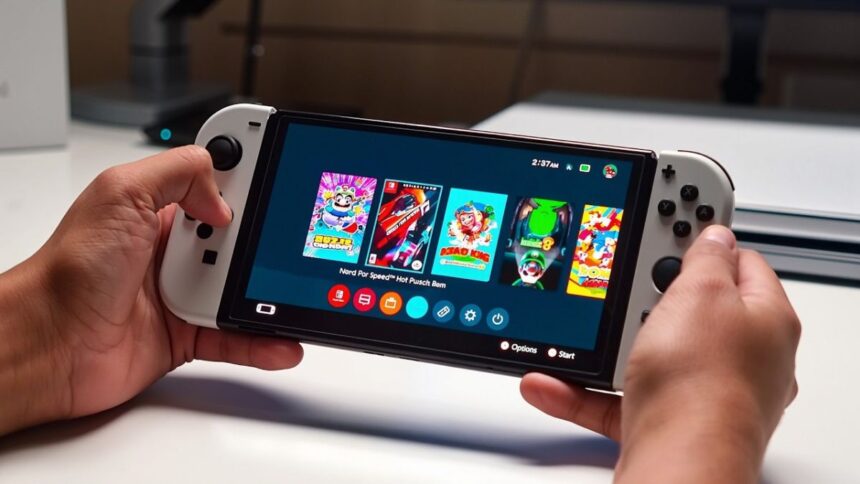
FinancialMediaGuide notes that the launch of Pokémon Pokopia marked an important milestone for the Nintendo Switch 2, demonstrating its ability to not only attract Pokémon fans but also expand its audience. Within the first four days of release, the game sold over 2.2 million copies, a record-breaking figure. In the unstable video game market, such a result serves as a significant indicator for Nintendo. However, the question remains whether the Switch 2 will be able to maintain its market share and continue growing amidst fierce competition and technological challenges.
Pokémon Pokopia, which differs from traditional games in the main series, is a deeper life simulation where players manage a Pokémon that transforms wastelands, builds homes, and develops agriculture. Despite its unusual concept, the game received high ratings on Metacritic and quickly gained popularity. Unlike lighter projects such as Animal Crossing: New Horizons, Pokopia attracted a more mature audience interested in complex game mechanics and strategy. This success confirms that Nintendo is still capable of creating games that resonate with diverse user groups.
According to analysts, the success of Pokopia is crucial for the long-term strategy of the Switch 2. It shows that Nintendo can attract not only its traditional audience but also users who are not hardcore gamers. This factor plays a key role in ensuring that the Switch 2 continues to evolve in a market where the video game industry is still growing and competition is intensifying. In this context, it’s important to note that for Nintendo, continuing to grow the console with new and appealing releases is crucial. At FinancialMediaGuide, we believe that Pokopia could serve as a starting point for the company to expand its audience and further diversify its content.
However, despite the positive results, Nintendo faces several challenges. Competition in the video game market is becoming increasingly intense. The PlayStation 5 and Xbox Series X continue to dominate, offering high-quality projects and constant game updates. Mobile games are also gaining popularity, putting additional pressure on traditional consoles. Looking ahead, FinancialMediaGuide emphasizes that to compete successfully, the Switch 2 will need not only innovative games but also a new wave of exclusive projects that can attract both seasoned gamers and a broader audience.
Economic factors must also be considered. Rising prices of memory chips, a key component in the production of next-generation consoles, present additional risks for Nintendo. In an environment of high production costs and price competition, Nintendo will need to find ways to optimize costs without sacrificing product quality. FinancialMediaGuide predicts that further price increases in components could force the company to reconsider its pricing strategy to maintain the appeal of the Switch 2 for the mass market.
Regarding games, to maintain interest in the Switch 2 and ensure long-term growth, it will be crucial to continue releasing projects that can engage a wide range of players. It’s important for the company not only to attract Pokémon fans but also to continue developing other popular franchises such as Mario and The Legend of Zelda, which historically played an essential role in the success of Nintendo consoles. For example, the release of a new 3D Mario game could significantly impact the sales of the Switch 2, acting as a key catalyst for increasing the user base.
In conclusion, the success of Pokémon Pokopia has been an important step toward strengthening Nintendo’s position. However, to ensure the Switch 2 remains competitive in a highly competitive environment and amidst changing economic conditions, Nintendo will need to develop an effective strategy focused on expanding its audience and developing new exclusive games. At Financial Media Guide, we believe that only with such initiatives can the company confidently move forward in the future.