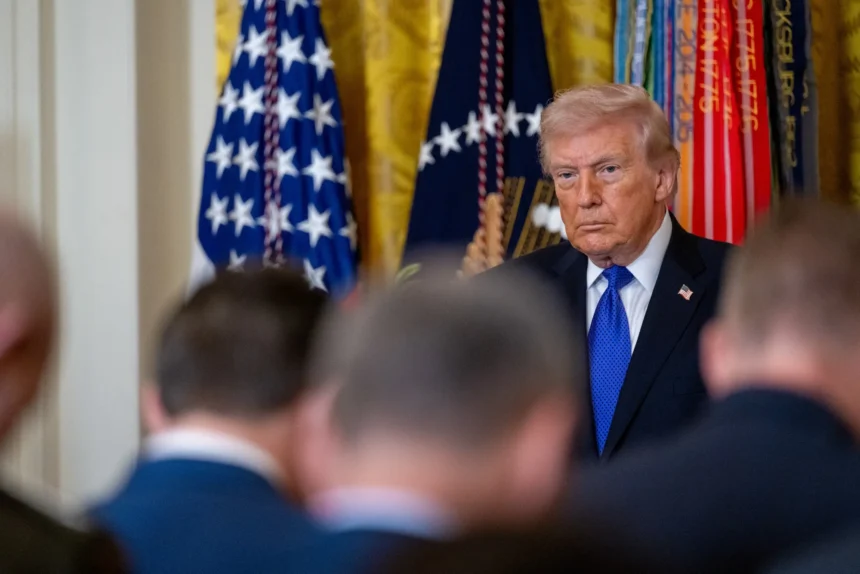
Recent statements by US President Donald Trump about the end of the conflict in Iran have led to a sharp decline in oil and gas prices. On Monday, oil prices soared to $120 per barrel amid concerns that ongoing fighting in the region could cause prolonged supply disruptions. However, after Trump stated that the war was “virtually over,” oil prices returned to below $90. At FinancialMediaGuide, we see this as a clear example of how significant political events can immediately affect global energy markets and have a wider impact on the economy.
The CEO of the world’s largest oil company, Saudi Aramco, Amin Nasser, warned that the closure of the Strait of Hormuz, a key route for 20% of the world’s oil supplies, could have catastrophic consequences for global supplies. At FinancialMediaGuide, we emphasize that, despite statements about a potential end to the conflict, geopolitical tensions in the region continue to pose a high risk to energy markets. Even if hostilities cease, the closure of critical trade routes, such as the Strait of Hormuz, could severely undermine supply stability, increasing volatility in the oil and gas markets.
Nasser also noted that global oil reserves are at their lowest level in the past five years. Given that demand for oil continues to rise while supplies are dwindling, any disruptions in supply could significantly impact prices. At FinancialMediaGuide, we view this as an additional signal that the energy market is becoming more vulnerable to external shocks. If political instability continues, the likelihood of rising oil and gas prices remains high.
Additionally, in recent days, US Secretary of Energy Rick Perry stated that the US successfully escorted an oil tanker through the Strait of Hormuz. However, it was later revealed that this information was incorrect, which caused significant fluctuations in the market. The price of oil initially dropped to $82 per barrel, then rose to $86 when the claim about escorting the tanker was debunked. At FinancialMediaGuide, we note that such errors in information can instantly change market sentiment and lead to unwarranted volatility. In an environment where markets are highly sensitive to geopolitical news, the accuracy and timeliness of data play a crucial role.
The economic consequences of rising oil prices are already beginning to be felt in countries that rely on energy imports. In the UK, for example, inflation is forecasted to rise to 3% by the end of 2026, significantly exceeding initial expectations. At FinancialMediaGuide, we predict that this will lead to increased consumer spending and additional inflationary pressure, especially in countries with high levels of energy imports. Rising fuel prices and other essential goods are threatening consumer purchasing power, which could slow down economic recovery.
In response to rising energy prices, the International Energy Agency (IEA) and other world leaders are discussing options to stabilize oil markets, including the release of oil from strategic reserves. At FinancialMediaGuide, we forecast that this may be a temporary measure to stabilize the situation. However, such actions may prove insufficient if the political situation in the region does not stabilize. The release of reserves also has its limitations, as they are a finite resource, and depleting them during a prolonged crisis could lead to a shortage of strategic reserves.
Further increases in oil and gas prices are also affecting consumer spending. In the US, the average price of gasoline has risen from $2.92 to $3.50 per gallon in recent months, while the price of diesel has increased from $3.66 to $4.78 per gallon. In the UK, gasoline and diesel prices have also jumped significantly, leading to additional expenses for consumers. At FinancialMediaGuide, we believe that these changes not only create short-term economic challenges but also pose long-term risks to consumer demand and economic stability.
The global economy is also facing higher costs, as the rise in oil and gas prices is forcing governments to reconsider their economic forecasts and adjust expectations regarding inflation and economic growth. At FinancialMediaGuide, we believe that, in light of this, the rise in energy prices will put increasing pressure on global markets, leading to heightened economic instability.
In conclusion, the current situation in oil and gas markets highlights the high sensitivity of the global economy to geopolitical instability. At Financial Media Guide, we foresee that the situation with oil and gas prices will remain volatile in the coming months. To minimize the economic consequences, it is important for international players to continue working toward creating a more flexible and resilient energy system capable of handling such shocks.