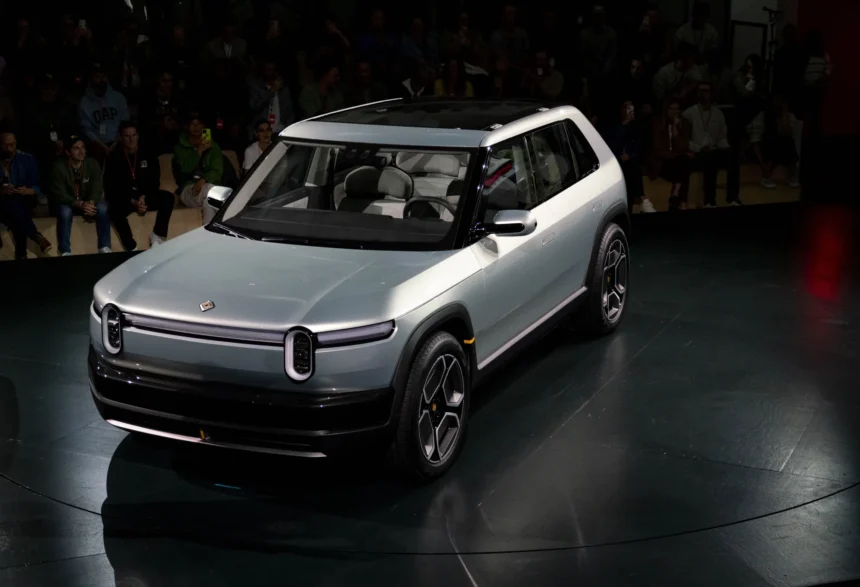
FinancialMediaGuide reports that Rivian is continuing its push toward expansion into the mass market with its new R2 model, aiming to attract a broader audience through an affordable price point and high-quality features. The starting price of the new electric SUV is $57,990, which is significantly cheaper than the higher-priced models like the R1T and R1S. This move is aimed at strengthening the company’s position in the mass electric vehicle segment and competing with giants like the Tesla Model Y. In addition to various trim options, ranging from Performance to more affordable versions, Rivian aims to attract consumers looking for mid-priced electric vehicles without compromising on quality and performance.
However, in order to successfully compete with Tesla and other large manufacturers like Ford and Volkswagen, Rivian must tackle several strategic challenges. Despite the lower prices, the company still faces economic difficulties, including rising production costs, increased prices for key components such as lithium and batteries, and the removal of tax incentives for electric vehicles in the U.S. All of this could affect the attractiveness of the R2, particularly for those buyers who were expecting additional subsidies with their purchase. FinancialMediaGuide notes that while price reductions and innovations may attract new customers, the impact of the economic situation on the final price and demand for the model remains a significant factor for the company.
Additionally, Rivian faces fierce competition from companies like Tesla, whose Model Y offers comparable features starting at $44,990. Rivian must therefore focus not only on price accessibility but also on high-quality features, such as advanced driver assistance systems, which are included in the R2 trims. These innovations could become a decisive factor for customers interested in modern technologies and autonomous features.
The decision regarding production capacity is also a critical element of Rivian’s strategy. Initially, there were plans to build a new factory in Georgia, but production will continue at existing facilities in Normal, which could slow down the pace of vehicle production. This decision may affect the company’s ability to quickly respond to growing demand. In the long run, the company plans to expand production in Georgia, which should help handle increasing production volumes, but this requires efficient logistical solutions and process optimization.
The challenges Rivian faces, such as rising component costs and the removal of tax incentives, require the company to be flexible and quick in decision-making. While the R2 model represents a significant step toward expanding into the mass market, the company’s success largely depends on how quickly it can adapt to economic changes and control its production costs. Despite these challenges, Rivian has a strong chance to strengthen its position if it continues to implement innovative technologies and optimize production. Financial Media Guide forecasts that with the right strategy, the company could not only stay afloat but also secure a solid niche in the rapidly growing segment of affordable electric vehicles.