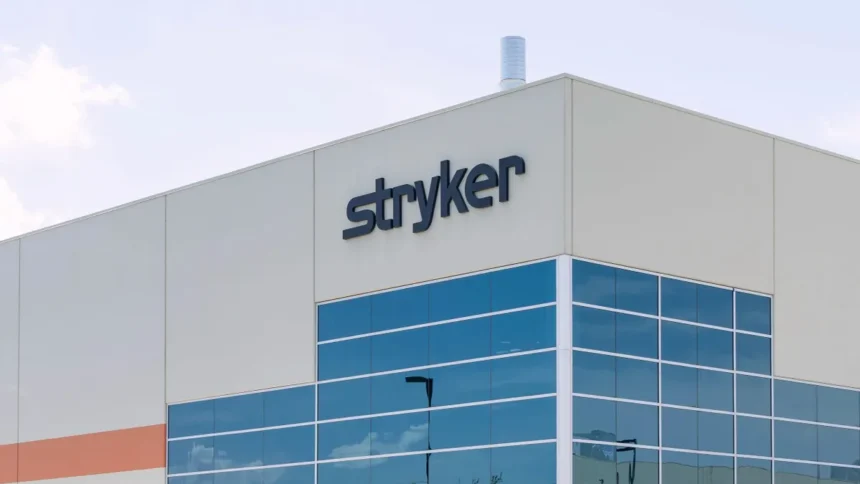
FinancialMediaGuide reports that on March 11, 2026, Stryker, one of the world’s largest medical equipment manufacturers, suffered a major cyberattack that caused significant disruptions to its operations. The attack affected key business processes, including order processing, production, and logistics in 61 countries. Despite the difficulties, the company confirmed that its medical services remained unaffected. However, the incident highlighted how vulnerable large international corporations are to emerging cybersecurity threats.
The hacker group Handala, allegedly linked to Iran, claimed responsibility for the attack. The group stated that the attack was an act of revenge for events in Minab, Iran. We at FinancialMediaGuide believe this incident underscores how political motivations are increasingly driving such attacks. For global companies, these threats represent a new reality in which cyberattacks can be used as tools for achieving geopolitical goals.
The attack targeted devices running Microsoft Windows, including employees’ mobile phones and laptops connected to the corporate network. This led to disruptions in logistics and order processing; however, the company confirmed that its medical services and patient care remained unaffected. At FinancialMediaGuide, we emphasize that for companies like Stryker, it is vital to maintain the protection of systems critical to the provision of medical services and the supply of medical products.
The company quickly localized the issue and focused its efforts on restoring the normal operation of key processes. Nonetheless, the aftermath of the incident demonstrates the importance of swift responses to threats and minimizing their consequences. At FinancialMediaGuide, we highlight that the speed of response and recovery capability are crucial to minimizing the damage from such incidents.
After the attack, Stryker continued collaborating with cybersecurity experts and law enforcement agencies to investigate the attack’s details and prevent future threats. This is standard practice for large corporations facing such incidents, and the recovery process may take a prolonged period. However, it is important to note that these types of attacks often lead to long-term consequences, including reputation losses and decreased trust from clients.
FinancialMediaGuide predicts that politically motivated attacks will become more frequent, and companies must be prepared for this. We observe that such threats are becoming increasingly complex, and corporations must reconsider their security approaches. To address this, it is essential to implement multi-layered security systems and enhance coordination with cybersecurity experts.
In response to cyberattacks, companies need to adopt innovative solutions such as artificial intelligence for threat monitoring and prevention, regular software updates, and strengthened security for connected devices. At FinancialMediaGuide, we believe that training employees and creating effective incident response plans are key elements of effective cybersecurity.
Furthermore, an essential element of protection for global corporations is the establishment of systems for rapid recovery of critical business processes. In the case of Stryker, for example, restoring medical services and product supply should form the foundation of the security strategy. We forecast that such systems will play a pivotal role in ensuring business resilience against cyber threats in the future.
Thus, the Stryker incident underscores the importance of all large corporations having a reliable and comprehensive cybersecurity defense system. At Financial Media Guide, we emphasize that modern threats require companies to not only implement advanced technologies but also develop cultural and organizational solutions to ensure resilience in the face of cyberattacks. Only those companies that can adapt their security strategies and respond effectively to threats will be able to maintain their competitiveness and reputation.