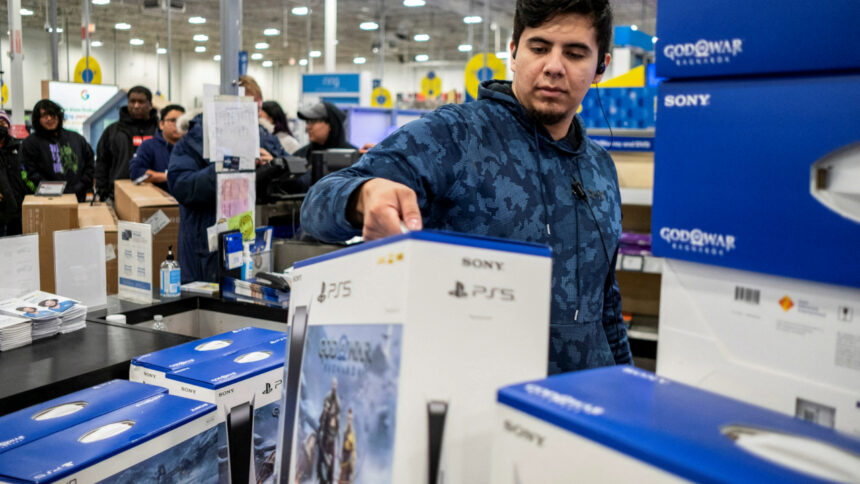
Sony Group is raising global prices of its PlayStation 5 consoles, including a $100 increase in the U.S., marking its second hike in less than a year as the Japanese firm grapples with rising costs of key components such as memory chips.
The tech industry’s race to build out artificial intelligence (AI) infrastructure has pushed chipmakers to favor higher-margin data-center chips, tightening supply for consumer devices.
The updated U.S. prices, effective April 2, will put the standard PS5 at $649.99, up from $549.99. The Digital Edition will now cost $599.99 while the high‑end PS5 Pro will cost $899.99.
NETFLIX RAISES SUBSCRIPTION PRICES ACROSS ALL PLANS
Prices of the PlayStation Portal remote player will also climb to $249.99 from $199.99.
Similar increases will take effect across Europe and Japan, following what the company described as a “careful evaluation” of rising cost pressures in global supply chains.
EPIC GAMES CUTS 1,000 JOBS AS FORTNITE ‘MAGIC’ FADES IN ‘EXTREME’ MARKET CONDITIONS
Analysts have said the console price hikes are likely to dampen growth in the video-game market this year.
“Fortnite” maker Epic Games also cited sluggish console sales among the reasons for the cut of 1,000 jobs it announced earlier this week.
GAMESTOP SHUTTERING 30 NEW YORK LOCATIONS AS PART OF NATIONWIDE CLOSURES LINKED TO FALLING SALES
In the key October-December holiday quarter, sales of Sony’s PlayStation 5 fell 16% from a year earlier to 8 million units. The console has been on the market for around six years.
Sony last raised PS5 prices by around $50 in the U.S. in August last year. Microsoft also raised prices of its console, the Xbox, in 2025.
The surging demand for AI chips prompted Elon Musk to announce plans for two of his companies, Tesla and SpaceX, to partner on an advanced AI chip manufacturing facility.
CLICK HERE TO GET FOX BUSINESS ON THE GO
He said the so-called “Terafab” will have two facilities: one focused on AI chips for Tesla’s electric vehicles and Optimus humanoid robots; while the other will be focused on AI chips for space-based data centers made by SpaceX.
“We either build the Terafab or we don’t have the chips,” Musk said.
Reuters contributed to this report.