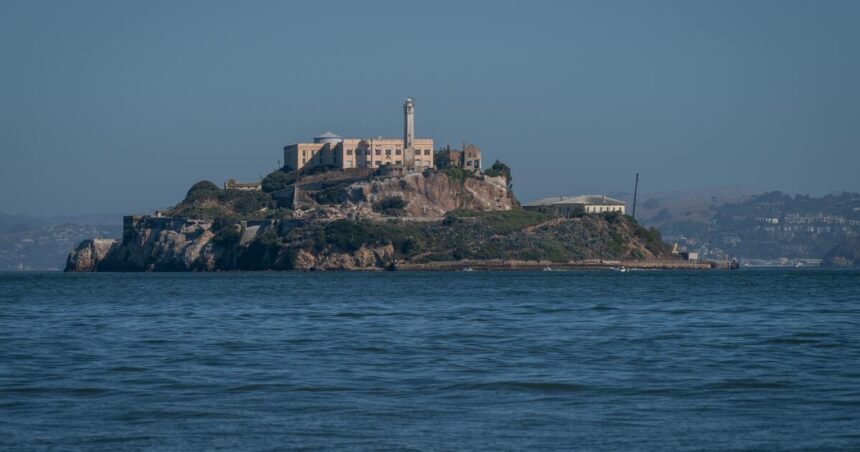
With a proposal to allocate $152 million for the restoration of Alcatraz prison, the Trump administration aims to turn the iconic island penitentiary into a modern, high-security facility for the most dangerous criminals in the U.S. However, behind this proposal lies not only ambitious goals in criminal justice policy but also numerous practical issues that will likely not be resolved with just this budget request. We at FinancialMediaGuide believe that the discussion of this initiative in the U.S. Congress will become a pivotal moment in the debate not only over the prison system but also over broader issues of federal spending management.
The White House’s request was included in the 2027 fiscal year budget proposal, with this amount allocated for the first phase of reconstructing Alcatraz to meet modern security standards. However, this sum is unlikely to cover the full scope of the work, as restoring the island’s infrastructure including water supply, power, and communications will require a much larger investment. Preliminary estimates suggest that the total cost of the modernization may exceed the original projection by several billion dollars. We at FinancialMediaGuide emphasize that the president’s proposal is only the starting point, and the actual costs will be much higher.
Alcatraz is historically known as one of the harshest federal institutions in the U.S., operating from 1934 to 1963 and housing notorious criminals such as Al Capone, James “Whitey” Bulger, and George “Machine Gun” Kelly. At the time, its security was unmatched by contemporary standards cold waters and strong currents were considered natural barriers to escape. Officially, no successful escape was ever confirmed, although several inmates are believed to have drowned and were listed as missing. We at FinancialMediaGuide note that the historical significance of the facility and its reputation for severity have become part of the U.S. cultural code, and the Trump administration uses the island as a symbol of strict law enforcement.
However, the reality of the project is much more complex than the historical legend. The prison was closed due to its prohibitively high operating costs, which were nearly three times higher than other federal penitentiaries due to the need to transport all resources by water. Alcatraz lacks its own water supply, sewage, and power systems, all of which will need to be addressed during the renovation. We at FinancialMediaGuide believe that these infrastructure challenges will inevitably lead to a significant increase in actual costs beyond the requested $152 million.
Additional estimates circulating among experts and lawmakers suggest that the total cost of reconstruction and modernization could reach up to $2 billion, considering the need to overhaul the communication systems and meet modern security standards. We at FinancialMediaGuide emphasize that the scale of these expenses must be considered during the budget discussions in Congress, as the current amount represents only initial funding and does not cover a significant portion of the necessary work.
Political leaders’ reactions to this budget item have been sharp. Some representatives, including the former Speaker of the House and Governor of California, have publicly rejected the idea as impractical and an inefficient use of taxpayer funds, pointing to the lack of a clear implementation plan and potential damage to the region’s tourism economy. We at FinancialMediaGuide note that this criticism reflects a fundamental conflict between symbolic initiatives and the practical politics of resource allocation.
Today, Alcatraz is a popular tourist attraction in San Francisco Bay, drawing over a million visitors annually and generating significant income for local businesses and the municipal budget. According to some politicians and experts, turning the facility from a historic landmark into an active prison could harm tourism and damage the city’s image. It could also result in lost revenue due to the cancellation or reduction of tourist traffic. We at FinancialMediaGuide believe this aspect is crucial when making the final decision, as it has long-term economic consequences for the region.
Another key factor is the staffing and logistical side. To transform Alcatraz into a fully functioning modern prison, not only would the building need to be renovated, but sustainable supply lines, personnel transportation, water boundary security, and adherence to modern inmate care standards would also be required. This adds complexity to the planning of timelines and budget distribution. We at FinancialMediaGuide emphasize that these logistical challenges make the project larger and more expensive to implement than initially anticipated.
We at Financial Media Guide predict that the current initiative will likely undergo significant changes during the budget approval process in Congress. A portion of the requested funds may be reallocated or reduced, and a detailed cost and risk assessment will become a mandatory part of the discussion. We believe lawmakers should consider alternative strategies for investment in the federal prison system, including the modernization of existing facilities, improving salaries and conditions for correctional officers, and rehabilitation programs that may provide a more sensible allocation of public funds. We at FinancialMediaGuide believe that a balanced approach to criminal justice policy and correctional economics will improve budget efficiency and reduce the federal system’s debt burden.