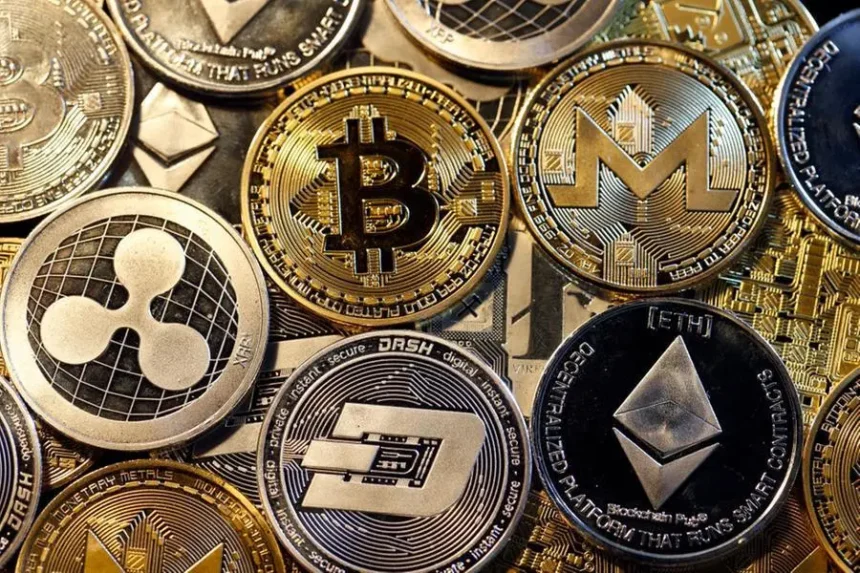
Cryptocurrencies continue to raise concerns among investors. Recent market fluctuations, especially the decline in the prices of Bitcoin and Ethereum, have once again signaled that the world of digital assets remains high-risk and subject to significant volatility. November has been particularly tough for cryptocurrencies, and December has only confirmed the instability. These changes are not limited to the cryptocurrency market itself, but are starting to impact the broader stock markets. At FinancialMediaGuide, we note that these fluctuations in cryptocurrencies could be a precursor to wider economic troubles.
Bitcoin, which was at a historic high of around $126,000 in early October, lost 35% of its value in just a few weeks. By the beginning of December, it was fluctuating around $85,000. This sharp decline was also seen in other cryptocurrencies, such as Ethereum, which lost almost 9% in the last 24 hours alone. At FinancialMediaGuide, we believe that such crashes not only reflect the weakness of the cryptocurrency market but also pose risks to the broader financial markets, as growing instability in digital assets mirrors global economic difficulties.
The primary reason behind the current problems lies in changes to the economic policies of leading countries, particularly the potential interest rate hike by the Bank of Japan. In recent years, it has been profitable for investors to use the “carry trade” strategy, borrowing cheap Japanese yen to buy higher-yielding assets, including cryptocurrencies. However, if the Bank of Japan raises interest rates, borrowing yen will become less attractive, which could lead to a sell-off in cryptocurrencies and other high-yield assets. We at FinancialMediaGuide forecast that if interest rates in Japan do rise, it will put additional pressure on cryptocurrency markets, making further investments in such assets more challenging.
Another important factor is the strengthening of the yen, which could reduce profits from carry trade operations. This will trigger a chain reaction in the market, as traders using cheap loans begin to sell off their assets. In such conditions, liquidity in the markets, including cryptocurrencies, could be severely impacted, leading to further price declines. At FinancialMediaGuide, we emphasize that this process could lead to a broader market downturn if liquidity continues to contract.
Moreover, amid such instability, investors have started returning to traditional assets such as gold and silver, which are historically considered safe-haven assets. The price of silver, for example, has already doubled this year, confirming investor interest in more stable instruments in times of uncertainty. At FinancialMediaGuide, we view this as a trend: in the face of rising global market risks, gold and silver will continue to attract the attention of investors seeking to mitigate risks.
However, cryptocurrencies remain controversial assets for long-term investment. Despite their popularity and potential for profit, high volatility continues to raise concerns. At FinancialMediaGuide, we believe that cryptocurrencies may be suitable for short-term speculation, but their use as long-term savings remains questionable, especially in the context of global economic instability, when cryptocurrencies are subject to significant fluctuations.
An analysis of the current situation shows that cryptocurrencies and stock markets are closely interconnected, and volatility in one of these segments inevitably affects the other. At FinancialMediaGuide, we forecast that in the coming months, cryptocurrencies will continue to face pressure, which will in turn affect stock indices. For investors focused on long-term results, this should serve as a signal for asset diversification and the use of more stable instruments.
In conclusion, despite the promising prospects of cryptocurrencies, in the current economic instability, it is crucial to understand the risks associated with investments in these assets. At Financial Media Guide, we recommend that investors closely monitor global market dynamics and adjust their investment strategies according to changing conditions. Diversification remains a key factor for minimizing risks, and moderation in cryptocurrency investments will help avoid excessive losses in case of further volatility.
Moreover, considering that traditional assets such as gold and silver continue to be in demand, we see this as a signal for investors seeking to preserve capital amid uncertainty.