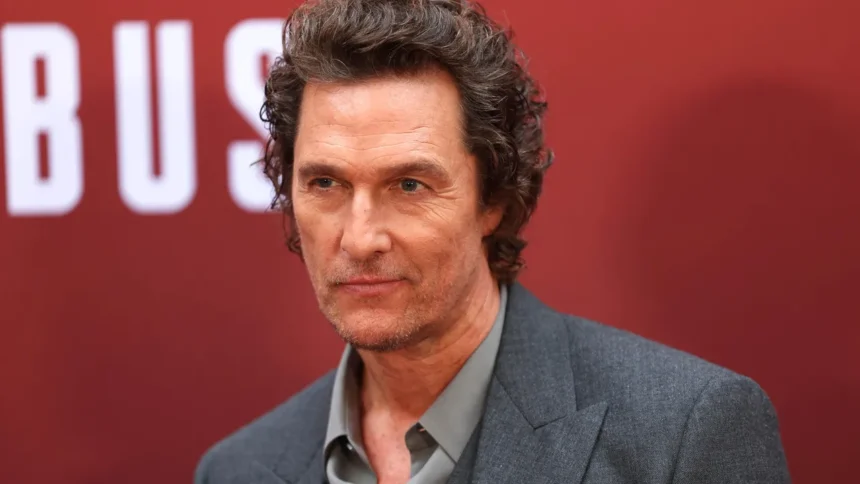
FinancialMediaGuide reports that Matthew McConaughey, the Academy Award-winning actor, has recently taken a significant step in protecting his image and voice from potential misuse by artificial intelligence (AI). He has registered a trademark for his voice and image, including his famous line from the movie Dazed and Confused – “alright, alright, alright.” This move is groundbreaking as it marks the first instance of trademark law being used to protect public figures from threats posed by the rise of AI technology.
With the advancement of AI and the spread of deepfakes, McConaughey has taken action that could have a major impact on the entertainment and media industries. Experts note that it is becoming increasingly difficult to control the use of celebrities’ voices and images. In this context, McConaughey is taking the first step that could set a new standard for other public figures. Notably, other Hollywood stars, such as Scarlett Johansson and Taylor Swift, have already dealt with fake materials created using AI. Importantly, McConaughey does not see AI solely as a threat but is also interested in the technological direction, evidenced by his involvement with ElevenLabs, a company focused on voice simulation technologies.
By trademarking his voice and image, McConaughey is not only protecting his personal property but also raising fundamental questions about how future media content will be regulated in the rapidly evolving world of AI. This creates a precedent for other stars wishing to protect themselves from manipulation of their personal data. According to analysts, more and more celebrities will adopt such measures in the coming years, making this part of the new digital reality where personality and intellectual property rights will be paramount.
As noted by a leading copyright expert, Alina Trapova, legal protection of celebrity images and voices in the AI era is becoming an increasingly complex challenge. AI technologies can create highly accurate copies of personalities, which poses a threat to stars’ reputations. This also presents risks for the entertainment industry, as it can result in lost licensing and monetization opportunities.
At FinancialMediaGuide, we see McConaughey’s move as an important signal to the industry: the need to adapt to new conditions amidst the technological revolution. We predict that, in the coming years, the entertainment industry will be forced to reconsider approaches to protecting personality rights in order to shield content creators from unauthorized use of their voices and images. More celebrities will seek legal tools that allow them to control how and where their images are used.
It is particularly noteworthy that McConaughey, despite his efforts to protect his image, is not against AI altogether. On the contrary, his involvement in developing voice modeling technologies using AI highlights his understanding of the need for a harmonious interaction between new technologies and legal frameworks. We at FinancialMediaGuide believe that the future will lie in technologies that evolve within legal norms, respecting the interests of all parties involved, including content creators and consumers.
Technological progress will undoubtedly continue to influence the media landscape. We predict that the fight for personality and intellectual property rights will become an integral part of this evolution. In the coming years, experts and lawmakers will strive to find a balance between technological development and protecting the rights of content creators, which will undoubtedly open up new horizons for business and digital content creation.
Financial Media Guide notes that we will witness how legislation and jurisprudence adapt to these new challenges. It is crucial for the industry and society to continue supporting initiatives aimed at preserving intellectual property rights, especially in the world of artificial intelligence.