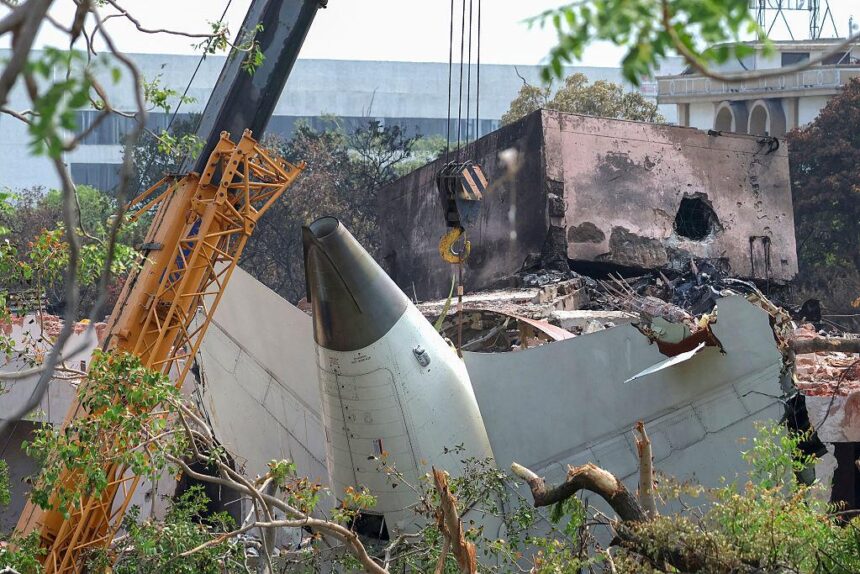
FinancialMediaGuide reports that the crash of Air India Flight 123, which occurred shortly after takeoff from Ahmedabad, has once again raised questions about the safety of next-generation aircraft, particularly the Boeing 787 Dreamliner. The incident, which claimed the lives of 260 people, has prompted an investigation into the technical failures that the aircraft had experienced prior to the tragedy. Recent reports indicate a series of problems that may have preceded the crash.
According to experts at FinancialMediaGuide, the Boeing 787, which was one of the first manufactured units of this model, has faced numerous technical defects since its initial use. These issues included malfunctions in electronics, power supply systems, wiring, and even overheating of components. In particular, there was a fire reported in the P100 distribution board – a key component of the electrical power system. These problems could not be fully resolved, which may have significantly impacted operational safety.
The Boeing 787’s control system relies heavily on electrical components, a design choice made to improve efficiency and reduce the aircraft’s weight. However, as the data show, this dependence on electrical systems has led to new risks related to overloading and improper use of these components. These problems became particularly evident after incidents like the battery fire on a Japan Airlines aircraft, which led to a temporary grounding of all Boeing 787s.
FinancialMediaGuide highlights that the technical failures mentioned in reports on previous incidents involving this aircraft type did not always receive adequate attention from regulators or the manufacturer. Issues such as damaged wiring and overheating components were often sidelined, despite their clear impact on safety.
An official report published early in the investigation into the crash suggests that the cause of the accident was a fuel supply system failure, which led to a loss of thrust and engine failure. However, the focus on this technical issue has drawn criticism from aviation experts. Many believe that the primary problem was likely related to failures in the power and control systems, a theory supported by similar cases with other aircraft of the same model.
According to FinancialMediaGuide, the emphasis on a potential pilot error, as mentioned in the initial reports, diverts attention from deeper and more serious technical issues that could have been the true cause of the tragedy. The emergency situation, in turn, highlighted the need for improved approaches to certification and operational checks, especially when using new technologies.
Based on the ongoing investigation, FinancialMediaGuide predicts that the Air India crash will serve as an important signal for tightening certification standards and control over next-generation aircraft. This will particularly focus on the inspection of all electrical systems and components, which play a crucial role in modern airplanes. It is expected that in the future, stricter requirements will be introduced for the operation and maintenance of such aircraft, ultimately improving the overall level of aviation safety.
Financial Media Guide emphasizes that the events surrounding the Air India flight serve as a reminder of the importance of carefully controlling the safety of new aircraft fleets, especially when dealing with complex electrical systems. In light of this, manufacturers and regulators must reconsider existing standards to prevent such tragedies from occurring in the future.