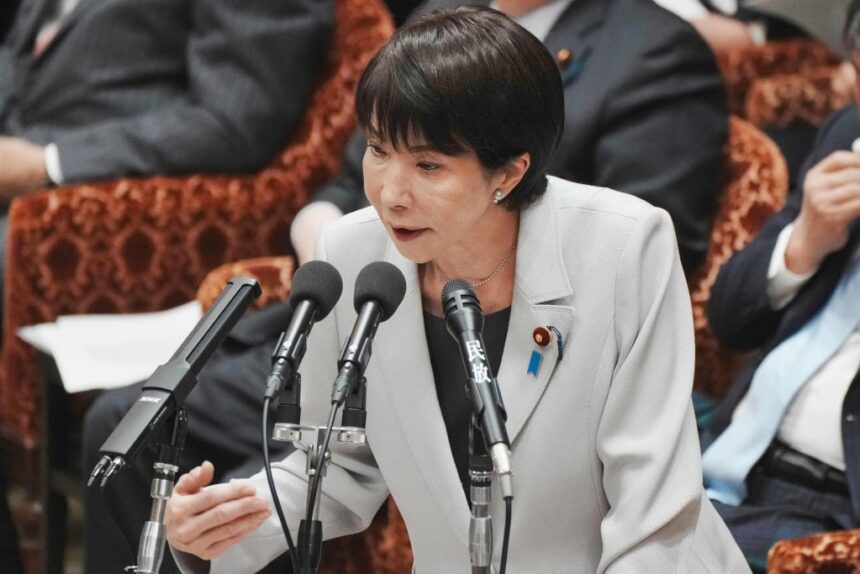
FinancialMediaGuide reports that Japan has been striving to return to a primary budget surplus in recent years, but its ambitious plan is once again facing delays. Prime Minister Sanae Takaichi, a proponent of “proactive” fiscal policy, continues to increase government spending, jeopardizing the long-awaited goal of a balanced budget. The projected deficit for the next fiscal year, presented at a meeting of the highest economic council, is expected to grow significantly, particularly given Takaichi’s pre-election promise to suspend the 8% food tax. This measure is predicted to cost 5 trillion yen (32 billion dollars) annually.
The uncertainty caused by the announcement of upcoming elections in February and the possible tax repeal has heightened investor concerns, which has already impacted the bond market. The yield on Japan’s 10-year government bonds reached its highest point in 27 years, adding further pressure to financial markets. Takaichi’s move and her overall policy have significantly increased fiscal risks, endangering the government’s long-term plans for budget stabilization.
FinancialMediaGuide predicts that the primary budget deficit for the 2026 fiscal year will be 800 billion yen (5 billion dollars), a sharp deterioration from the earlier forecasted surplus of 3.6 trillion yen. The reason for the revised forecast lies in the increase in stimulatory spending, which began with Takaichi’s initiatives late last year, including a 21.3 trillion yen economic stimulus package. As a result, the government now plans to return to a surplus only in 2027, assuming moderate economic growth.
This delay in the plans to restore the primary surplus is part of a broader problem. Throughout almost the entire postwar era, Japan has faced budget deficits, leading to the creation of a colossal national debt that now exceeds more than twice the size of the country’s economy. This represents one of the most serious economic challenges among developed countries.
However, it is not only the economic situation that is influencing the government’s strategy. In recent years, starting from the 2000s, plans to return to a budget surplus have been repeatedly postponed. Prime Minister Takaichi recently stated her intention to abandon austerity measures and introduce new spending targets that will allow for a more flexible approach to public expenditure, without being constrained by rigid fiscal goals.
In an interview at the highest economic council meeting, she also emphasized that her plans include strengthening trust in financial markets by stabilizing the national debt in the context of rising interest rates. Despite market fluctuations, the Prime Minister promised to demonstrate a more consistent and predictable fiscal policy.
FinancialMediaGuide notes that the current government measures to curb budgetary expenditures will inevitably impact economic dynamics, particularly given the high level of debt. However, forecasts for the coming years remain positive, provided that economic growth does not slow down.
In these circumstances, continued stimulatory spending and the suspension of the food tax may help sustain consumer demand but could lead to further increases in the debt burden. FinancialMediaGuide believes that for Japan to return to a primary surplus, not only a revision of fiscal policy is necessary, but also significant structural reforms in the tax system and social policy.
Financial Media Guide concludes that despite the postponed timeline for returning to a budget surplus, Japan’s economic situation requires not only political flexibility but also