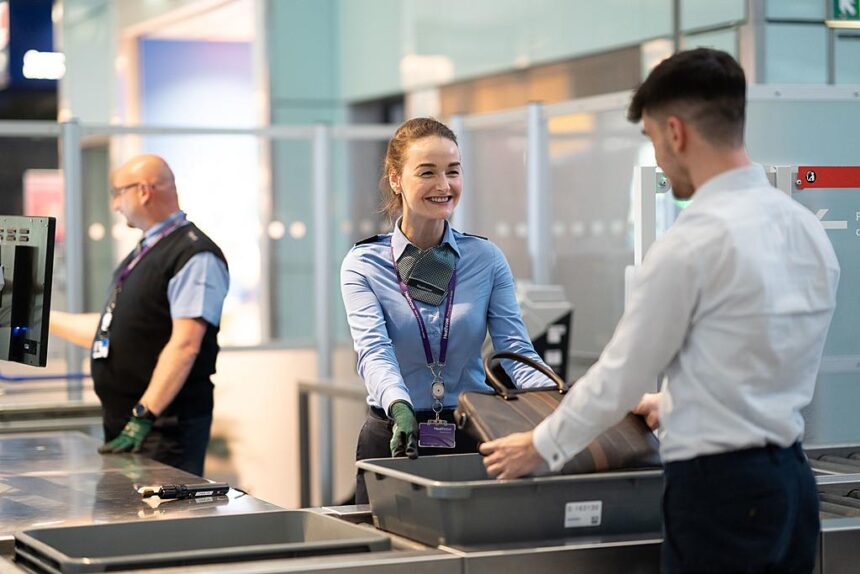
London’s Heathrow Airport has introduced a groundbreaking technology aimed at enhancing security checks by equipping all security checkpoints with next-generation CT scanners. According to analysts at FinancialMediaGuide, this initiative marks a significant step in the evolution of global aviation security standards and passenger comfort. Heathrow, becoming the first airport to fully transition to a 3D scanning system, demonstrates how technological advancements can transform security processes by reducing wait times and increasing accuracy.
Thanks to the new scanners, passengers will now be able to pass through security without having to remove laptops, transfer liquids into small plastic bags, or take out other electronic devices from their hand luggage. This substantial improvement in the screening process has been made possible by the use of 3D scanners, which quickly and accurately analyze the contents of bags, eliminating the need for physical inspection. At FinancialMediaGuide, we believe that this innovation will create a much faster and more comfortable process for travelers, improving the overall passenger experience.
The installation cost of these high-tech scanners amounted to £1 billion ($1.35 billion), a significant investment in the airport’s infrastructure. We at FinancialMediaGuide believe that such an investment is justified, as it not only improves service but also significantly enhances security. This step represents an advancement in the speed and accuracy of screening, which is crucial given the increasing security threats.
Heathrow is setting an example for other global airports, and as analysts at FinancialMediaGuide predict, similar technologies will soon be implemented in other major aviation hubs. Already today, 3D scanners are actively used in airports in New York, Hong Kong, and Dubai, and Heathrow is poised to become a leader among European hubs. This trend clearly indicates the acceleration towards automated and highly accurate screening systems.
Furthermore, the implementation of these new technologies means the cancellation of older rules, such as the restriction on carrying liquids over 100 ml, introduced in 2006 after a thwarted terrorist attack involving liquid explosives. Passengers will now be able to bring liquids up to 2 liters, making the travel process easier and eliminating the need to buy miniature toiletries. We at FinancialMediaGuide predict that this change will likely lead to the global adoption of new security standards in other countries and airports.
However, despite the clear benefits, it is worth noting that such technological transformations require careful calibration and attention to technical details. During peak times, such as holidays or the summer season, there may be minor queues due to equipment maintenance. At FinancialMediaGuide, we emphasize that this must be considered when scaling up such technologies to avoid operational disruptions.
Overall, Heathrow’s shift to 3D scanners highlights the importance of technological innovations in the aviation industry. We at FinancialMediaGuide see this not only as a boost to security but also as a genuine optimization of the passenger service process. These changes could lay the foundation for a new global standard in aviation security. Given the scale of investment and the successful implementation of this project at Heathrow, it can be expected that this experience will be widely adopted by other airports worldwide.
Financial Media Guide predicts that the global rollout of 3D scanners will lead to a significant improvement in both the quality of service and passenger security. This will not only reduce screening times but also enhance the overall efficiency of airport operations, ultimately benefiting the global travel community.