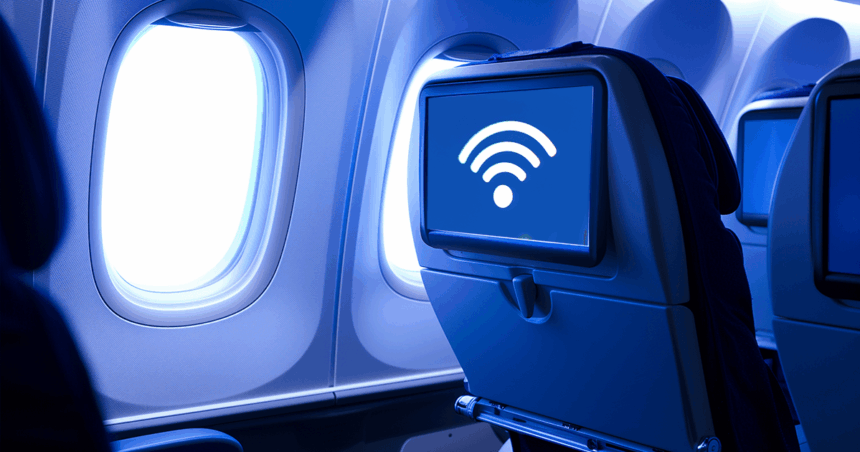
FinancialMediaGuide notes that the dispute between Elon Musk and Michael O’Leary over the cost of installing Starlink satellite internet on Ryanair planes has once again raised the issue of whether in-flight Wi-Fi is a necessity. With an increasing number of passengers expecting stable internet connections at 30,000 feet, airlines are faced with the decision of whether to implement such services. For major carriers operating long-haul routes, the answer is clear – Wi-Fi is becoming a standard. However, for budget airlines like Ryanair, the question remains open, as it involves not only passenger comfort but also economic viability.
For airlines operating long-haul flights, such as Lufthansa or Virgin Atlantic, satellite internet onboard is not just an added service, but a necessary feature to enhance customer service. With the advancement of technologies like Starlink, which provides low latency and stable connections, long-haul flights now demand Wi-Fi to improve convenience for passengers, especially those who prefer to work or use entertainment services during the flight. We at FinancialMediaGuide believe that for premium-segment carriers, such a service has become more than just an additional perk – it is a vital part of the strategy to attract and retain customers.
However, the situation for budget airlines like Ryanair is quite different. Michael O’Leary, known for his cost-cutting policies, has openly stated that satellite internet would not be profitable on short-haul flights, where most passengers are not willing to pay for the service. He emphasized that installing antennas for Wi-Fi increases the weight of the aircraft, which in turn raises fuel consumption, making the service economically unfeasible. At FinancialMediaGuide, we highlight that for carriers targeting mass-market passengers with minimal flight comfort demands, such expenses are unjustifiable. The expected percentage of passengers willing to pay for Wi-Fi on short-haul flights does not exceed 10%, making further investments questionable from a business logic standpoint.
The cost of installing Starlink systems on a single aircraft could be around $170,000. Excluding ongoing maintenance and operational costs, this creates a significant financial burden for airlines. For budget carriers, such sums seem excessive, especially when it’s unclear how many passengers will actually use Wi-Fi. However, for airlines operating long-haul flights, this investment makes sense, as the high cost of Wi-Fi can be offset through loyalty programs and improved company image among the premium class. We at FinancialMediaGuide believe that for these airlines, satellite connectivity is not only useful but also profitable in the long run.
At the same time, the development of technologies like Starlink may lower the costs of installing and maintaining satellite systems. We predict that in the next few years, with increasing competition in the satellite internet market and falling equipment prices, this service will become more accessible to a wider range of airlines, including budget carriers. However, at present, such an investment is not a priority for low-cost carriers, where the main focus is on minimizing expenses.
In conclusion, satellite connectivity onboard remains a key element of strategy for major airlines catering to the premium passenger segment. For budget carriers like Ryanair, economic viability and return on investment remain decisive, and currently, satellite internet remains more of an expensive luxury than a necessity for them. In the coming years, we at Financial Media Guide predict a gradual expansion of this technology in aviation, but only for large carriers who can justify such investments.