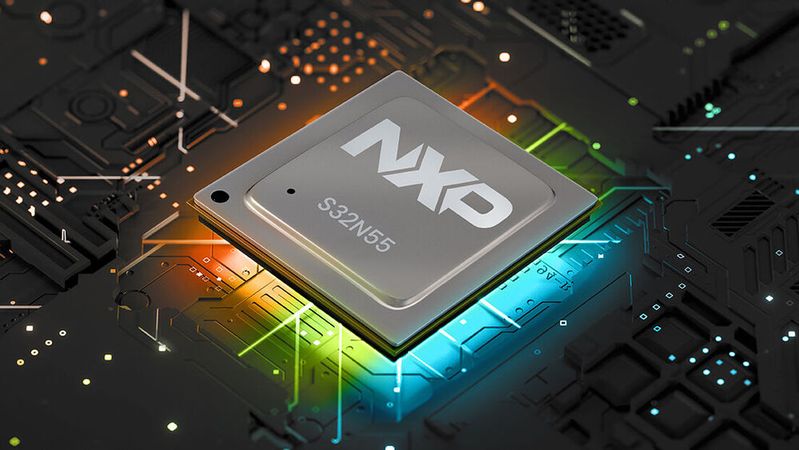
FinancialMediaGuide notes that NXP Semiconductors continues to be at the center of attention in the technology industry, placing a major bet on “physical AI” as a key element of its strategy. In recent years, with the development of artificial intelligence and its integration across various sectors, from industrial applications to automotive technologies, the company is opening new horizons for its products and solutions. Rafael Sotomayor, CEO of NXP, recently highlighted that the company’s strategy focuses on embedding intelligence at the edge of devices – an area that is rapidly becoming the foundation for the development of many high-tech industries.
At FinancialMediaGuide, we believe that NXP’s efforts to diversify its assets and extend its automotive technologies into other sectors such as drones and industrial robots—could have a significant impact on not only the company’s future but also the broader technology landscape. Integrating intelligent systems into industrial manufacturing opens opportunities for cost reduction, improved safety, and enhanced process quality, giving NXP a competitive advantage.
In 2023, the company demonstrated steady growth. Results for the fourth quarter exceeded analysts’ expectations, with an 11% increase in revenue compared to the same period last year. Notably, the industrial chip sector grew by 20%. These figures confirm that the integration of “physical AI” is indeed driving the company’s growth and its ability to adapt to the changing needs of the market. However, despite these positive results, NXP’s stock on the markets dropped by 5%. At FinancialMediaGuide, we see this as a signal that investors are looking for more evidence of long-term growth stability rather than just short-term successes.
One of the factors supporting growth is the expansion of global investments in data centers and energy systems, which require the development of new chips. In this context, analysts’ forecasts remain optimistic. The demand for technologies used in automating manufacturing, data storage, and optimizing energy systems will only increase in the coming years. NXP is well-positioned for this trend and continues to intensify its efforts in developing chips for industries such as energy storage and intelligent manufacturing.
Among the long-term growth drivers is also the shift in global supply chains, which require companies to be flexible and reliable. NXP is enhancing its manufacturing capabilities in various regions, which not only increases resilience to geopolitical risks but also reduces dependence on unstable supply chains. According to analysts at FinancialMediaGuide, this decision will be strategically crucial for NXP amidst rising global uncertainty.
The automotive sector, while still a major source of revenue for NXP, is also witnessing changes. In 2026, vehicle sales are expected to stabilize, but NXP will continue to grow through new technologies in autonomous vehicles and electric cars, which will be equipped with more complex and powerful chips to handle AI. At FinancialMediaGuide, we predict that the growing demand for electric vehicles and autonomous driving systems will further boost the company’s growth, as NXP’s chips continue to play a key role in these technologies.
Despite some short-term fluctuations in the stock markets, NXP’s long-term prospects remain highly positive. At Financial Media Guide, we emphasize that the company is in a strong position to capitalize on the opportunities presented by innovations in artificial intelligence and robotics. Additionally, expanding its technologies into other industries beyond automotive will allow NXP to strengthen its position and continue to thrive in the era of global digitalization.