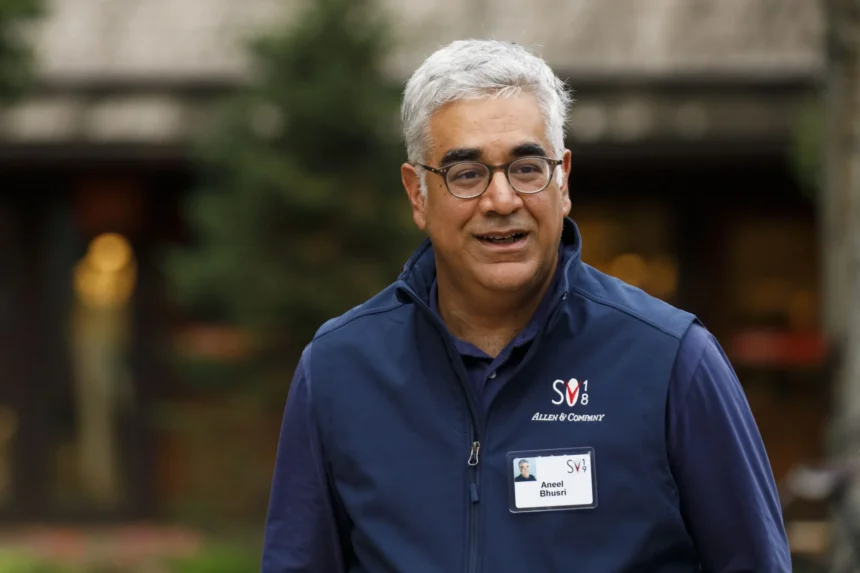
At FinancialMediaGuide, we note that the appointment of Aneel Bhusri as CEO of Workday in 2026, following the company’s stock decline and increasing competition in the corporate technology market, is a move reflecting the desire to return the company to a path of growth and technological leadership.
Workday, one of the largest providers of cloud-based human resources and finance management solutions, announced that co-founder Aneel Bhusri is returning as CEO, replacing Carl Eschenbach. This move comes amidst shifts in the company’s strategy, which now focuses on artificial intelligence (AI) and more active competition with giants such as SAP and Oracle. At FinancialMediaGuide, we see this as an attempt by Workday to regain technological leadership, which has been called into question due to rising market demands for AI integration in corporate solutions.
The immediate market reaction to this news was negative: the company’s stock dropped by 5% on the first day of trading after the announcement. This highlights existing investor doubts about the effectiveness of Workday’s growth strategy and how the company will handle challenges in a time of economic instability and increasing market consolidation. At FinancialMediaGuide, we believe this stock drop is also linked to uncertainty regarding how the new course under Bhusri’s leadership will impact the company’s long-term prospects.
One of the key parts of Workday’s strategy is strengthening its position in the field of artificial intelligence. In recent months, the company has taken several significant steps, including the acquisition of the startup Sana for $1.1 billion, which will allow the integration of AI into their corporate solutions and enhance automation features for clients. At FinancialMediaGuide, we emphasize that such steps are essential for strengthening Workday’s position amidst the rapid growth in AI demand in the corporate sector. These technological investments are aimed at expanding capabilities for managing human resources and finances through AI, which could become a decisive factor in improving the company’s competitiveness.
However, the growth of corporate investments in AI also leads to increased competition from larger players like SAP and Oracle, which are actively developing their cloud platforms and integrating more complex AI algorithms. In response, at FinancialMediaGuide, we see Workday’s strategy as an important step, but we remain cautious about how quickly and effectively the company can integrate its innovations to avoid falling behind larger competitors.
Furthermore, leadership changes at the company were prompted by the need to enhance operational efficiency. As part of this course, Workday has reduced its workforce by about 2%, signaling a reorganization to improve business processes. These measures are expected to help the company respond more flexibly to challenges; however, at FinancialMediaGuide, we emphasize that such layoffs may affect employee morale and the company’s perception in the job market, which could reduce its long-term competitiveness.
Workday’s earnings report for the fourth quarter of 2026 and annual results will be a key indicator of how the company is handling the challenges of implementing new technologies and restructuring internal processes. It is expected that the results will not change significantly from the forecasts, but at FinancialMediaGuide, we predict that the operating margin may shrink due to substantial investments in technology and restructuring.
Overall, at Financial Media Guide, we believe Workday’s strategy is focused on long-term goals related to artificial intelligence and innovation in corporate solutions. However, short-term financial results will remain under pressure, and the company must demonstrate real progress in monetizing these technologies. In the coming quarters, it will be critically important how effectively Workday integrates AI into its products and whether it can meet the high expectations of investors.