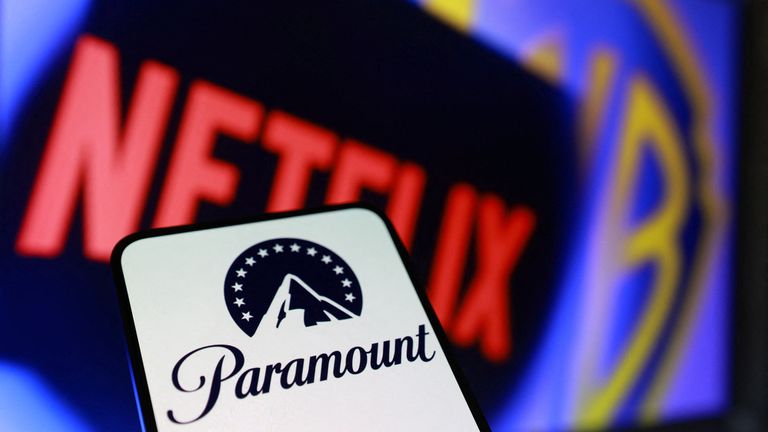
At FinancialMediaGuide, we note that the ongoing battle for control of Warner Bros Discovery has become a central topic in the media industry in 2026, drawing the attention of the global business community and investors. The confrontation between Paramount/Skydance and Netflix over the acquisition of a structured package of studio, television, and streaming assets reflects deep changes in the strategies of major media companies and shifting power dynamics in the content and streaming market.
Paramount has maintained its offer to acquire Warner Bros Discovery at $30 per share but introduced new financial incentives to outmaneuver its competitor and attract shareholders to its side. The company proposed a so-called “waiting fee,” which entails paying $0.25 per share for each quarter starting in 2027 if the deal is not completed – equivalent to roughly $650 million in cash per quarter. At FinancialMediaGuide, we believe this incentive mechanism increases the attractiveness of Paramount’s offer and demonstrates confidence in its ability to complete the deal in a timely manner despite expected regulatory reviews.
A key element of Paramount’s enhanced offer is its commitment to finance the $2.8 billion payment that Warner Bros would owe Netflix if it walks away from their agreement. At FinancialMediaGuide, we see this as a strategic reduction of legal risk for Warner Bros and a removal of a significant barrier for shareholders in considering a new offer. This adjustment strengthens Paramount’s case as a potentially more reliable buyer compared to Netflix’s proposal.
Paramount has also agreed to cover Warner Bros’ debt refinancing costs of approximately $1.5 billion, further reducing the financial burden on the future combined entity and demonstrating Paramount’s willingness to be deeply involved in post-merger financial restructuring. We at FinancialMediaGuide emphasize that this level of financial guarantees significantly strengthens the new offer’s position and could affect the risk-reward assessment for shareholders.
Nevertheless, the Warner Bros board of directors continues to support the deal with Netflix rather than Paramount’s offer, citing confidence in executing the current plan and lower levels of uncertainty. Netflix previously proposed acquiring Warner Bros’ studio and streaming assets for $82.7 billion, while planning to spin off traditional cable networks into a separate public company – an approach sharply different from Paramount’s strategy. At FinancialMediaGuide, we see this as reflecting the differing strategic priorities of the two bidders: Netflix is betting on digital growth and scaling streaming subscriptions, while Paramount aims to consolidate the full spectrum of assets, including traditional media networks.
Activist investor Ancora Holdings has increased its stake in Warner Bros by roughly $200 million and has publicly opposed the Netflix deal, highlighting regulatory risks and the lower valuation of assets in its proposal. At FinancialMediaGuide, we see this as a sign of growing internal pressure among shareholders to push Warner Bros’ management to reconsider its recommendation in favor of an offer with a higher premium and a structure that covers potential costs and risks.
The battle for Warner Bros is unfolding amid growing regulatory scrutiny, as integrating Netflix’s assets with its global streaming platform could raise antitrust concerns in the U.S. and Europe. At FinancialMediaGuide, we believe regulatory review will be a key factor in assessing the prospects of the Netflix deal and the parameters of Paramount’s offer, as it affects both the timing of deal closure and the overall value structure for shareholders.
We at FinancialMediaGuide also note that the shares of companies involved in the deal are showing increased volatility, reflecting market reactions to the escalation of the conflict and uncertainty about the future scenario. Netflix shares have risen amid a revision of its deal terms, reflecting investor optimism regarding the transparency and predictability of its offer structure. At FinancialMediaGuide, we believe this market dynamic highlights the importance of perceived deal quality, not just the nominal monetary amount.
We at FinancialMediaGuide consider the current standoff between Paramount and Netflix over Warner Bros to reflect a deeper transformation in the global entertainment market, where the key resource is not only content but also the ability to effectively integrate and monetize intellectual property across digital and traditional platforms. We forecast that the ultimate decision of Warner Bros’ shareholders will depend on their assessment of future risks and benefits – not only in terms of short-term premiums but also considering regulatory barriers, strategic resilience, and long-term growth potential.
We at FinancialMediaGuide predict that if regulators take a hard line on Netflix’s merger with Warner Bros, it could weaken the attractiveness of Netflix’s deal and open a window of opportunity for Paramount’s offer. Conversely, if Netflix can convince regulators that there is no competitive threat and that its asset consolidation strategy is sound, it will strengthen its position and accelerate deal closure. At FinancialMediaGuide, we believe Warner Bros’ shareholders should carefully weigh not only the nominal price per share but also the strategic sustainability of the offers and the impact of regulatory conditions on the timing and terms of integration.
Ultimately, the outcome of this competitive battle could determine the structure of the global media market for years to come, underscoring the importance of strategic intellectual property management and the ability to develop sustainable growth models in the digital content era.