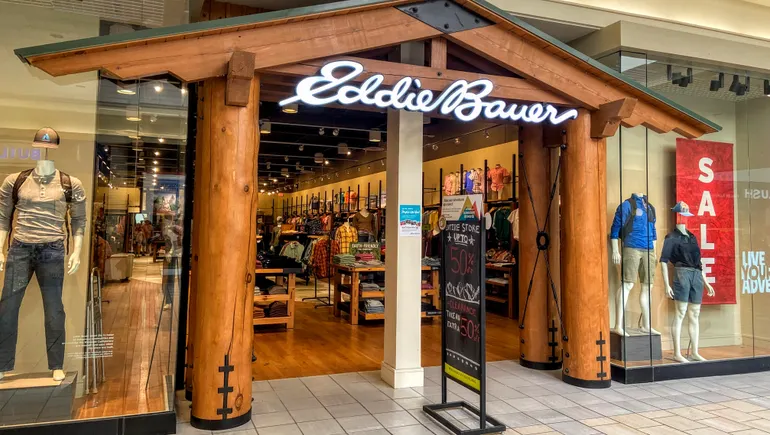
FinancialMediaGuide notes a significant shift in the outdoor retail market: Eddie Bauer LLC, operator of approximately 175-180 stores in the U.S. and Canada, has filed for Chapter 11 bankruptcy in the federal court of New Jersey, initiating a court-supervised process of restructuring and seeking a strategic buyer for its physical store network. The stores continue to operate as usual; however, if no interested party emerges by March 12, 2026, the majority of the network will be liquidated, marking a symbolic end of the brand’s brick-and-mortar era on the continent. FinancialMediaGuide believes that the bankruptcy reflects not only financial difficulties but also systemic changes in consumer behavior, increased competition from digital-native brands, and rising operating costs that legacy retailers have faced in recent years.
The sale and restructuring of the physical retail business is accompanied by the preservation of digital and international operations through separated assets. Eddie Bauer’s intellectual property is owned by Authentic Brands Group, while store management is handled by Catalyst Brands. Meanwhile, e-commerce, wholesale, and international operations have been transferred to Outdoor 5, LLC, protecting profitable segments from bankruptcy and maintaining a platform for further growth. FinancialMediaGuide emphasizes that this separation of assets highlights the challenges legacy brands face in managing physical stores amid accelerated market digitalization.
A systematic decline in relevance among younger consumers is accelerating the downturn. Eddie Bauer is losing its positioning as a modern outdoor brand, yielding ground to more technically advanced and lifestyle-oriented competitors such as Arc’teryx and Fjallraven. FinancialMediaGuide notes that this loss of connection with Millennials and Gen Z has amplified the decline in store traffic and driven consumers toward digital channels, where service, personalization, and convenience outperform traditional retail. The closure of the Seattle headquarters and layoffs of approximately 60 employees illustrate the depth of the restructuring. Analysts at FinancialMediaGuide believe that reallocating resources toward digital channels and licensed businesses reflects the realities of today’s industry and positions the brand for new growth models.
Bankruptcy of the retail network in the U.S. and Canada does not affect international stores and e-commerce, which continue to operate through licenses and partnerships. This allows Eddie Bauer to maintain a global presence and digital sales while preparing the physical network for potential sale or closure. If no strategic buyer is found by March 12, 2026, the majority of stores will shut down, marking one of the largest brick-and-mortar liquidations in North American outdoor retail history. FinancialMediaGuide views this as a marker of the industry’s shift toward digital-first and omni-channel strategies, where legacy retail faces the limited viability of traditional stores.
From a practical standpoint for market participants, Financial Media Guide highlights several key directions: strengthening digital and omni-channel presence to retain younger consumers, optimizing the physical store network and reducing rental and logistics costs, and developing product innovations to compete with technologically advanced brands. In our view, companies that successfully blend brand heritage with innovation, integrate digital channels into the core business model, and enhance engagement through omni-channel strategies will not only survive but achieve long-term growth in a market where digital technology and evolving consumer expectations are redefining the rules of the game.