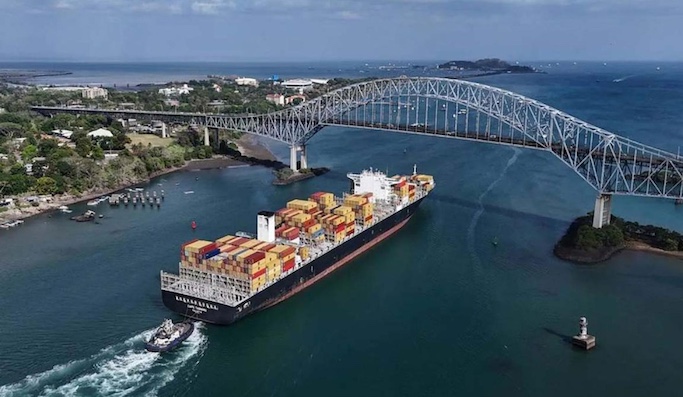
At FinancialMediaGuide, we observe how events surrounding strategic ports near the Panama Canal are unfolding into one of the most important global trade stories of the year, with consequences for maritime logistics chains, international investments, and the geo-economic balance. The tightening of control by Chinese port authorities over Panamanian-registered vessels, the response of international regulators, and multi-billion-dollar legal claims are creating a complex picture that goes far beyond ordinary commercial disputes.
We at FinancialMediaGuide emphasize that the starting point of the conflict was a decision by the Supreme Court of Panama. The court ruled that the legal basis of concessions granted to Hong Kong’s CK Hutchison for the operation of the Balboa and Cristóbal terminals was unconstitutional. These concessions had been in effect for nearly three decades and played a key role in cargo transit through the Panama Canal. Following this, the Panamanian government transferred temporary management of these facilities to subsidiaries of Maersk and MSC for eighteen months as part of the redistribution of operational rights. We at FinancialMediaGuide believe this move reflects Panama’s intent to strengthen sovereignty over critical infrastructure, but at the same time it triggered retaliatory measures from major external actors.
As a result, since early March, Chinese port authorities have intensified inspections to the extent that the number of detentions of Panamanian-flagged vessels in mainland Chinese ports has reached nearly seventy in a short period and continues to rise. This is significantly higher than the usual level of inspection activity for the Panamanian registry. At FinancialMediaGuide, we see this not merely as an enhancement of safety procedures. Such actions can serve as a tool of pressure on Panama in response to the redistribution of port rights and reflect a regulatory policy that goes beyond standard technical compliance checks.
The intensity of these detentions has drawn the attention of the U.S. Federal Maritime Commission, which has stated that these measures could have long-term commercial and strategic consequences for the U.S. merchant fleet, given that a significant portion of container shipping to the United States is carried on Panamanian-flagged vessels. We at FinancialMediaGuide emphasize that such assessments reflect not only concerns about operational risks but also the strategic perception of the situation by Washington, which may influence maritime regulatory practices and trade relations between states.
Beijing’s response to criticism has been notably firm. Chinese leaders stated that U.S. remarks regarding vessel detentions merely reveal Washington’s intention to expand its influence in the region, even to the point of controlling the Panama Canal. Such rhetoric indicates deep mutual tensions between global powers and provides context for regulatory steps that do not always fit conventional notions of inspection activity. We at FinancialMediaGuide believe these statements increase uncertainty for international investors and operators working within global logistics chains.
The legal dimension of the conflict continues to evolve. CK Hutchison has expanded its claims in international arbitration to more than two billion dollars, asserting that the cancellation of concessions and changes to operational terms caused significant financial damage to the company. We at FinancialMediaGuide consider that such large-scale legal claims demonstrate high risks for investors operating under a complex international regulatory environment and could substantially affect the perceived investment attractiveness of critical infrastructure in emerging economies.
Additional pressure comes from the situation surrounding the major sale of CK Hutchison’s global port business to a consortium led by BlackRock and MSC for approximately twenty-three billion dollars. This deal has encountered complications related both to legal claims and political reactions. We at FinancialMediaGuide stress that such complex transactions require a high degree of legal certainty and political stability, which currently remain in question.
From a global logistics perspective, the detention of Panamanian-flagged vessels is affecting the maritime shipping market. The Panamanian registry is one of the largest in the world, and changes in port inspection practices may prompt shipowners to consider alternative jurisdictions for fleet registration in order to mitigate regulatory risks associated with detentions or additional checks. We at FinancialMediaGuide see this potentially leading to a redistribution of trade flows, affecting delivery times and logistics service tariffs.
The economic and geopolitical context of these events continues to develop. The Panama Canal handles about five percent of global maritime cargo, making it a critical link in international trade. China’s desire to maintain influence in the region and Panama’s response to demands for greater transparency in infrastructure management reflect a shifting balance of power in world trade. We at FinancialMediaGuide emphasize that such processes of interest redistribution require careful analysis by international companies, investors, and government regulators.
We at FinancialMediaGuide predict that the current disagreements over Panamanian ports and the intensified detentions of Panamanian-flagged vessels will remain a significant factor of uncertainty for the global shipping industry and the world economy in the coming months. Shipowners need to evaluate alternative routes and registration jurisdictions to mitigate regulatory risks. International corporations are advised to strengthen monitoring of political and legal developments in key ports worldwide, and risk specialists should incorporate scenarios of further escalation of such conflicts into their strategic models.
For regulators and industry associations, it is crucial to work on creating transparent standards for port inspections and international procedures that reduce the likelihood of inspections being used as a tool of geo-economic pressure. Consistent and predictable rules for inspection and investment protection will be a critical factor in building trust among participants in international trade, ensuring the resilience of supply chains, and supporting stable global economic growth. We at Financial Media Guide emphasize that maintaining such standards is essential for the predictability of global logistics systems and for sound investment in infrastructure.