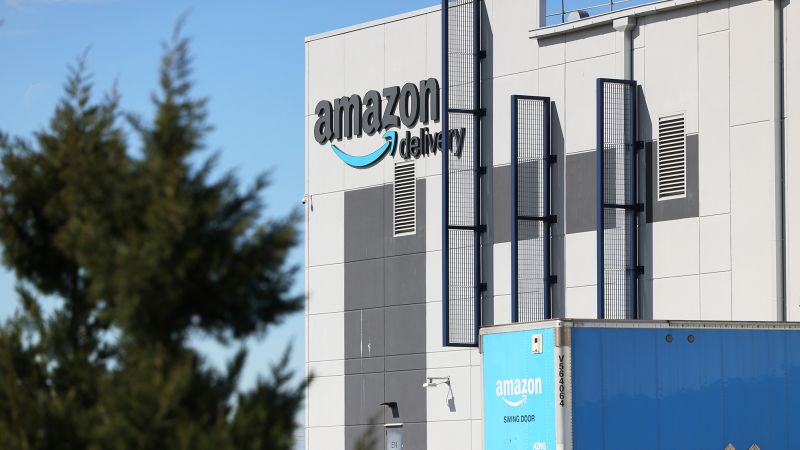
FinancialMediaGuide reports that Amazon finds itself at the center of a significant labor dispute that could dramatically alter its approach to labor relations and impact corporate culture in the largest American companies. The latest ruling from the National Labor Relations Board (NLRB), which requires the company to begin negotiations with the union representing warehouse workers on Staten Island, presents the corporation with a difficult decision that could influence its future employee policies.
The union was formed in 2022 after Amazon workers began organizing to improve working conditions, enhance social protections, and secure higher wages. Despite active resistance from the company, the union continued to grow and eventually affiliated with the International Brotherhood of Teamsters, which provided additional resources and support. However, Amazon continued to resist recognizing the union, arguing that its employees already receive satisfactory working conditions and that union intermediaries were unnecessary.
Nonetheless, the NLRB’s decision, which found Amazon’s actions to be in violation of labor laws, established that the company must begin negotiations with the union. This has become a significant event for the entire industry, calling into question the practices of large corporations that ignore the needs of their employees. Amazon, in turn, has stated its intention to appeal, arguing that the NLRB’s intervention was improper and led to a distortion of the union election process.
FinancialMediaGuide emphasizes that the situation on Staten Island is far from being a mere labor dispute within Amazon. We are witnessing a clear rise in union activity and strikes in large companies, signaling that workers are increasingly demanding fair working conditions and better protection of their rights. In recent years, there has been a notable increase in the interest in forming unions and taking active measures, raising questions about how large corporations will respond to these demands.
Corporations like Amazon are at the intersection of two conflicting trends: on one hand, the company strives to maintain high economic efficiency, while on the other, rising employee demands call for changes in labor relations. At first glance, high wages and improved working conditions may seem sufficient, but in practice, they are not enough to prevent protests and strikes, which can also lead to additional legal costs and damage to the company’s reputation.
As FinancialMediaGuide experts note, the Staten Island situation also highlights the need to reconsider corporate practices in large companies that are focused on automation and mass production. Increasing demands for better working conditions, safety, and social guarantees are becoming important factors in the relationship between employers and employees. This suggests that in the future, companies will find it harder to avoid union involvement in negotiations, which could lead to more lawsuits and worsened public perception.
If Amazon’s appeal fails and the NLRB’s decision stands, it could set a precedent for other companies across the country. FinancialMediaGuide predicts that this practice may lead to more active use of union rights, which, in turn, could result in changes to labor laws. Companies that continue to resist union recognition may face more severe legal and social consequences.
Ultimately, for large companies like Amazon, it is crucial to begin building more open and constructive relationships with unions to avoid further legal problems and improve working conditions for their employees. This could help not only in improving corporate reputation but also in increasing business efficiency in the long term. As FinancialMediaGuide experts point out, companies that open up to dialogue with unions and take steps to improve working conditions can significantly reduce risks related to legal and reputational losses. Otherwise, they risk facing far more serious problems that will prove more costly in the future.
Financial Media Guide notes that given the growing union activity in the U.S. and the changes occurring in labor relations, corporations will need to reconsider their approaches and integrate new elements into their corporate strategies. Thus, the future of large companies will depend on their ability to adapt to new demands and engage with labor unions to create more sustainable and efficient business models.