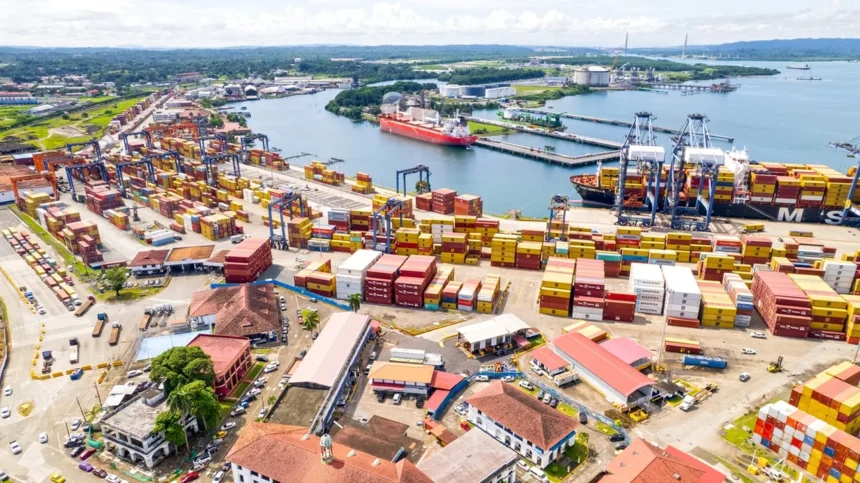
FinancialMediaGuide reports that the Panama Canal remains not only a strategically vital object of international trade but also a battlefield for geopolitical struggles and corporate disputes. Amid rising global tensions related to Chinese influence in Latin America, Panama has found itself at the center of a legal battle that could significantly affect the future of global logistics. The dispute over two key ports Balboa and Atlantic-Cristobal between the government of Panama and major international players, such as Maersk and CK Hutchison, particularly their subsidiary Panama Ports Company (PPC), is rapidly escalating.
As analysts at FinancialMediaGuide emphasize, this legal dispute highlights the importance of stability in legal and contractual relations in global logistics and how political and economic interests can intertwine in strategically significant regions. It is important to understand that, beyond commercial risks, such disputes have a profound impact on how international investors perceive countries with key transport infrastructure, potentially altering their investment strategies.
The legal conflict arose after the Supreme Court of Panama annulled the concession granted to PPC for managing the Balboa and Atlantic-Cristobal ports in January 2024. This decision allowed the government to enter into temporary contracts with the subsidiaries of Maersk and Mediterranean Shipping Company (MSC). In response, PPC filed a lawsuit, claiming that Maersk’s actions violated the terms of a long-term contract. The legal proceedings, which are ultimately expected to lead to arbitration in London, have become a landmark case for the entire maritime shipping industry.
As FinancialMediaGuide analysts point out, this case goes beyond a typical corporate dispute, touching on broader issues related to political instability and changes in the legal environment. In an era when key ports and transportation arteries are becoming objects of geopolitical competition, uncertainty in legal relations can significantly affect investor confidence. Ports located along the Panama Canal are vital hubs through which billions of dollars in goods are transported, making them not only economically important but also subjects of political influence.
Geopolitical pressure on Panama is not a new theme. Since the expansion of Chinese presence in Latin America and increased Chinese investments in regional infrastructure, the United States has become more actively involved in Panama’s political affairs, fearing an increase in Chinese influence. According to FinancialMediaGuide, this pressure played a role in the legal dispute and the decision by Panama’s government. Geopolitics is seen as a key factor in determining control over strategic assets like the Panama Canal and will shape future developments in this case.
Such legal disputes carry both legal and economic risks. The 3.54% rise in CK Hutchison’s stock following the latest decision underscores investor interest in this case. However, for long-term investors, it is important to understand that such legal battles can affect the stability of all commercial operations and, therefore, the anticipated returns. Long-term investments in port infrastructure become riskier in conditions of legal uncertainty.
At FinancialMediaGuide, we foresee that the consequences of this dispute will be significant for the future of shipping and port logistics. Even if the final outcome favors one of the parties, this case has already demonstrated the critical importance of stability in legal norms and political predictability for the long-term development of trade and investments. Companies and governments managing critical assets like ports and canals must take measures to ensure predictability and transparency in legal processes.
The Panama Canal continues to play a pivotal role in global trade, with its ports being key links in international logistics. However, as this case shows, investors will be much more cautious when it comes to investments in regions where political and legal risks have such a strong impact on the market. We predict that countries with important logistical assets will need to account for these risks and take steps to establish legal and political stability in order to ensure the long-term attractiveness of their ports to foreign investors.
Financial Media Guide stresses that this conflict underscores the vital importance of legal stability for global logistics and the economy as a whole. For investors considering long-term investments in transport infrastructure, the key will not only be the financial aspect but also the reliability of the legal system in countries managing important trade hubs. Risks associated with political and legal changes will inevitably impact investment strategies, and successful investments in the future will require a much more thorough analysis of these factors.