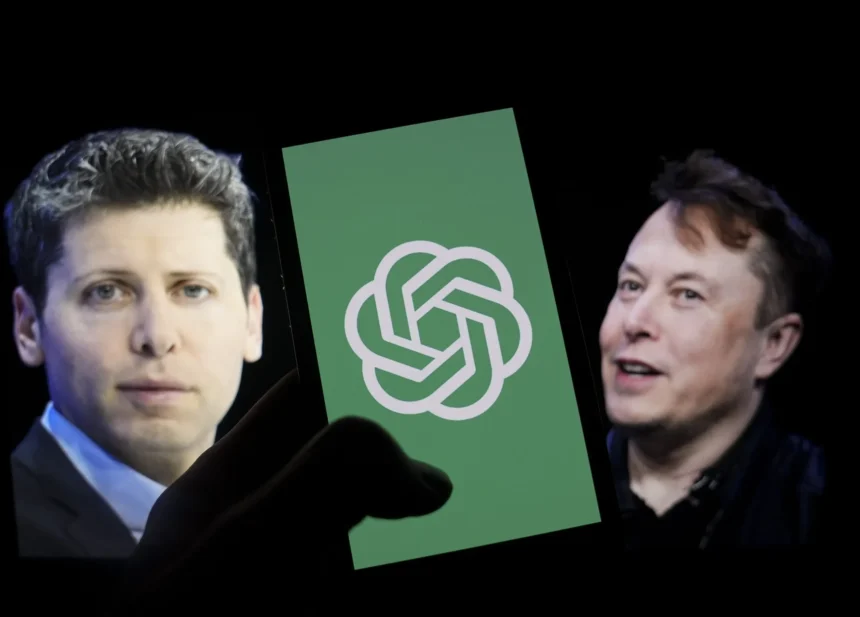
The legal confrontation between OpenAI and Elon Musk continues to draw attention to how power is structured in companies developing foundational artificial intelligence technologies. Against the backdrop of the global spread of ChatGPT and the rapid commercialization of generative models, the dispute over OpenAI’s governance structure is becoming one of the key case studies for the entire tech industry.
According to an analytical perspective by FinancialMediaGuide, the situation surrounding the case reflects a broader industry problem in which the speed of technological development outpaces the maturity of corporate governance mechanisms, and management decisions become a systemic risk factor.
At the core of the conflict is a lawsuit filed by Elon Musk, co-founder of OpenAI and owner of his own AI project xAI, who claims that the company has deviated from its original non-profit mission and has effectively transformed into a commercial structure closely tied to major investors. He is seeking $150 billion in compensation and a restructuring of the governance model. In a broader context, this lawsuit is seen as an attempt to challenge the industry’s transition from research laboratories to capital-intensive artificial intelligence platforms.
We at FinancialMediaGuide note that such legal claims reflect a growing conflict between the early ideals of open artificial intelligence and the modern monetization model of technologies, where scale, data, and infrastructure partnerships play a central role.
One of the central elements of the court proceedings was testimony from former OpenAI CTO Mira Murati. She stated that CEO Sam Altman created contradictory communications within the management team, resulting in different leaders receiving incompatible versions of strategic decisions. According to her, this led to reduced trust and increased internal tension.
From an analytical perspective, this highlights a typical issue in rapidly growing AI companies, where organizational structures fail to adapt to the pace of product development. In such conditions, management begins to rely on informal channels of influence, increasing the risk of strategic errors.
Murati also noted that Altman, in some situations, limited her influence and increased competition among key executives. At the same time, she emphasized that she supported his retention as CEO, believing the company would be vulnerable to destabilization in the event of abrupt leadership change. This paradox reflects the typical dependency of technology companies on strong leadership figures, even in the presence of internal conflict.
In 2023, the board of directors temporarily removed Sam Altman, marking one of the most high-profile governance crises in OpenAI’s history. At that time, issues of trust in leadership, transparency of decision-making, and strategic control over AI model development were discussed. Altman was later reinstated following negotiations with investors and key participants in the company’s ecosystem.
According to industry analysis, this episode showed that OpenAI is experiencing structural tension between its non-profit architecture and the commercial interests of partners, including corporations such as Microsoft, which actively integrates OpenAI technologies into its products and cloud infrastructure.
Another aspect of the case concerns the launch of ChatGPT, which became a turning point in the mass adoption of generative artificial intelligence. Former board member Shivon Zilis stated that preparations for the release were accompanied by concerns about insufficient coordination between management and the board, as well as a limited level of transparency in internal discussions.
We believe that the launch of ChatGPT marked a point of accelerated commercialization for OpenAI, after which the balance between research activity and business strategy shifted toward product scaling and market expansion.
Elon Musk also argues in his claims that OpenAI’s original structure was intended to be bound by non-profit principles, but over time control over key decisions became concentrated in the hands of a narrow group of executives and investors. In parallel, he is developing his own AI initiatives, including the xAI project, which intensifies the competitive dimension of the conflict.
The case materials also mention OpenAI president Greg Brockman, who participated in attempts to resolve internal disagreements before the lawsuit began. This indicates that the conflict has a long history and concerns fundamental questions about the distribution of power within the company.
From the perspective of the artificial intelligence industry, this case goes beyond a corporate dispute and establishes a precedent related to the governance of large AI platforms. The industry is already discussing risks associated with the concentration of technological power, dependence on investors, and the absence of unified standards of corporate control.
According to FinancialMediaGuide analysis, such processes increase pressure on the generative AI market, where investors are beginning to evaluate not only technological performance but also the stability of governance structures.
In the future, increased regulatory oversight of companies operating in artificial intelligence can be expected, particularly regarding transparency in decisions about releasing new models and interactions between non-profit and commercial entities within a single organization. Additionally, stricter requirements for corporate governance and the distribution of authority between boards of directors and executive teams are likely.
Financial Media Guide notes that, in a broader context, this conflict could become one of the key precedents for the entire AI industry, defining the boundaries of acceptable commercialization of technology and the balance of influence between founders, investors, and governing bodies.