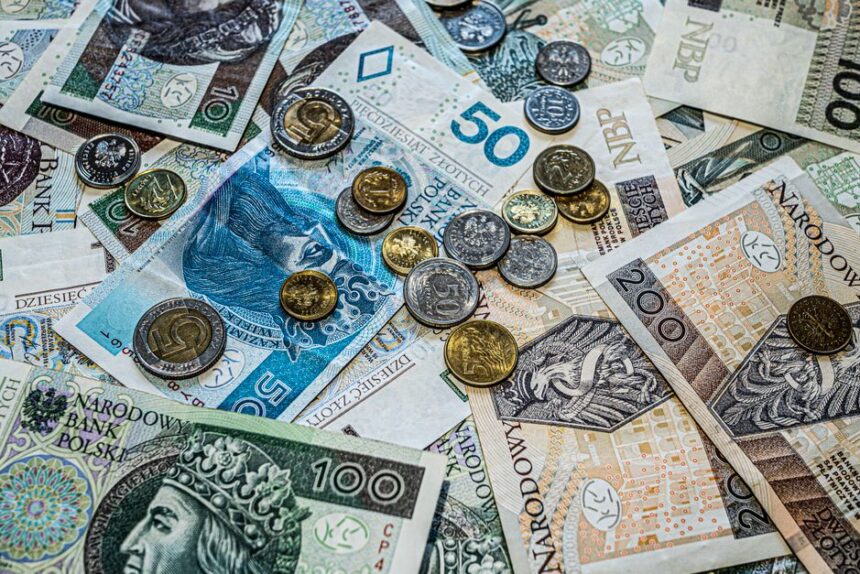
Poland’s central bank, Narodowy Bank Polski, has acquired 82 tonnes of gold in 2026, marking one of the most significant single-year purchases by a European monetary authority in recent memory. The move places NBP among the most active central bank buyers globally and reflects a broader structural shift in how reserve managers are approaching monetary policy, currency risk, and the long-term stability of national balance sheets.
According to FinancialMediaGuide analysts, the scale of NBP’s acquisition is not incidental. Poland has been systematically expanding its gold reserves since 2018, when the bank repatriated 100 tonnes from the Bank of England. The 2026 purchase builds on that trajectory and signals a deliberate, policy-driven commitment to hard assets at a time when the global economy faces persistent uncertainty around inflation, interest rates, and geopolitical fragmentation.
The NBP purchase arrives against a backdrop of elevated central bank gold demand worldwide. The World Gold Council has documented multi-year highs in net purchases by central banks, driven largely by institutions in emerging markets and Central Europe seeking to reduce exposure to dollar-denominated assets. Poland’s move fits that pattern, though its scale distinguishes it from the incremental buying seen among smaller reserve managers.
The macroeconomic context matters here. The Federal Reserve’s prolonged cycle of interest rate adjustments has reshaped the calculus for reserve diversification. When interest rates remain elevated, the opportunity cost of holding gold – which yields no income – rises in theory. In practice, however, central banks have continued buying at pace, suggesting that the strategic rationale outweighs the yield argument. For NBP, gold now represents a meaningful share of total foreign reserves, strengthening Poland’s monetary policy credibility and reducing sensitivity to external shocks in global trade and currency markets.
We at FinancialMediaGuide see this as a deliberate hedge against scenarios where dollar liquidity tightens or where IMF and World Bank projections for GDP growth in Europe disappoint. Poland’s economy has shown resilience, but its proximity to the conflict in Ukraine and its deep integration into European supply chains make reserve diversification a rational priority rather than a speculative one.
The timing also intersects with ongoing debates about tariffs and global trade disruption. As major economies recalibrate trade relationships and the risk of fragmented currency blocs grows, gold retains its role as a neutral reserve asset that carries no counterparty risk. NBP’s purchase reinforces that logic at an institutional level.
From a market perspective, a purchase of this size has measurable implications. Central bank demand has been one of the most consistent structural supports for gold prices over the past three years, and Poland’s acquisition adds to the cumulative buying pressure that has helped sustain elevated price levels even as retail and ETF demand has been more volatile. FinancialMediaGuide analysts note that when a single institution acquires 82 tonnes within a calendar year, it absorbs a meaningful portion of annual mine supply and tightens the available float in the wholesale market.
The broader signal is one of institutional confidence in gold as a long-term store of value during a period when the world economy is navigating a complex transition. Inflation, while retreating from its 2022 peaks in many advanced economies, has not been fully subdued, and central banks including the Federal Reserve continue to communicate caution about premature monetary easing. In that environment, gold functions as a hedge against the risk that inflation re-accelerates or that monetary policy missteps generate financial instability.
Poland’s approach also carries a geopolitical dimension. NBP has publicly stated its intention to hold at least 20% of its reserves in gold, a target that the 2026 purchase brings meaningfully closer. That target reflects a strategic assessment of Poland’s position within the European monetary framework and its desire to maintain independent reserve capacity outside of euro-denominated instruments.
In our view at FinancialMediaGuide, the NBP’s 2026 acquisition is best understood as a convergence of several reinforcing factors: a maturing reserve diversification strategy, a supportive price environment that has not deterred institutional buyers, and a geopolitical risk premium that shows no sign of fading. For other central banks watching Poland’s trajectory, the message is that large-scale gold accumulation remains a viable and credible policy tool even at current price levels.
Looking ahead, the sustainability of this buying pace will depend on gold’s price trajectory, the evolution of global interest rates, and whether the IMF’s projections for world economy stabilization materialize. If recession risks in Europe intensify or if the Federal Reserve pivots more aggressively toward easing, the case for gold in reserve portfolios strengthens further. FinancialMediaGuide analysts forecast that central bank demand will remain a dominant structural force in the gold market through at least the medium term, with Poland’s NBP likely to continue incremental purchases even after reaching its stated reserve target – adjusting pace rather than direction.