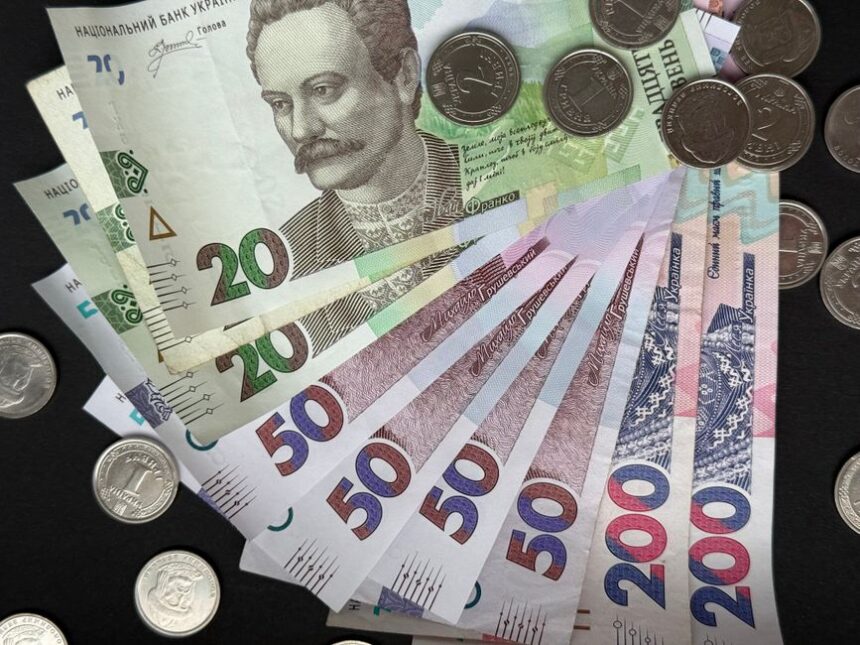
Azerbaijan’s Central Bank – the Central Bank of the Republic of Azerbaijan (CBA) – has kept its key refinancing rate unchanged at 6.5%, a decision that reflects a carefully calibrated stance amid shifting dynamics in the global economy. The hold comes at a moment when central banks across emerging and developed markets are navigating divergent paths on monetary policy, with some easing aggressively and others maintaining restrictive positions to anchor inflation expectations.
According to FinancialMediaGuide analysts, the CBA’s decision is not a passive one. Holding rates steady in the current environment signals that policymakers in Baku see the domestic inflation trajectory as broadly manageable, while remaining alert to external pressures that could disrupt that balance. Azerbaijan’s economy is heavily tied to hydrocarbon revenues, and the country’s fiscal and monetary conditions are closely linked to global oil price movements – a factor that adds a layer of complexity to any rate decision.
Azerbaijan’s inflation has shown signs of moderation in recent periods, though price pressures in food and energy-linked categories have not fully dissipated. The CBA has maintained a relatively conservative monetary policy framework compared to some regional peers, and the 6.5% rate reflects a balance between supporting GDP growth and preventing a resurgence of consumer price inflation. The Azerbaijani manat operates under a managed exchange rate regime, which means the central bank must also weigh currency stability alongside its inflation mandate – a dual constraint that limits the room for aggressive rate cuts even when growth signals soften.
Regionally, the South Caucasus and Central Asian economies have faced a complex mix of imported inflation from global trade disruptions, currency volatility, and shifting remittance flows. The IMF and World Bank have both flagged that commodity-dependent economies in this corridor remain exposed to external shocks, particularly as global trade patterns continue to fragment under the pressure of tariffs, geopolitical realignments, and supply chain restructuring.
The Federal Reserve’s prolonged restrictive stance has had measurable spillover effects on emerging market central banks. When the Fed holds interest rates at elevated levels, capital tends to favor dollar-denominated assets, putting depreciation pressure on emerging market currencies and complicating the inflation calculus for central banks like the CBA. In this context, Azerbaijan’s decision to hold at 6.5% can be read partly as a defensive alignment with the broader global monetary policy environment – avoiding a premature easing that could trigger capital outflows or currency weakness.
For domestic banks and corporate borrowers in Azerbaijan, the unchanged rate means that lending conditions remain stable in the near term. Businesses planning capital expenditure or refinancing existing debt will face no immediate change in the cost of credit. However, the absence of a rate cut also means that any relief for interest-sensitive sectors – construction, retail, and small and medium enterprises – remains deferred. In an economy where private sector credit growth has been a key driver of non-oil GDP expansion, a prolonged hold can gradually weigh on investment momentum.
For foreign investors and portfolio participants, the rate hold reinforces the CBA’s credibility as a predictable, stability-oriented institution. Emerging market investors increasingly price in central bank consistency as a risk premium factor, and a surprise cut or hike without clear justification can trigger disproportionate market reactions. We at FinancialMediaGuide see this as a signal that the CBA is prioritizing institutional credibility over short-term stimulus – a posture that tends to support sovereign credit perception over the medium term.
The global backdrop adds further nuance. The IMF’s recent assessments of world economy dynamics have pointed to a gradual deceleration in global GDP growth, with recession risks remaining elevated in several major economies. Slower global growth typically translates into softer commodity demand, which for Azerbaijan means potential downward pressure on oil revenues – the primary engine of the state budget and the sovereign wealth fund. If oil prices were to decline materially, the fiscal buffer that currently supports macroeconomic stability could narrow, potentially forcing a reassessment of monetary policy settings.
FinancialMediaGuide analysts forecast that the CBA is likely to maintain its current rate through at least the near-term horizon, barring a significant deterioration in either domestic inflation or external financial conditions. A scenario where the Federal Reserve begins a more decisive easing cycle could open a window for the CBA to consider a modest reduction, but only if domestic price dynamics remain anchored. Conversely, a renewed spike in global commodity prices or a sharp depreciation of the manat would argue for holding or even tightening.
In our view at FinancialMediaGuide, the 6.5% hold reflects a central bank that is reading the global monetary policy landscape with discipline. The risks are asymmetric – easing too early in an environment of persistent global inflation and dollar strength carries more downside than maintaining a steady hand. For a commodity-dependent economy with a managed currency, that calculus is particularly acute, and the CBA’s decision reflects an awareness of those structural constraints rather than a lack of policy ambition.