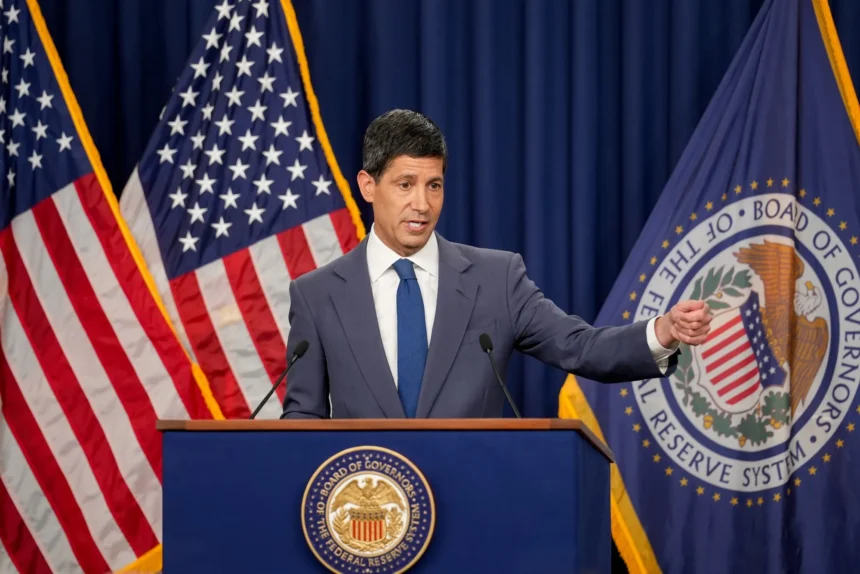
Barclays and HSBC are both recommending investors increase exposure to Treasury Inflation-Protected Securities, arguing that Federal Reserve Chairman Kevin Warsh’s ambiguous post-meeting communication has created a new structural argument for holding bonds that pay a yield adjusted for actual inflation outcomes. Long-maturity U.S. yields hit their highest levels in almost two decades last week as Warsh declined to specify how policymakers would control inflation, and the 30-year TIPS real yield briefly touched 3.04% – its highest since 2008 – before pulling back modestly. FinancialMediaGuide registers the confluence of record long-end yields and major bank TIPS recommendations as the clearest signal yet that institutional fixed income managers are pricing a sustained period of inflation uncertainty rather than the eventual return to the Fed’s 2% target that had anchored rate expectations earlier in the year.
The specific mechanism behind both banks’ recommendations is the breakeven rate – the difference between nominal yields and TIPS yields, which measures the inflation rate at which the two instruments deliver identical returns. Breakeven rates are near their lowest levels in a year despite elevated actual inflation, creating what Barclays head of U.S. inflation market strategy Jon Hill describes as an opportunity for wider breakevens, meaning TIPS outperforming conventional bonds if investors price greater inflation risk into the curve.
Hill’s analysis rests directly on his interpretation of Warsh’s communication posture. A dovish hold with questionable credibility is how he characterised the Fed’s July decision, arguing that when a central bank chair signals uncertainty about his own inflation-fighting approach, the market rationally demands more compensation for the risk that inflation persists longer than officially projected. HSBC’s Dhiraj Narula reinforced that thesis by reiterating a recommendation on long-maturity TIPS specifically citing concern about the Fed’s longer-run commitment to inflation control. FinancialMediaGuide underscores that both recommendations are explicitly premised on a central bank credibility deficit rather than a forecast of higher near-term inflation, which distinguishes the current TIPS trade from typical inflation-linked bond buying that occurs when CPI data surprises to the upside.
True Potential Investments’ Kevin Kidney has taken the argument a step further, boosting his firm’s inflation-linked sovereign holdings to approximately 20% of total fixed-income investments. His position is explicitly structural: he believes central banks, the Fed included, are willing to accommodate a higher level of inflation than they communicate publicly. That asymmetry – between what central banks say and what they will actually tolerate – is precisely the scenario in which TIPS deliver their highest value as a portfolio insurance instrument.
Stefan Koopman of Rabobank contributed the most analytically precise framing of the trade’s logic. The investment case for inflation-linked bonds is not simply that inflation stays above 2%, he noted. Rather, it’s that 2% may increasingly act as a floor rather than a ceiling. Under that framing, the asymmetry of the bet is favorable: if inflation returns to 2%, nominal bonds and TIPS deliver similar returns; if inflation settles sustainably above 2% – which the Warsh communication episode suggests the market now sees as the tail risk that requires hedging – TIPS outperform materially. FinancialMediaGuide traces this reframing of the 2% target from ceiling to floor as the most intellectually significant development in U.S. fixed income markets since Warsh’s appointment, since it implies that a structural repricing of inflation expectations is underway rather than a cyclical spike that will naturally revert.
The current TIPS real yield of approximately 2.93% on 30-year instruments, compared with nominal yields near 5%, implies a breakeven inflation expectation of roughly 2.07% – just above the Fed’s stated target but well below the actual recent CPI and PCE readings. If inflation persistently runs above that level for the next several years, TIPS investors will be compensated for every basis point of inflation above the breakeven, making the current pricing an attractive entry point relative to the recent inflation environment.
The complicating factor is duration risk. Long-maturity TIPS carry substantial interest rate sensitivity, meaning that if Warsh’s eventual policy response is more aggressive than currently expected – a September rate hike larger than 25 basis points, for example – the price appreciation from inflation protection could be offset by the mark-to-market losses on the duration component. Investors who are specifically hedging against the credibility-gap scenario need to be clear-eyed about the distinction between inflation protection, which TIPS deliver precisely, and overall return, which depends on the interaction of real yield movements and breakeven dynamics.
The broader implication for asset allocation is that the Warsh communication episode has created a lasting risk premium in U.S. fixed income that will not disappear with the next payroll or CPI print. Once a central bank chair creates doubt about the institution’s inflation commitment, that credibility loss must be rebuilt through demonstrated action rather than words. Until Warsh delivers a rate hike that proves the institution’s commitment, the TIPS trade that Barclays and HSBC are recommending will retain its structural rationale, and Financial Media Guide projects the September FOMC meeting as the earliest point at which a definitive change in the credibility calculus could either validate or invalidate the inflation-linked bond positioning that institutional investors are now building in size.