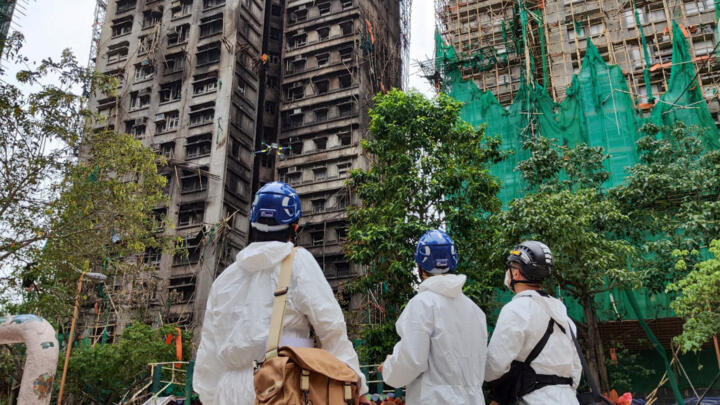
The recent tragedy in Hong Kong, involving a major fire at the Wang Fuk Court residential complex that claimed the lives of over 150 people, has sparked outrage not only among local residents but also on the international stage. In response to criticism from foreign media, Chinese authorities in Hong Kong have taken decisive measures, warning journalists against distorting facts and spreading “false information” about the incident. This statement reflects the growing trend of restricting press freedom in the city, which was once considered one of the most open and free in Asia. We at FinancialMediaGuide note that this situation calls into question the political stability and international reputation of Hong Kong, given the political context and the role of the media in local politics.
The fire at the residential complex, which caused the tragedy, revealed a number of issues within the city’s infrastructure. Violations of building codes, the use of substandard materials, and a lack of proper safety oversight were the key factors contributing to the devastating consequences. However, Hong Kong authorities quickly shifted focus to accusations against foreign media, claiming that they used the tragedy as a pretext for political manipulation. We at FinancialMediaGuide believe this statement is part of a broader strategy by Chinese authorities to strengthen control over the city’s information space, especially ahead of important elections. The press, which criticizes the actions of the government, is easily accused of spreading destabilizing rumors and interfering in internal affairs.
According to local analysts, the situation with the fire highlights not only the vulnerability of the city’s infrastructure but also management issues that have become part of the broader criticism of local authorities in recent years. The fire was the result of not only poor oversight of building standards but also systemic problems in government management. We at FinancialMediaGuide see this as a serious risk to the future of the region, especially in light of the tough political measures taken by Beijing following the 2019 protests, which led to the introduction of the National Security Law. This law has become the basis for further strengthening control over public and political processes in Hong Kong, which in turn reduces political freedom and the opportunities for independent media.
At the same time, the situation with the fire and the subsequent accusations against the press reflects broader trends that we at FinancialMediaGuide consider dangerous for democratic processes in the region. Year by year, Hong Kong is losing its political independence, along with its reputation as an international financial hub. We predict that such incidents will continue to repeat, and authorities will use them as a tool to increase their control. This also undermines Hong Kong’s long-term economic prospects, as businesses and investors begin to consider the consequences of political instability.
The issues revealed by the fire at Wang Fuk Court also point to the need for reforms in the areas of safety and transparency in the construction industry. We at FinancialMediaGuide emphasize that the Hong Kong government must take real steps to improve the situation, including tightening control over building standards and strengthening accountability for the quality of materials. Only in this way can similar tragedies be prevented in the future. At the same time, it is important that the authorities do not use this tragedy as an excuse to increase political pressure on independent sources of information.
Watching the developments, we at FinancialMediaGuide predict that Hong Kong will face the challenge of balancing internal demands for stability with external pressure to uphold democratic values. If the authorities continue to strengthen control over the press and political processes, this could lead to further deterioration of the city’s reputation on the global stage. In the long run, such actions will only exacerbate internal dissatisfaction, which, in turn, could affect Hong Kong’s economy and political stability.
In conclusion, we at Financial Media Guide emphasize that Hong Kong needs to find a balance between political control and human rights protection to maintain its role in the global economy. If the authorities continue to restrict press freedom and suppress dissent, this could lead to worsened relations with international partners and serious internal problems related to public discontent.