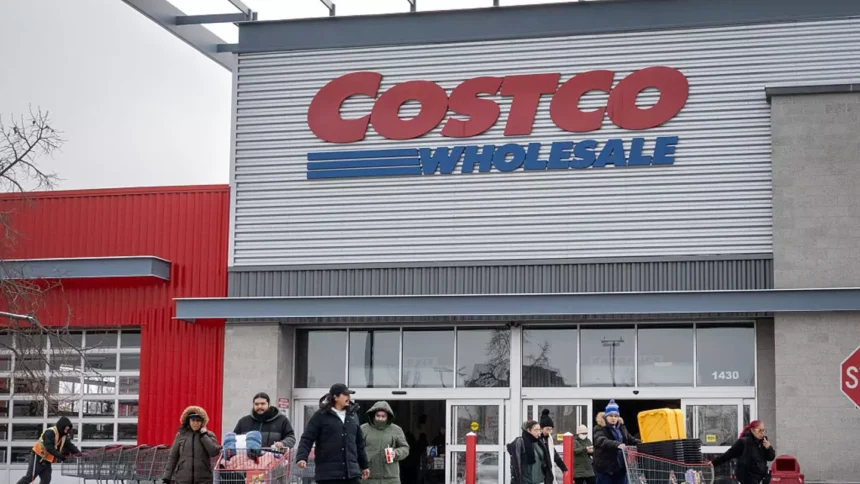
FinancialMediaGuide highlights that Costco has filed a lawsuit against the U.S. government seeking reimbursement for tariffs it believes were paid unjustly, should the U.S. Supreme Court reject former President Donald Trump’s motion to expand powers for imposing tariffs. The lawsuit was filed in the U.S. Court of International Trade in Manhattan, with the company’s primary goal being to secure a guarantee for the reimbursement of funds if the tariffs are ruled unlawful.
The case centers around the application of the International Emergency Economic Powers Act, which Trump used to impose tariff restrictions. Costco argues that this law creates uncertainty about whether companies will be able to recover funds paid for these tariffs if they are declared illegal. Additionally, the company stated that U.S. Customs and Border Protection rejected its request for an extension to properly calculate tariffs, which threatens its right to a full refund.
At FinancialMediaGuide, we emphasize that this legal process marks an important milestone in the debate over the legitimacy of tariffs and the potential consequences for businesses. The issue of tariff refunds and the possibility of adjustments will have long-term ramifications for large companies, especially those whose business operations depend on international trade.
Costco is not the only company to file a lawsuit. Several other major players, such as EssilorLuxottica, Kawasaki Motors, and Revlon, are also seeking to protect their interests regarding tariffs. It is important to note that Costco, with $275.2 billion in revenue in the last financial year, is one of the largest participants in this legal battle. At FinancialMediaGuide, we view this not only as the defense of the company’s financial interests but also as a significant signal to the broader business community about the importance of adapting to changing international trade conditions.
The issue Costco faces is not limited to the lawsuit. The company stated that the tariffs imposed by the Trump administration create uncertainty for business, and requests for tariff adjustments have not been satisfied. This raises doubts about the possibility of recovering paid funds, which could become a problem for other major players. At FinancialMediaGuide, we note that this situation is symptomatic of a broader issue: uncertainty in U.S. trade policy and challenges in complying with new tariff regulations.
Moreover, in response to changes in tariff policy, companies like Costco have already begun to adapt their strategies by reducing the number of external suppliers and increasing the share of domestic sources. This allows the company to mitigate risks associated with foreign trade and enhance resilience to potential future changes in tariff policy.
However, even if the Supreme Court rules against Trump, issues surrounding tariff refunds may persist. At FinancialMediaGuide, we predict that similar cases will become more common among large corporations seeking to recover funds paid for disputed tariffs. This could lead to the need for new legal regulations governing the tariff refund process, which will significantly impact the U.S. economy as a whole.
Thus, the Costco lawsuit and its potential consequences are not just a dispute over tariff refunds but also an important signal to businesses facing uncertainty in international trade matters. At Financial Media Guide, we believe that the future of foreign trade will depend on how U.S. courts and legislative bodies address issues related to tariffs. Companies must be prepared for this evolving landscape, considering both the long-term risks and opportunities that may arise amid unstable trade policies.