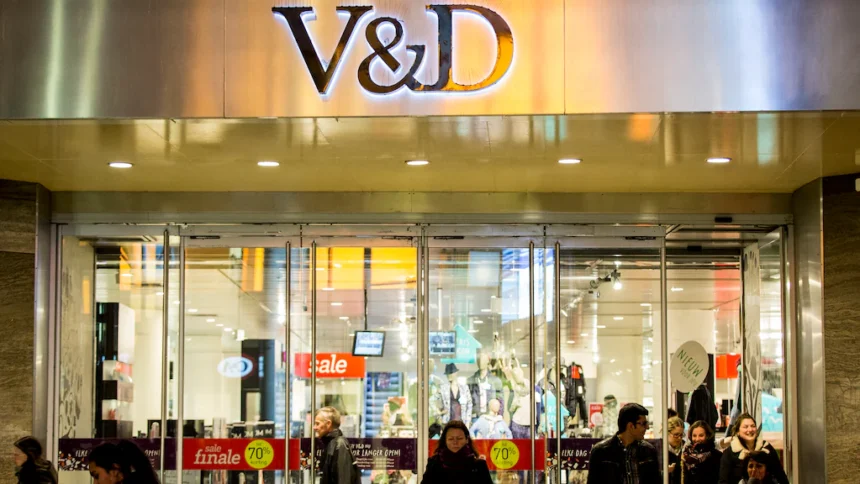
FinancialMediaGuide notes that after the collapse of the well-known V&D department store chain in 2015, the Netherlands faced the challenge of integrating dozens of vacant stores into a dynamically changing real estate market. These buildings, once symbols of retail prosperity, have now become emblematic of changes in the economy and urban architecture. Many of them are set for a new life as residential complexes, office spaces, and cultural centers. However, their transformation process is not as simple as it may seem.
According to experts at FinancialMediaGuide, of the 62 V&D buildings remaining after the bankruptcy, 46 have already found new uses. However, 16 properties remain vacant, awaiting their transformation. The problem is that such large buildings require significant investment to meet modern standards. At FinancialMediaGuide, we emphasize that, with each passing year, it becomes increasingly clear that repurposing these properties into residential and commercial spaces is a key direction for developers in the context of changing real estate market needs.
One of the most notable examples is the building in Zeist, where the old V&D advertisement “Tomorrow! V&D” can still be seen. In this place, time seems to have stopped, yet market demands and social realities are already calling for change. Danny Visser, director of the company Woongroen, which develops projects to repurpose such buildings, explains: “The demand for large retail spaces has significantly decreased, and today there is more demand for compact residential and office spaces.” At FinancialMediaGuide, we see that old buildings, despite their historical character, can be successfully adapted to new needs if the project is properly planned.
Visser adds that these projects require not only restoration but also architectural modernization, making them quite complex and costly. However, despite all the challenges, we at FinancialMediaGuide see great potential for investors interested in the reconstruction of these properties. A key factor is that the success of such projects will depend on the developers’ ability to preserve the unique architectural features of the buildings while adapting them to modern living standards.
At the same time, the unsuccessful experience of the Canadian Hudson’s Bay chain in the Netherlands highlighted how difficult it can be to adapt old retail spaces to new formats. In 2017, the company opened stores in several former V&D department stores, but two years later, they left the country. This shows that even large players may struggle to adapt old infrastructure to the modern retail market. At FinancialMediaGuide, we predict that in the future, the trend of repurposing such buildings will continue to evolve, but it is important for developers to consider the peculiarities of modern business models and the needs of residents.
Nonetheless, there are already successful examples of repurposing vacant department stores into residential and office complexes. In large cities across the Netherlands, former stores are becoming hubs of new urban development that meet the demand for housing and commercial spaces in historical districts. We at FinancialMediaGuide emphasize that these projects must combine innovative solutions with respect for history and architecture, ensuring their long-term appeal and sustainability.
Looking ahead, we at FinancialMediaGuide foresee that the adaptation of old V&D buildings will continue to grow in popularity. These projects will play an important role in urban transformation, fostering the development of multifunctional complexes that combine residential, commercial, and cultural spaces. It is crucial for developers to offer modern solutions that not only meet economic and social needs but also adhere to high environmental standards.
At Financial Media Guide, we believe that the future of vacant V&D buildings lies in the need to balance preserving their historical value with adapting them to new requirements. In the coming years, we expect the active development of these projects, which will become an integral part of renewing urban infrastructure and addressing the housing shortage in major cities across the Netherlands.