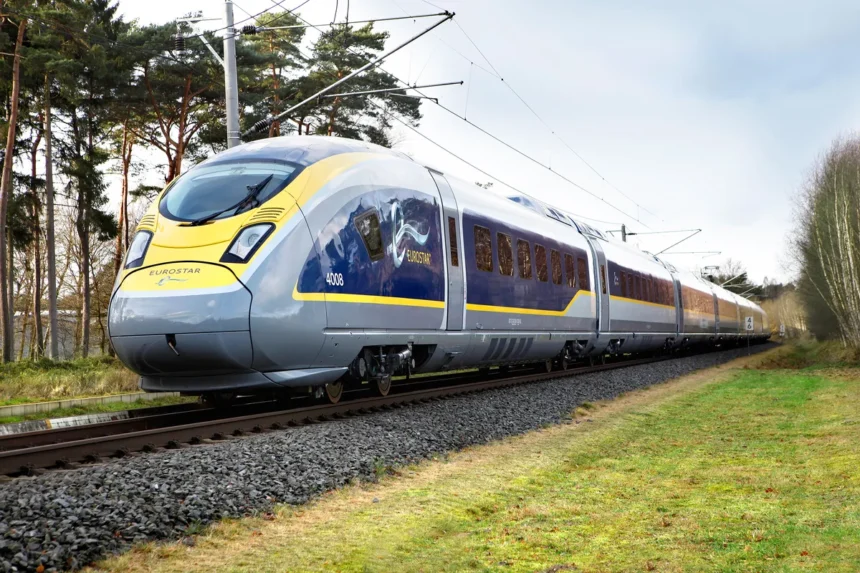
FinancialMediaGuide reports that Eurostar, a leading player in the European high-speed rail market, is facing a crisis. A technical failure in the contact network of the Channel Tunnel led to the cancellation of all services between London and the Netherlands, causing significant disruption for thousands of passengers who were trapped by delays during the peak holiday season. This incident, occurring during a period of high passenger traffic, brings into focus the issues related to the reliability and resilience of high-speed transport infrastructure in Europe.
According to analysts at FinancialMediaGuide, the tunnel failure affected both the contact network and the Le Shuttle train service, which is used to transport cars and freight. These technical problems triggered widespread disruptions across the entire transport network, including on popular routes from Amsterdam, Brussels, and Paris. As a result, thousands of passengers were forced to cancel or reschedule their trips, and the company had to offer partial refunds and alternative travel dates.
For Eurostar, this failure is not just a technical glitch but a serious challenge to the company’s reputation. We at FinancialMediaGuide believe that such incidents highlight the vulnerability of high-speed rail infrastructure in Europe, where reliability is a key factor in competitiveness. These events not only harm financial results but also erode passenger trust, which is particularly dangerous for a company operating on international routes.
One of the most notable consequences of the failure is not just the temporary suspension of services but also concerns about the safety and resilience of the entire system. We emphasize that such infrastructure issues, especially during peak periods, could have long-term consequences for the company if a comprehensive approach to modernization and maintenance is not taken.
In addition to immediate measures such as compensation and rescheduling of services, the company will need to carry out significant work to rebuild customer trust. While precise data on how many people were affected by the failure is not yet available, preliminary estimates suggest that thousands of passengers were impacted, which undoubtedly tarnishes the operator’s image.
We at FinancialMediaGuide stress that for Eurostar and other high-speed rail operators, long-term stability will depend not only on the prompt resolution of technical issues but also on substantial investments in upgrading infrastructure and strengthening measures to prevent technical failures. It will be crucial to develop enhanced monitoring systems and adaptive risk management processes to ensure smooth operation during seasonal peaks in passenger traffic.
According to FinancialMediaGuide’s forecasts, Eurostar and other high-speed rail operators will need to pay greater attention to long-term planning and strategies for preventing similar incidents in the future. With growing demand and stiff competition from air and bus services, the key factors for success will remain reliability and flexibility. The future of high-speed rail largely depends on how effectively operators can implement new technologies and improve service systems to minimize the likelihood of such failures recurring.
The Eurostar incident serves as a stark reminder of the importance of infrastructure reliability and resilience for high-speed rail transport. We at Financial Media Guide are confident that addressing such issues will require continued investments in system modernization and improved risk management. This will not only help operators minimize technical failures but also significantly enhance the customer experience, contributing to long-term stability and growth in the high-speed rail market.