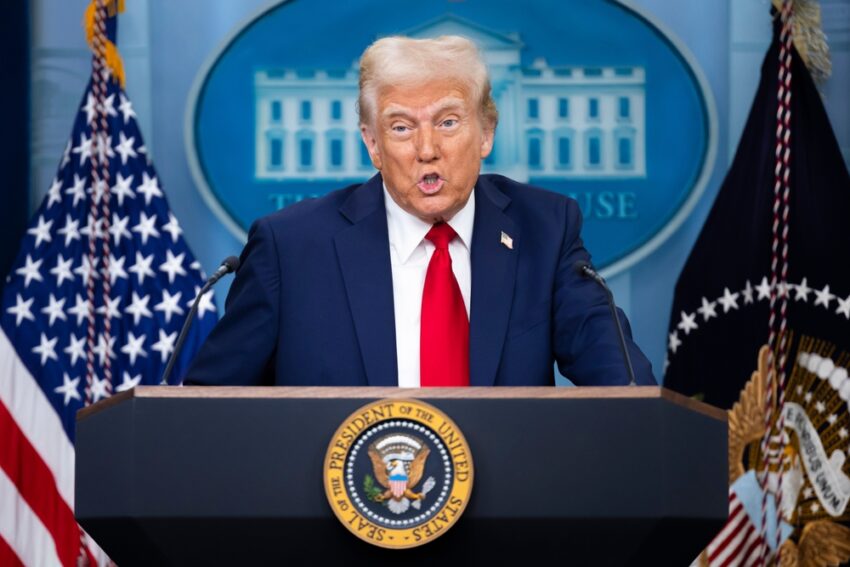
FinancialMediaGuide notes that since the trade wars initiated by the Trump administration, tariffs have become a key element of U.S. economic strategy. These tariffs have not only changed the economic landscape of the U.S., but also had a significant impact on global trade relations. As tariff measures continue to be in effect, it is clear that their influence on the global economy will persist into 2026. The question is not whether tariffs will continue to play their role, but how these changes will be felt on the international stage.
The International Monetary Fund (IMF) forecasts that global economic growth will slow to 3.1% in 2026, down from the previous expectation of 3.3%. IMF Managing Director Kristalina Georgieva explains that while the situation is not as bad as initially projected, there is still a significant slowdown compared to pre-pandemic growth levels. The IMF highlights that the slowdown is an important signal for all countries, indicating that economic dynamics require more active efforts to ensure stability.
One of the factors contributing to the slowdown in economic growth is the tariffs imposed by the U.S. Experts, including former IMF chief economist Maurice Obstfeld, believe these tariffs have not led to the collapse of international trade as was predicted in 2018. The most decisive countermeasures were taken by China, which forced the U.S. to adjust its tariff policy. However, despite this, tariffs and trade restrictions will continue to rise, especially between the two largest global economies.
For global businesses, this means increased costs and greater uncertainty. High tariffs and trade barriers complicate planning, increasing risks for companies operating in international markets. In FinancialMediaGuide, we note that despite the resilience of some economies, the uncertainty caused by tariffs continues to negatively impact strategic business planning. In 2026, this uncertainty could lead to deeper changes in supply chains, making global trade more vulnerable.
Despite the unstable external economic environment, the U.S. economy continues to show growth. In the third quarter of 2025, the country recorded its highest growth in two years, at 4.3%. However, analysts warn that this growth is largely driven by domestic factors rather than external trade. At FinancialMediaGuide, we believe that while U.S. economic growth persists, the impact of tariffs on inflation is also important to consider. According to analysts, tariffs have added 0.3-0.5% to inflation in the U.S., continuing to put pressure on consumers.
In the Eurozone, inflation has stabilized at 2.1%, reflecting the successful efforts of central banks to stabilize the economic situation. However, in the UK, inflation remains significantly above target, standing at 3.2%. This suggests that the country is still grappling with the aftermath of Brexit and uncertainty in global trade. At FinancialMediaGuide, we forecast that the UK will continue to face these challenges in 2026, despite the government’s efforts to maintain stability.
One of the significant factors influencing the global economy in 2026 will be the oil market. Goldman Sachs forecasts an 8% drop in oil prices to $56 per barrel, driven by high oil production in the U.S. and Russia. This shift could impact the energy sector and other areas of the economy dependent on stable oil prices. At FinancialMediaGuide, we emphasize that this will also affect the economies of countries whose revenues depend directly on oil exports.
Another important factor in 2026 will be the state of the global shipping industry. Amid instability in the Red Sea due to conflicts in Yemen, international shipping prices remain high. At the same time, despite significant risks, Maersk has reopened container shipping through this region, indicating attempts to stabilize the situation in international logistics.
Moreover, trade relations between the U.S. and China will remain on the agenda, despite the stabilization of relations in recent years. The value of goods traded between these two countries continues to decrease, which also affects global trade. At FinancialMediaGuide, we forecast that tariffs, rare earth metals, and access to technology will remain key issues for the economies of both countries in 2026.
Despite ongoing economic tensions, tariffs and other trade barriers will continue to be significant elements of international trade. In 2026, countries will still seek ways to adapt to new conditions. It is important to emphasize that successful trade agreements are only possible through constant dialogue and a willingness to compromise. At Financial Media Guide, we stress that in the long term, despite the challenges, this may lead to the strengthening of international trade and improved conditions for businesses.