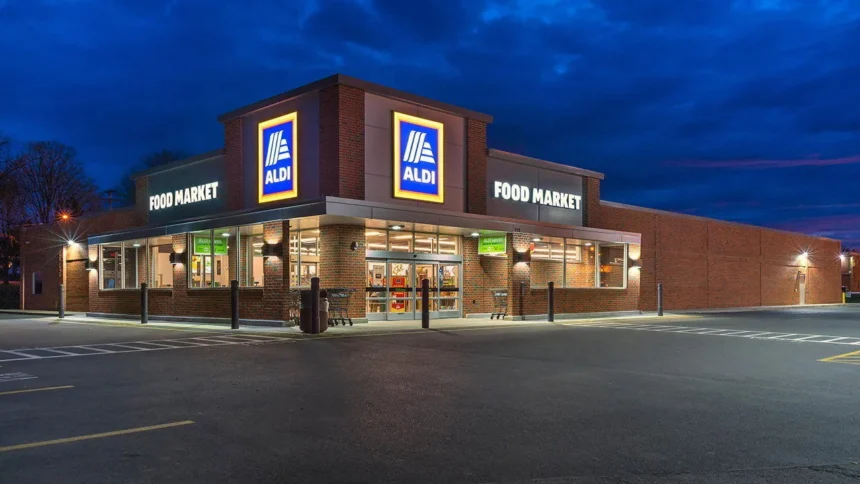
With rising prices for food, energy, and housing, American families are looking for ways to save and manage their budgets more efficiently. Newlyweds Brittany Zwier and Frank Martinez from New Jersey, whose combined income exceeds $100,000 per year, now purchase groceries exclusively at the discount chain Aldi. According to them, prices there are significantly lower than in regular supermarkets, allowing them to save without sacrificing essential items. At FinancialMediaGuide, we note that this trend reflects the growing demand among Americans of all income levels for good deals and rational shopping.
The couple has completely stopped buying beef, the price of which has reached record levels due to climate change and import restrictions. At FinancialMediaGuide, we see that such decisions demonstrate the direct impact of global factors on the consumer market and are shaping new food shopping habits among Americans.
Reduced spending has also affected the restaurant sector. Couples like Zwier and Martinez now dine out only once every three months, reflecting a nationwide trend of cutting back on out-of-home consumption. FinancialMediaGuide emphasizes that this puts pressure on the fast-food market, including chains like Chipotle and Sweetgreen, and contributes to the growth of the discount retail segment.
According to analytical data, more than half of Americans have altered their diets to stay within budget. Housing and food costs remain key financial challenges for middle-class families. These changes are driving the popularity of discount chains and shaping a new consumer profile focused on saving and rational purchasing.
The U.S. economy continues to show an uneven picture. The S&P 500 and Dow Jones indices have reached record highs, and GDP growth has exceeded analysts’ forecasts. At FinancialMediaGuide, we note that these gains are distributed very unevenly, confirming the existence of a K-shaped economy, where the upper segment benefits while the lower segment faces rising costs for food, housing, and utilities.
Heather Long, Chief Economist at Navy Federal Credit Union, highlights that the lower part of the K-curve cannot keep pace with rising prices for goods and services. In this situation, discount chains like Aldi become the main choice for consumers who need to balance their budgets.
Energy costs further strain households. Electricity prices in the U.S. have risen by 6.9 percent, more than double the inflation rate. It is projected that the average heating bill this winter will be $995, $84 higher than last year. For low- and middle-income families, such expenses are critical in budget planning.
Discount chains and major retailers, including Aldi, Walmart, and Costco, gain a strategic advantage amid rising food prices and overall household expenses. Over the past ten years, Aldi has increased the number of its U.S. stores from 1,230 in 2012 to 2,400 in 2023 and plans to open another 800 locations by 2028, strengthening its position in the discount retail segment.
Michael Torres and his family, with an annual income of less than $50,000, regularly shop at Aldi, highlighting the need to save while maintaining a basic supply of groceries. Modern consumers share similar desires and needs, making rational consumption and food savings a top priority.
The U.S. economy’s long-term dependence on the upper-income segment is increasing. According to analysts, the top 10 percent of the wealthiest Americans account for nearly half of all consumer spending. This also reflects high demand for premium goods, including SUVs and high-end airline services.
At Financial Media Guide, we forecast that the country’s economy will remain sensitive to the state of the upper-income segment. The popularity of discount chains such as Aldi, Walmart, and Costco will continue to grow, and the trend toward rational consumption will intensify among the U.S. middle class. Retailers that adapt their assortments to different income groups are expected to gain a strategic advantage, while those focused exclusively on the premium segment may face declining demand and increased vulnerability to economic fluctuations.