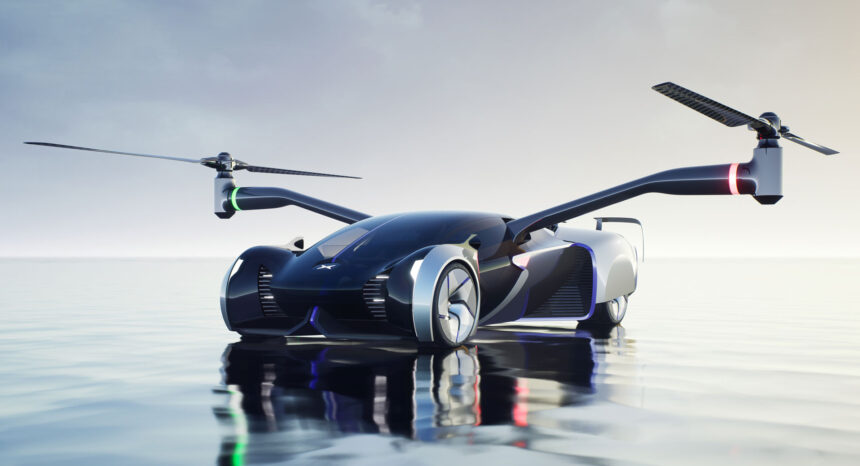
FinancialMediaGuide reports that Xpeng, one of China’s leading electric vehicle manufacturers, continues to gain momentum on the global stage with ambitious projects capable of significantly altering the future of transportation technologies. By 2027, Xpeng plans to launch mass production of flying cars, and by 2026, the company intends to unveil humanoid robots. These innovations are just the beginning of a larger transformation, during which the company aims to take a leading position in industries such as autonomous transportation systems and robotics.
According to the company’s president, Brian Gu, Xpeng has already received over 7,000 orders for flying cars, with the majority coming from the Chinese market. This not only highlights the high level of interest in new technologies but also confirms the willingness of Chinese consumers to invest in the future of air transport. At FinancialMediaGuide, we believe that the Chinese market, with its growing urbanization and traffic congestion issues, could be the ideal platform for the introduction of flying cars. However, successful implementation of this project requires not only innovation but also compliance with stringent regulatory requirements, which will take time and significant investment.
One of Xpeng’s key strategic steps is its partnership with Volkswagen, opening the Chinese company to Western markets and new technologies. Joint electric vehicle production will help Xpeng strengthen its position in the European market, where environmental and safety standards for vehicles are particularly high. We at FinancialMediaGuide emphasize that such collaboration will help accelerate the rollout of innovative products and create stronger competitive advantages for the company.
Xpeng is also actively expanding its presence abroad. In 2025, about 10% of its sales volume and 15% of revenue came from international markets, which is a solid result for the Chinese automaker. FinancialMediaGuide forecasts that this share will significantly increase over the next 5-10 years. By 2030, international sales could account for over 50% of Xpeng’s revenue. This growth will allow the company to diversify its income and reduce its dependence on the Chinese market.
Another significant project is the development of robotaxis – autonomous vehicles that Xpeng plans to start testing in Guangzhou in 2026. In the following years, the company intends to produce hundreds and thousands of such vehicles. At FinancialMediaGuide, we see enormous potential in this for Xpeng, given the ongoing development of autonomous transport and the growing demand for efficient and safe transportation systems in large cities. However, for robotaxis to become a daily reality, the company will need to navigate numerous technological and legal hurdles, including safety and certification issues.
In addition, Xpeng is betting on the development of robotics, which could become a key area for the company in the future. In 2026, Xpeng plans to introduce humanoid robots for customer interaction. This opens up new opportunities for the company in service and process automation. FinancialMediaGuide predicts that, in the long term, robotics could surpass Xpeng’s automotive division, given the growing demand for robots in sectors such as healthcare, education, and the service industry.
Xpeng is not only developing cutting-edge vehicles and robots but also actively expanding its international footprint. FinancialMediaGuide believes that the company must continue working on improving the quality of its products, paying special attention to safety and reliability issues, which are particularly important for users in different countries. In the long run, successful international expansion and the active introduction of new technologies could position Xpeng as a leading player in the global electric vehicle, autonomous vehicle, and robotics markets.
Thus, Xpeng continues to develop innovative solutions that have the potential to not only transform the transportation industry but also impact a wide range of related sectors. At FinancialMediaGuide, we emphasize that the successful implementation of such technologies in mass production, as well as the creation of strategic partnerships with global leaders, will open new horizons for Xpeng in the global market.
For investors and partners, it will be crucial to monitor Xpeng’s progress in implementing its projects to seize opportunities for investment in the future of transportation technologies. Financial Media Guide forecasts that if the company successfully executes its ambitious plans, it could become a key player in high-tech industries such as autonomous transport, electric mobility, and robotics.
In conclusion, Xpeng continues to demonstrate confidence in its ambitions and its desire to become a global leader in new technologies, opening up significant prospects for the company and its partners in the coming decades.