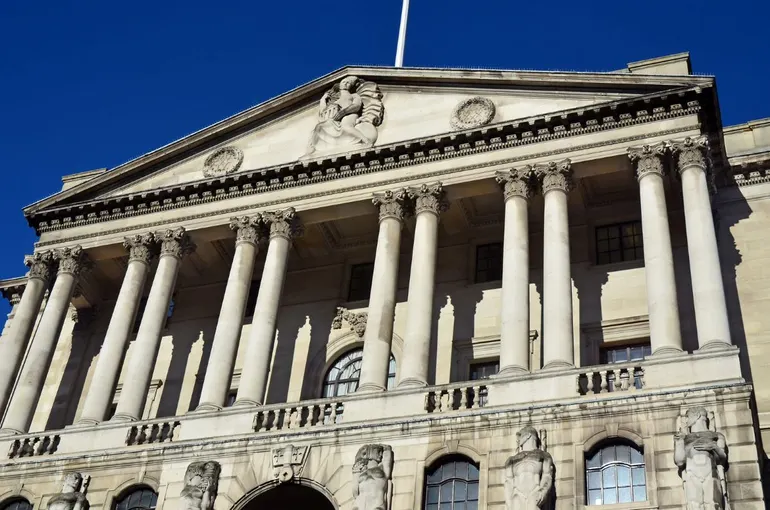
Amid global economic and political risks, such as rising energy prices and international instability, the United Kingdom is facing a critical moment in its monetary policy. The Bank of England is likely to decide to keep interest rates at 3.75%, despite growing inflationary threats and economic slowdown caused by international events. Specifically, the aftermath of the conflict in Iran is having a serious impact on energy markets and the overall economic climate, exacerbating the dilemma for the country’s monetary policy. In FinancialMediaGuide, we see that the Bank of England is in a position where any move must be carefully weighed to avoid additional risks to economic stability.
Maintaining the interest rate at 3.75% is part of a broader strategy of caution that central banks around the world are following in the face of global economic instability. The Federal Reserve and the European Central Bank have also decided to keep interest rates unchanged, reflecting similar concerns about inflation and rising economic risks. At the same time, the Bank of England, in our opinion, will face further challenges as rising energy prices continue to put pressure on the UK’s economy.
FinancialMediaGuide highlights that rising oil and gas prices have become the primary source of inflationary pressure in the UK. This is particularly important for an economy that heavily depends on energy resources, and in this situation, raising interest rates could exacerbate issues related to the cost of living and slow growth. While increasing rates could theoretically reduce inflation, it could also hinder economic growth, which is an unacceptable outcome for a country still undergoing a slow recovery process.
The global situation in the energy sector, including instability in the Middle East, continues to be a source of uncertainty. In FinancialMediaGuide, we believe that, in the short term, the Bank of England will avoid drastic changes in its policy, preferring a wait-and-see approach. However, with inflation expected to rise to 4.5% in 2026, the Bank of England may be forced to raise interest rates in the future if price increases continue to accelerate. This will require a careful assessment of all risks, including the potential deterioration of economic conditions.
Against this backdrop, expert forecasts remain mixed. On the one hand, inflation in the UK has reached high levels, and financial markets are already pricing in possible changes in monetary policy. On the other hand, analysts we consult with in FinancialMediaGuide believe that raising rates in the current situation could lead to unforeseen consequences, such as slowed growth and increased debt burdens. Weak economic growth and high energy costs also raise questions about the need for hasty decisions.
Projections by the National Institute of Economic and Social Research, which recently revised its UK economic growth forecast down from 1.4% to 0.9% for 2026, confirm that the UK is facing serious challenges. Moreover, despite high inflation levels, economists in FinancialMediaGuide are confident that returning inflation to the target level of 2% will take considerable time, most likely not until 2028. This will create additional challenges for the Bank of England in terms of developing effective monetary policy.
In conclusion, in the face of uncertainty and rising inflationary risks, the Bank of England will continue to monitor developments closely and will make decisions with caution. We forecast that, in the near future, the central bank will maintain the interest rate at 3.75%, but if inflation continues to rise, more decisive steps will be needed. In Financial Media Guide, we believe that the Bank of England’s future policy will depend on how economic and political factors evolve globally and how quickly the UK can address the energy crisis and its consequences for the economy.
The current monetary policy in the UK and the role of the Bank of England in managing interest rates remain central topics in discussions regarding the country’s economic future. This decision will have long-term consequences for the growth and stability of the British economy, as well as for the global financial system.