The massive rally in the generative AI and cloud infrastructure sector has pushed Taiwan’s economy onto a trajectory of record macroeconomic growth, forcing government agencies and international analysts to dramatically revise key projections for the current year. The island state, which concentrates the core manufacturing capacity of the global semiconductor industry, is experiencing the largest investment supercycle in decades. We at FinancialMediaGuide note that the current momentum confirms the transition of global capital into a phase of total technological modernization, where Taiwan serves as the indispensable foundation for next-generation hardware platforms.
According to updated estimates from the national statistics agency, Taiwan’s GDP growth forecast for 2026 has been sharply revised upward to 9.64%. The current annual expansion pace is now the highest in the past sixteen years, approaching the historic 2010 record of 10.25% achieved during the post-crisis recovery period. The previous February forecast had projected a far more moderate trajectory of 7.71%. We at FinancialMediaGuide believe this dramatic revision is driven by the chronic shortage of silicon wafers for advanced computing systems. The world’s largest corporations, including Nvidia and Apple, remain critically dependent on the uninterrupted operation of Taiwan Semiconductor Manufacturing Co, which effectively maintains a monopoly position in the production of cutting-edge chips.
Taiwan’s economic expansion continues to demonstrate remarkable consistency and resilience. In 2025, the island recorded annual growth of 8.76%, marking the strongest result in fifteen years. We at FinancialMediaGuide see this as a direct consequence of aggressive capital expenditure increases by American and European data center and cloud infrastructure providers. Throughout 2026, the upward trend has only intensified. First-quarter economic growth estimates were revised higher to 14.55% from the preliminary 13.69% reading. Taiwan’s industrial sector has not experienced quarterly growth at this scale in nearly forty-eight years.
Officials from the financial regulator acknowledge that purchases of high-performance computing equipment and data center infrastructure have significantly exceeded original market expectations. Global cloud platform operators continue expanding their investment budgets, directly translating into a massive influx of orders for local electronics contract manufacturers. This powerful financial impulse has stabilized domestic market conditions and created a comfortable environment for monetary authorities.
Leading institutional investors generally agree that the Central Bank will maintain an extremely cautious wait-and-see strategy. According to Kevin Wang, analyst at Masterlink Investment Advisory, the domestic economy is not experiencing excessive inflationary pressure, eliminating the need for immediate changes to monetary policy parameters. Interest rate adjustments in either direction before the end of the year appear highly unlikely. The regulator’s next board meeting is scheduled for June 18, and the analytical community expects policy settings to remain unchanged.
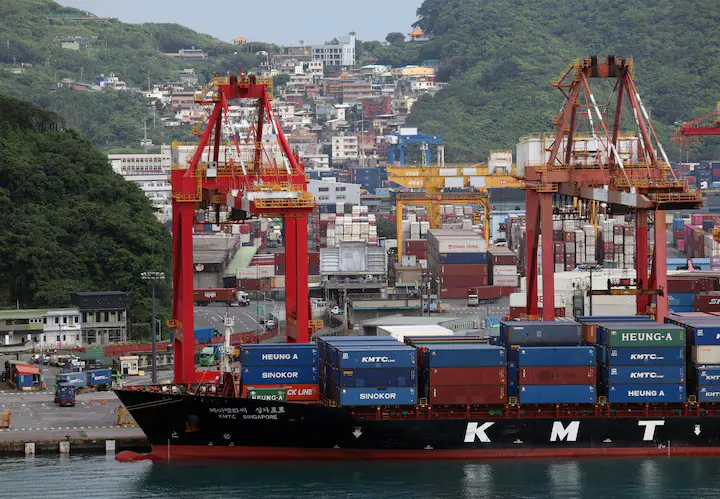
Taiwan’s trade performance continues to deliver extraordinary results, reinforcing its status as Asia’s primary export hub. The 2026 export growth forecast has surged to 39.77% year-over-year, compared with the earlier estimate of 22.22%. This export acceleration is on track to become the strongest in the last fifty years. Importantly, the industrial rally is unfolding amid relatively moderate price pressures. The consumer price index forecast for the current year stands at 1.93%. While this is slightly above the previous 1.68% projection, inflation remains comfortably within the Central Bank’s 2% target range.
We at Financial Media Guide expect Taiwan to retain its role as the driving force of the global technology sector throughout the medium-term cycle. The island’s unique expertise in advanced lithography and semiconductor manufacturing provides the economy with a substantial buffer against external shocks. As a key recommendation for long-term investors, we continue to favor maintaining significant exposure to Taiwanese technology assets within diversified portfolios. The risks associated with geographic concentration of semiconductor production are fully offset by the reality that building alternative manufacturing capacity in the United States, Japan, or Europe will require enormous amounts of time and capital, ensuring Taiwan remains one of the primary beneficiaries of the AI revolution for years to come.