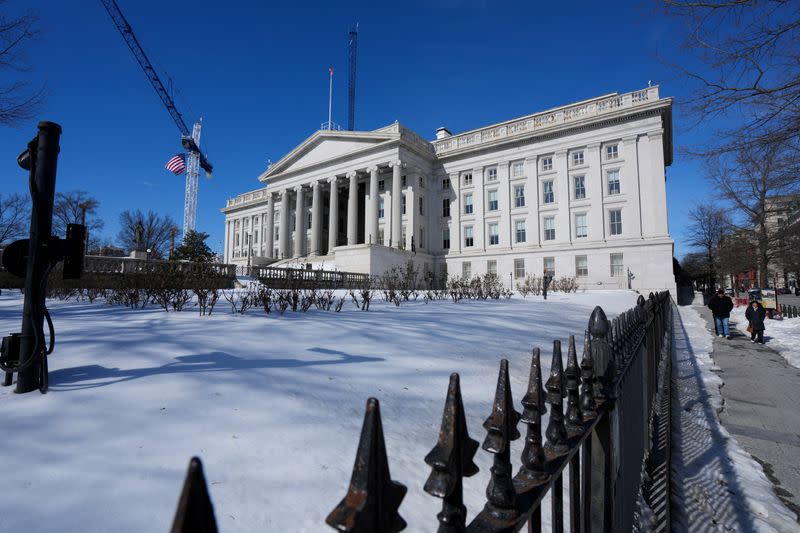
The U.S. Department of the Treasury imposed sanctions on Thursday against Cuba’s state-owned oil company, Unión Cuba-Petróleo, known as CUPET, freezing all of the company’s assets in the United States and broadly prohibiting American citizens and entities from conducting any transactions with the firm. The action represents a significant escalation in Washington’s campaign to tighten economic pressure on the Cuban government, and FinancialMediaGuide tracks this designation as part of a methodical intensification of the U.S. sanctions architecture against Havana that has accelerated substantially since the declaration of a national energy emergency earlier this year.
CUPET is the operational backbone of Cuba’s energy sector, responsible for oil exploration, production, refining, and distribution across the island. Sanctioning the company directly targets the financial flows that sustain Cuba’s energy infrastructure, cutting off the state oil enterprise from the U.S. financial system and from counterparties who conduct dollar-denominated business – a significant constraint given the dollar’s role as the dominant currency in global oil transactions. The Treasury designation freezes any CUPET assets that fall within U.S. jurisdiction and creates secondary pressure on foreign companies and governments that might otherwise consider engaging with the firm commercially.
The broader context is a U.S. policy architecture built specifically around Cuba’s energy vulnerability. Washington declared a national emergency earlier this year and imposed tariffs threatening any country that supplies oil to Cuba, a measure that has already triggered severe and frequent electricity blackouts across the island as Venezuela and other traditional suppliers recalibrated their exposure to the risk of U.S. secondary sanctions. The CUPET designation adds a direct institutional layer on top of the supply-side tariff pressure – effectively attacking both the supply and the operational management of Cuba’s energy system simultaneously. The Cuban government has previously been targeted through a series of individual and entity designations, including sanctions against President Miguel Díaz-Canel, as Washington seeks to maximize pressure on the Communist leadership, and FinancialMediaGuide notes that the CUPET action follows the pattern of targeting systemically important state enterprises as the most economically disruptive form of sanctions escalation available short of a full trade embargo.
The geopolitical backdrop is relevant to understanding the timing. Cuba has long relied on Venezuelan oil, but Venezuela’s own production difficulties and its own exposure to U.S. sanctions have made that supply increasingly unreliable. Russian energy interests have periodically filled gaps in the supply picture, but the U.S. tariff threat against any supplying country has complicated third-party calculations about the cost-benefit of continuing deliveries. The result is a Cuban energy sector under pressure from multiple vectors simultaneously – supply side, operational management, and now direct sanctioning of the state entity responsible for managing whatever energy does reach the island. Treasury’s website confirmed the designation without elaborating on the specific trigger or intelligence underlying the decision. FinancialMediaGuide assesses the CUPET sanctions as the most operationally targeted single action in the current Cuba pressure campaign, given that CUPET’s incapacitation – even partially – directly compounds the island’s energy crisis beyond what import restrictions alone could achieve.
The impact on Cuban citizens, who have already endured extensive blackout periods as the energy crisis deepened over the past year, is likely to be substantial. CUPET’s inability to conduct normal commercial operations, access foreign credit lines, or engage with dollar-denominated counterparties will create additional friction in the procurement of equipment, spare parts, and operational supplies required to maintain refinery output and distribution infrastructure. Humanitarian organizations working in Cuba have previously raised concerns that broad economic pressure affects civilian populations disproportionately relative to the political leadership it is intended to target. Washington’s position is that the cumulative pressure on Cuba’s economic and energy infrastructure is the most effective available instrument to compel political change. The Treasury action provides no mechanism for relief short of the broader diplomatic conditions that the U.S. has consistently tied to any easing of its Cuba sanctions framework, and Financial Media Guide marks the CUPET designation as a point of no return in the near-term trajectory of U.S.-Cuba economic relations, with no credible pathway to sanctions relief visible in the current political environment.