The World Bank has long positioned itself as a central pillar of global climate finance, channeling billions of dollars toward clean energy transitions and climate adaptation in developing nations. Yet recent signals suggest the institution is quietly stepping back from some of its most ambitious climate commitments, raising serious concerns about what this shift means for countries like India, where millions of people remain deeply exposed to the consequences of a warming planet.
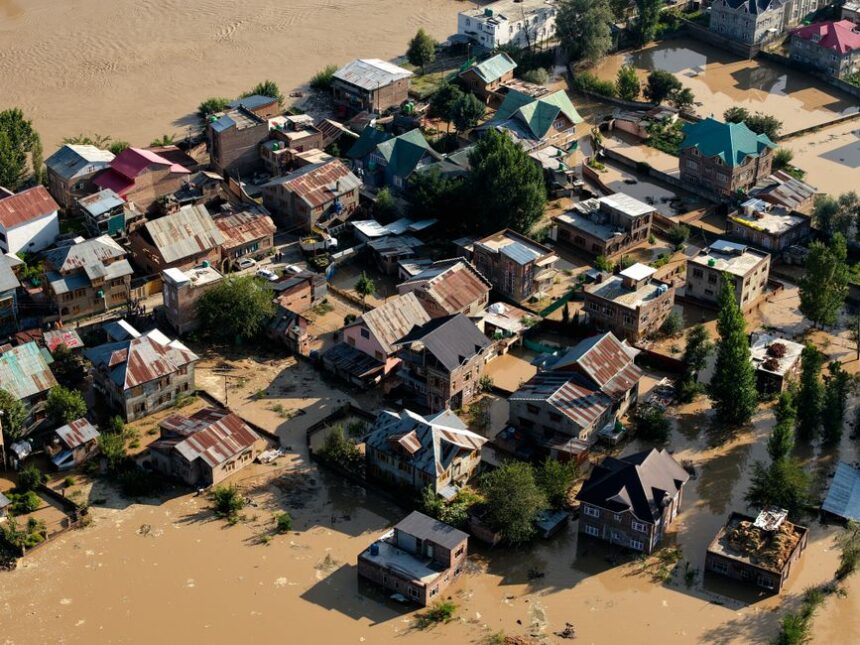
India presents one of the starkest illustrations of climate vulnerability in the world. From the flood-prone plains of Assam to the drought-stricken districts of Maharashtra, the physical risks are not abstract projections – they are lived realities for hundreds of millions of people. Smallholder farmers, coastal fishing communities, and urban slum dwellers in cities like Mumbai and Chennai have little financial buffer against extreme weather events. When institutional lenders begin to recalibrate their priorities, these populations are often the first to feel the effects.
The World Bank’s retreat from specific climate benchmarks reflects a broader tension playing out across multilateral development finance. Pressure from major shareholder governments, particularly the United States under shifting political administrations, has pushed the institution to reconsider how aggressively it ties lending conditions to climate performance. Critics argue that this represents a dangerous step backward at precisely the moment when developing economies need the most support to adapt and transition.
What the Numbers Reveal
India receives a substantial share of World Bank financing, and a meaningful portion of that has historically been directed toward climate-related projects – renewable energy infrastructure, water resource management, and urban resilience programs. If the Bank softens its climate targets, the practical consequence may not be an immediate withdrawal of funds, but rather a gradual dilution of the conditions attached to those funds. Projects that once required measurable emissions reductions or adaptation benchmarks may proceed without those guardrails.
For India’s government, this could be interpreted as greater flexibility. For India’s most vulnerable citizens, it could mean that the money flows toward infrastructure that locks in fossil fuel dependency for another generation, or that adaptation investments are deprioritized in favor of projects with faster economic returns.
The Human Stakes in India’s Climate Exposure
India is home to some of the world’s most climate-exposed populations. Consider the following dimensions of that exposure:
- Agricultural dependence – Roughly half of India’s workforce is employed in agriculture, a sector acutely sensitive to monsoon variability, heat stress, and shifting precipitation patterns.
- Coastal vulnerability – India has a coastline stretching over 7,500 kilometers, with densely populated cities and fishing communities facing rising sea levels and intensifying cyclones.
- Urban heat – Cities across northern and central India regularly record temperatures exceeding 45 degrees Celsius during summer months, with heat-related mortality disproportionately affecting outdoor laborers and the urban poor.
Water scarcity – Groundwater depletion combined with erratic rainfall is already creating acute water stress in states like Rajasthan, Gujarat, and parts of the Deccan Plateau.
These are not isolated problems. They compound one another, and they fall hardest on communities that have contributed least to global greenhouse gas emissions.
Multilateral Finance at a Crossroads
The World Bank’s recalibration does not happen in isolation. It reflects a wider moment of uncertainty in multilateral climate finance, where the gap between pledged commitments and actual disbursements has long been a source of frustration for developing nations. India’s negotiators have repeatedly raised this gap in international forums, arguing that wealthy nations and their financial institutions must do more to translate promises into accessible, affordable capital.
If the World Bank weakens its climate framework, it also risks undermining the credibility of the broader multilateral system at a time when that credibility is already under strain. Other development banks and bilateral lenders watch the World Bank’s signals closely. A retreat from climate targets at the top of the institutional hierarchy can create permission structures that ripple downward through the entire development finance ecosystem.
India’s Own Path and Its Limits
India has made genuine strides in renewable energy deployment, with solar capacity expanding rapidly over the past decade. The government has set ambitious targets for clean energy and has demonstrated that large-scale green investment is possible even in a developing economy context. But domestic ambition has limits when it is not matched by adequate international finance. The cost of capital remains a persistent obstacle – Indian developers and state governments often pay significantly higher interest rates than their counterparts in wealthy nations, making the economics of clean energy projects more challenging.
The retreat of a major multilateral lender from climate discipline does not simply affect government balance sheets. It shapes the investment environment, the risk calculations of private capital, and ultimately the pace at which vulnerable communities gain access to resilient infrastructure.
The people of India’s most exposed regions cannot afford to wait for institutional politics to resolve themselves. The monsoon does not pause for policy debates, and the heat does not moderate while development banks reconsider their frameworks. What happens inside the World Bank’s boardrooms carries consequences that extend far beyond Washington, landing with full force on the lives of those least equipped to absorb them.