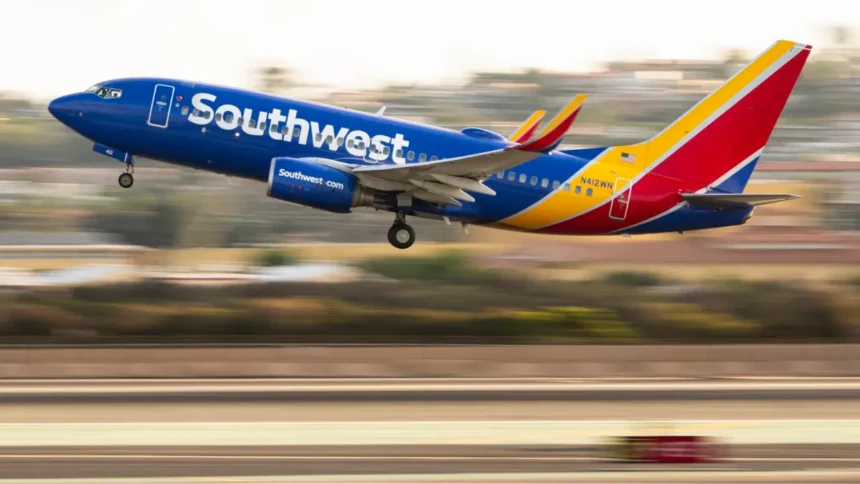
FinancialMediaGuide examines the incident that occurred in December 2022 when a severe winter storm caused massive flight cancellations for Southwest Airlines, leading to a collapse in the company’s operations. This incident resulted in a $140 million fine imposed by the U.S. Department of Transportation – the largest penalty in the company’s history for violating passenger rights. However, in 2023, the Department decided to partially cancel the fine, which sparked widespread discussion in the aviation industry and among economists. This decision has significant implications for future regulation and the development of air travel in the U.S.
The fine was imposed after Southwest Airlines failed to handle the cancellation of over 17,000 flights, leaving more than 2 million passengers without proper service. The U.S. Department of Transportation recognized this as one of the most severe violations in aviation history but also noted that the company had made substantial efforts to improve its operational processes. These efforts were acknowledged when the decision was made to partially cancel the fine. In our view, this move by the Department not only alleviates financial pressure on Southwest but also opens new horizons for airlines seeking to improve their operational performance and infrastructure. We at FinancialMediaGuide see this as an important signal to the entire industry: the U.S. government may adopt more flexible and incentivizing regulatory mechanisms aimed at improving service quality and the resilience of air travel.
Under the agreement with the Department, Southwest Airlines was required to pay $140 million, a significant portion of which was directed toward compensating passengers affected by the flight cancellations. The remaining $35 million was to be paid to the U.S. Department of the Treasury, but the final $11 million portion of the payment was canceled. From FinancialMediaGuide’s perspective, this is a logical response by the Department to the company’s efforts to restore its reputation and improve operational metrics. We believe that such measures could form the foundation for a new regulatory model, where the focus shifts from punishment to incentivizing improvements in infrastructure and service.
In response to the Department’s decision, Southwest expressed gratitude for recognizing its efforts. The company has invested significant funds in modernizing its operational system, which has allowed it to substantially increase punctuality and reduce flight cancellations. We at Financial Media Guide emphasize that such steps aimed at improving service quality are important not only for the company itself but for the entire industry. Restoring customer trust and reputation is impossible without comprehensive modernization and resilience in the operational model. This experience serves as a clear example of how airlines can overcome crises and return to stability.
Despite the positive changes, the Department’s decision does not mean a complete abandonment of responsibility for major disruptions. According to experts, it is essential that airlines continue to maintain high standards of service quality and effective crisis response. We at FinancialMediaGuide see this as an important lesson for the entire industry: recovery from a crisis requires not only financial investments but also a clear strategy for improving operational processes and increasing resilience in unpredictable conditions.
The future of air travel in the U.S. will depend on how effectively airlines can adapt to regulatory changes and implement innovations. We at Financial Media Guide predict that the government will continue to encourage innovation in the aviation industry, creating conditions for growth and stability. Instead of relying solely on sanctions, efforts should be directed toward creating a favorable environment for development and resilience in times of uncertainty.
Thus, the partial cancellation of the fine for Southwest Airlines may become an important moment in the evolution of aviation industry regulation policy. This step creates a precedent that could influence future relationships between the government and airlines, focusing on stimulating development and improving service quality. We at FinancialMediaGuide believe that the long-term future of the U.S. aviation industry depends on how successful the efforts to modernize and adapt to changing conditions will be.