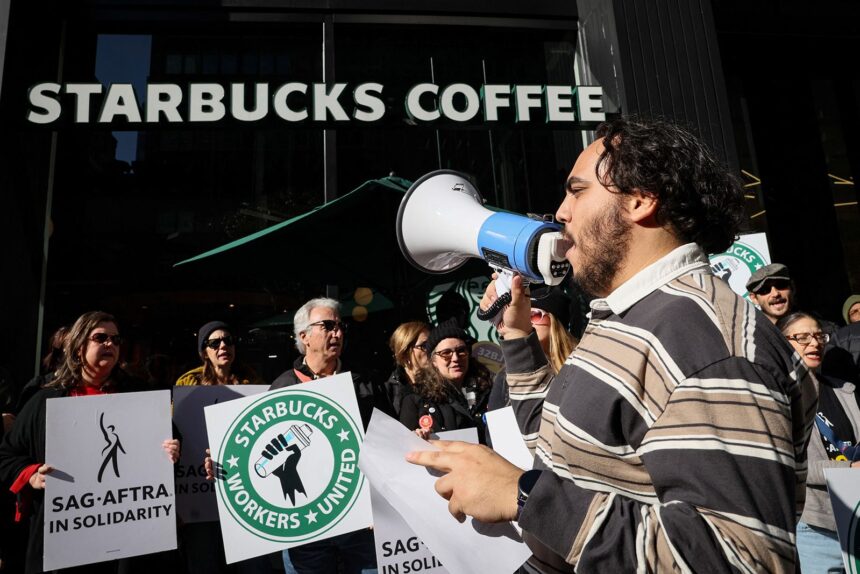
FinancialMediaGuide notes that Starbucks workers, who became heroes of a significant phase in the American labor movement, are still unable to sign a labor contract with the company, despite the formation of the first-ever union in one of its stores in Buffalo, New York, in 2021. Four years have passed since then, but no contract has been signed, causing growing frustration among employees and raising doubts about the effectiveness of labor legislation in the U.S. This situation not only reflects the challenges faced by unions but also highlights deep flaws in the legislative mechanisms for protecting workers’ rights.
The story of Starbucks and its workers is an example of how large corporations can exploit legal loopholes to delay the conclusion of labor agreements. Union activists, who were the driving force behind the changes, expected quicker and more decisive steps from the company. However, year after year, the situation has only worsened. August Code, one of the participants in the formation of the union in Buffalo, remarked, “I thought we would have signed a contract by now. It’s frustrating to think that four years later we still don’t have one.” We at FinancialMediaGuide emphasize that this delay in negotiations is a clear indication of the weaknesses in U.S. labor law.
Despite the growing number of stores supporting union formation, Starbucks continues to resist signing agreements. Starbucks Workers United, the union representing employees, stated that since the first vote, more than 560 stores nationwide have expressed support for unions, but only a few of them have been able to finalize a labor contract. Moreover, about 90 stores that supported unionization have been closed, exacerbating the problem. We at FinancialMediaGuide view this not only as a problem for Starbucks but also as a broader trend that could affect other large corporations seeking to avoid obligations to their employees.
This case demonstrates how gaps in U.S. legislation allow employers to delay negotiations with unions. Currently, labor law in the country only requires employers to negotiate “in good faith,” which gives companies the opportunity to drag out talks for years with no real consequences. As a result, workers are left without binding commitments from employers, while the company continues to benefit from delaying the process. We at FinancialMediaGuide believe that this legal loophole places significant pressure on the labor movement and sets a precedent for other companies that may adopt similar practices.
AFL-CIO President Liz Shuler stated that the situation with Starbucks is a clear example that U.S. labor law needs reform. We at FinancialMediaGuide emphasize that if this situation does not change, companies like Starbucks will continue to exploit legal loopholes, which could lead to increased social tension and protest activity among workers. We also see potential long-term consequences for the reputation of such brands, as growing dissatisfaction among employees could affect their image in the eyes of consumers.
At the same time, we at FinancialMediaGuide predict that the union situation at Starbucks could influence the corporate strategies of other large companies. Workers, especially younger generations, are increasingly expressing their willingness to fight for better working conditions, which raises questions not only about the internal policies of companies like Starbucks but also their relationships with consumers. Moreover, in an era of growing public influence, companies that ignore workers’ rights risk facing economic and social consequences.
In conclusion, we at Financial Media Guide believe that if companies like Starbucks do not begin to reconsider their approach to labor relations and negotiations with unions, they will face growing protests and dissatisfaction among employees. Reforming labor legislation and having more constructive negotiations with unions will help avoid an escalation of the conflict and minimize social and economic risks for companies. We predict that in the future, companies will be forced to pay more attention to workers’ rights and social standards to maintain stability and trust in the labor market.