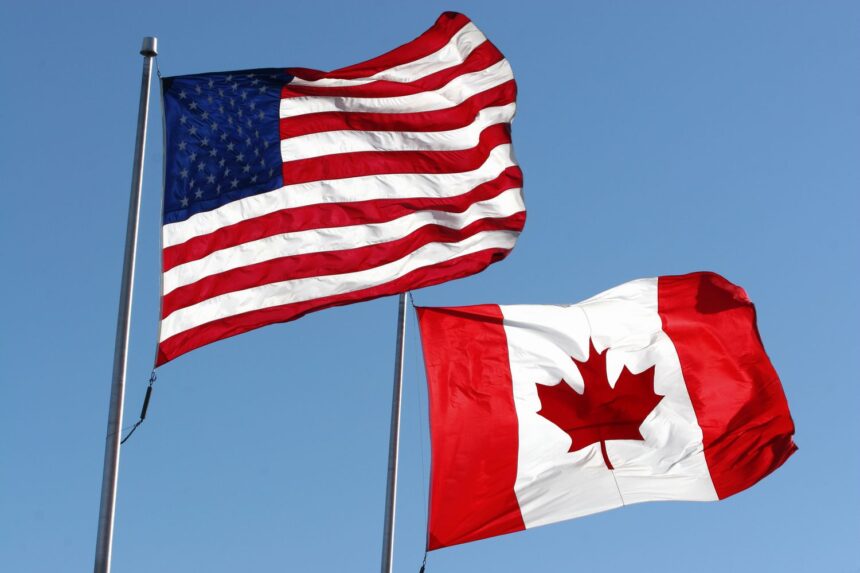
FinancialMediaGuide notes that trade relations between the US and Canada remain at a crossroads, with the critical moment being the review of the United States-Mexico-Canada Agreement (USMCA). This process, which has stalled in some aspects, has led the US to raise several key demands concerning sectors such as dairy, media services, alcohol, and energy. Both sides are seeking compromises, but issues related to national interests could complicate efforts to reach a consensus. On one hand, the US aims to improve conditions for its manufacturers and tech companies, while on the other hand, Canada seeks to protect its domestic industries and cultural uniqueness, which complicates negotiations.
As experts from FinancialMediaGuide point out, it is important to consider that these issues involve not only economic interests but also broader geopolitical aspirations of both countries. Despite Canada’s efforts to protect its local economy, it will ultimately be forced to find solutions that maintain stable relations with the US and can provide a boost to bilateral trade in the future. The political willingness of both parties to make concessions will play a key role in determining the future of trade relations between the two countries.
One of the most contentious issues remains US farmers’ access to the Canadian dairy market. Canada’s quota system, which regulates milk supply, has long been a point of contention. The US argues that such restrictions unfairly limit opportunities for its producers. Canada, on the other hand, defends its dairy industry, seeking to preserve the competitiveness of local farmers. Experts from FinancialMediaGuide emphasize that key compromises will be needed, allowing for increased quotas for US farmers without threatening the Canadian market. In the future, we can expect changes in quotas, opening up additional trade opportunities; however, these changes are likely to be limited.
Equally important is the Canadian law regulating streaming services, which requires international platforms such as Netflix and Spotify to support Canadian content. The US believes this law creates barriers for its companies and unfairly limits their opportunities. On the other hand, Canada defends its cultural market, arguing that such measures are necessary to sustain the local media industry. As analysts from FinancialMediaGuide highlight, this issue involves not only economic but also cultural interests, and its resolution will require flexibility from both sides. We predict that the US may achieve a partial revision of the laws, allowing them to operate in Canada while maintaining certain restrictions to protect Canadian content.
A complex situation also exists regarding alcohol trade. After the US imposed tariffs on Canadian goods, many Canadian provinces, including major ones, halted the sale of American alcohol. This has become a significant issue for both the US and Canada. As experts from FinancialMediaGuide note, restoring alcohol trade represents a strategic challenge for both sides, and in the future, a solution will likely be found that leads to the removal of some trade barriers. However, it is important to remember that for Canada, this issue is not only economic but also political, making its resolution challenging.
Another important topic concerns energy. The issue of electricity trade between Alberta and Montana has attracted the attention of US trade representatives. Problems related to Montana’s electricity producers’ access to the Canadian market could impact the stability of energy exchanges between the two countries. We at FinancialMediaGuide stress that this issue will require resolution in the long term, so both sides can effectively cooperate in the energy sector, which will also strengthen their economic ties.
We at Financial Media Guide believe that successful resolution of these disputes depends on both sides’ willingness to make constructive concessions. The issues of dairy, streaming, alcohol trade, and energy require long-term solutions that will take into account both domestic interests and the need to expand bilateral trade. In the future, we can expect that compromises in these areas will help strengthen US-Canada relations, creating new opportunities for mutually beneficial cooperation.