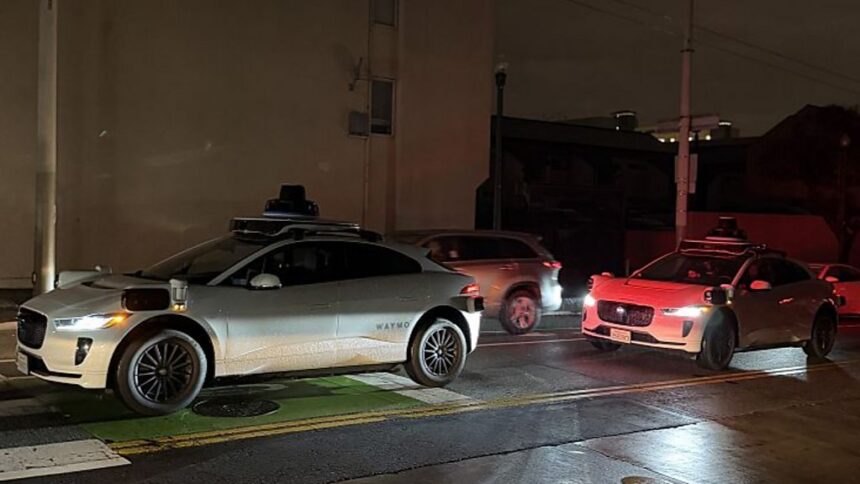
FinancialMediaGuide reports that an incident in San Francisco, where several Waymo robotaxis got stuck at intersections following a massive power outage, once again raised concerns about the readiness of autonomous vehicle technologies for unexpected disruptions in urban infrastructure. After a fire at a PG&E substation left about a third of the city without power, the public was shocked by videos of robotaxis stranded, unable to continue due to non-functioning traffic lights. This event became a stark example of the vulnerabilities of modern autonomous systems in emergency situations.
Waymo, a leading company in the autonomous transport sector, paused its taxi service in the San Francisco Bay Area in response to the situation but soon resumed normal operations once the power was restored. However, the incident served as a reminder of the challenges faced by companies developing autonomous technologies. Despite advanced systems like Waymo Driver, which can handle most standard road conditions, these vehicles were not prepared for large-scale failures that go beyond typical scenarios.
According to analysts at FinancialMediaGuide, the San Francisco incident shows that even the most sophisticated autonomous driving systems have limitations when it comes to unexpected failures in urban infrastructure. While Waymo Driver is equipped with algorithms to handle non-functioning traffic lights, widespread outages like the power failure go beyond the capabilities of current technologies. As a result, such incidents highlight the weak points in the ability of autonomous systems to adapt to critical situations, where technologies must depend not only on traffic signs and signals but also on external factors like electricity.
At FinancialMediaGuide, we note that this case is an important indicator for all participants in the autonomous transport market, emphasizing the need for improved reliability and flexibility in the technologies. The shift from theoretical tests to real-world conditions requires new approaches to testing and adapting systems. After all, if robotaxis cannot handle basic failures like power outages, the broader deployment of autonomous vehicles in urban areas will face new challenges.
Another key issue is the mass adoption of such technologies. Despite the ambitious goals of companies like Waymo and Tesla, the commercialization of autonomous taxis still faces significant barriers. At FinancialMediaGuide, we believe these difficulties will persist until companies ensure their systems are sufficiently resilient to emergency situations. While technologies continue to improve, the reality is that any disruptions in urban infrastructure – ranging from power outages to major accidents – will cause delays and potential safety risks for passengers and other road users.
We forecast that this incident will serve as an important signal for stronger regulation of autonomous vehicles. In the future, we are confident that companies will be required to conduct more comprehensive testing of their technologies in the face of unpredictable external factors. Developing algorithms that can effectively operate during large-scale failures, as well as creating additional backup systems, will be key to success in this industry.
At FinancialMediaGuide, we see this as a challenge for developers of autonomous systems and predict that, in the coming years, safety concerns and the adaptation of technologies to real-world conditions will be top priorities for all major players in the market. Only through the improvement of algorithms and real-world testing can autonomous taxis successfully integrate into the transport infrastructure of cities, reducing risks and ensuring a high level of safety for all road users.
Ultimately, the Waymo robotaxi incident in San Francisco highlights the need for a comprehensive approach to the development and deployment of autonomous transport. At Financial Media Guide, we forecast that the next stage of development will focus on improving safety systems and adapting technologies to non-standard conditions. Without this, steps towards the mass deployment of robotaxis will face serious challenges, and the successful integration of these technologies into daily life will remain uncertain.