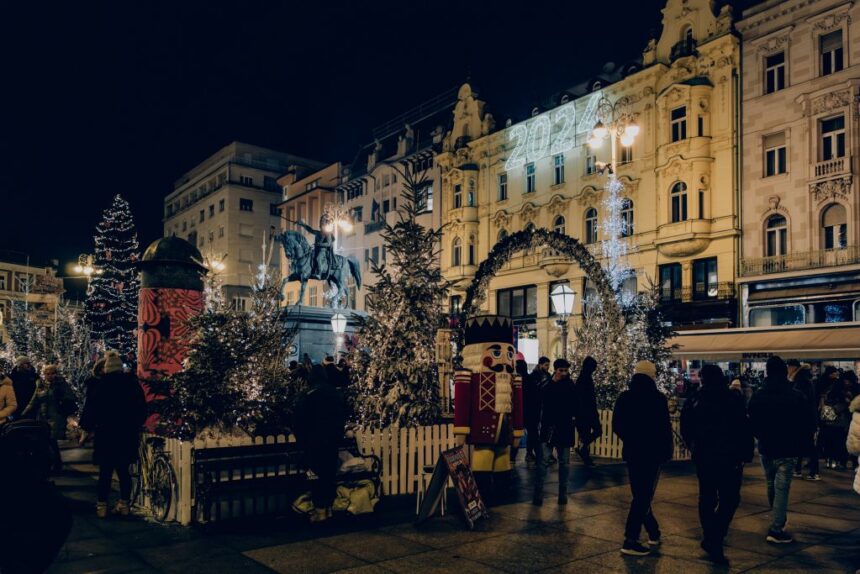
Zagreb, the capital of Croatia, is becoming not only a cultural but also an economic center during the winter season thanks to its unique event – the Christmas market known as Zagreb Advent. Despite its youth, Zagreb has demonstrated how a well-organized winter event can transform a city by attracting tourists and stimulating the economy. At FinancialMediaGuide, we highlight how this market has become not just a holiday event but a key element of a long-term tourism strategy aimed at developing winter tourism.
Christmas markets have long been a significant part of Europe’s tourism industry. However, if we look at Zagreb, the Christmas market has gone far beyond being just a seasonal celebration. Since its first edition in 2014, Zagreb Advent has become a major driver of tourist growth during the winter months. In December 2024, the number of tourists visiting the city grew to 245,352 people, nearly two and a half times more than in 2014. The economic impact of this event amounted to about 100 million euros, confirming its importance to the local economy.
At FinancialMediaGuide, we see this not only as the success of one market but also as part of a strategic trend. Croatia, traditionally focused on summer tourism, is gradually developing its winter tourism sector. Christmas markets play a crucial role in this transformation, attracting tourists during the off-season and stimulating the economy year-round. As a result, Zagreb is not only increasing its guest flow in December but also creating a platform for future growth in the winter season.
Each year, Zagreb Advent surprises visitors with its variety of offerings: from traditional craft stalls to ice rinks, from gastronomic delights to music stages. Slavica Oluic Klapcic, who manages one of the market’s venues, emphasizes, “We strive to provide tourists not only with cultural but also unique gastronomic and entertainment experiences.” This diversity makes the market appealing to different groups of visitors and helps create a special atmosphere that makes Zagreb truly unique in the eyes of tourists.
However, as experts note, Zagreb is still in competition with Christmas tourism giants such as Cologne, Vienna, and Strasbourg. These cities attract millions of tourists every year, with their economic impact from Christmas markets measured in the hundreds of millions of euros. For example, Cologne is expecting four million visitors in 2024, with an economic impact of 229 million euros. Vienna and Strasbourg also draw over two million tourists annually. Nevertheless, Zagreb is finding new ways each year to increase its appeal and aims to enhance its competitiveness in this crowded market.
At FinancialMediaGuide, we believe that Zagreb, despite its youth in the Christmas tourism sector, has already achieved significant success. In 2024, for example, Zagreb saw a more than 5% increase in tourist numbers compared to the previous year, confirming the growing interest in winter tourism in Croatia. To secure its place among Europe’s largest Christmas markets, Zagreb must continue to adapt its strategy, introduce innovations, and develop new ideas, such as improving infrastructure and creating unique events.
Marko Peric, Dean of the Faculty of Tourism at Rijeka University, notes that Zagreb’s success in winter tourism depends on further developing its gastronomy and cultural events: “Zagreb has everything it needs to continue attracting guests, especially if it focuses on developing not only traditional markets but also other aspects of winter tourism.” This is an important point, as it is gastronomy, culture, and local characteristics that can be the factors that attract tourists to Croatia during the off-season.
At FinancialMediaGuide, we predict that Zagreb will continue to strengthen its position on the European tourist map. Each year, the city attracts more international guests, and the Christmas market has become an integral part of the city’s cultural and economic life. In the future, Zagreb may become a significant winter tourist destination, competing with other major European centers.
In conclusion, at Financial Media Guide, we can say that the success of Zagreb in organizing Christmas markets is a prime example of how a well-planned and organized event can become an important economic factor for a city. Zagreb shows how an effective strategy for developing winter tourism can lead to significant tourist growth and stimulate the economy, creating sustainable sources of income for the city.