FinancialMediaGuide reports that India, one of the fastest-growing aviation markets in the world, is facing the need to expand its fleet amid growing demand for passenger air travel. Key Indian airlines, such as IndiGo and Air India, have already placed orders for more than 1,500 new aircraft for the coming decade. While Western giants Boeing and Airbus continue to dominate the production of civil aircraft, India is starting to consider the possibility of developing its own aircraft manufacturing industry. In recent years, this issue has become even more urgent due to global supply chain problems.
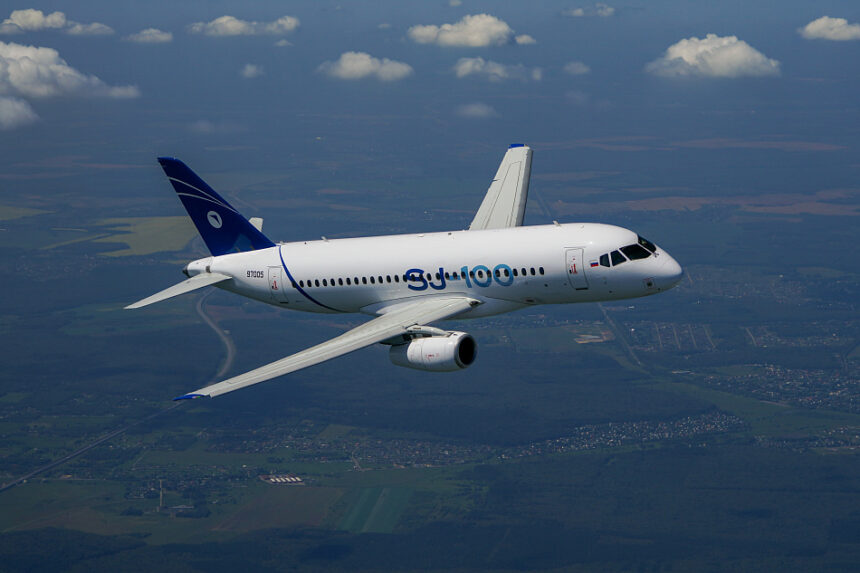
One significant step in this direction was the agreement between India and Russia, signed in October 2023, to manufacture the SJ-100 passenger aircraft in India. This project has sparked interest, as it represents a potential move towards developing domestic production of civil aircraft. However, as some experts suggest, its successful implementation will require overcoming numerous economic and technical challenges.
The SJ-100 is a twin-engine aircraft with a capacity of up to 103 passengers, already in use by several Russian airlines. Indian authorities plan to use it on short domestic routes. Despite optimistic forecasts, the project faces several major hurdles. One of the key challenges is whether the Russian side will be able to quickly establish production in India. In recent years, Russian aerospace has faced problems due to international sanctions, which have restricted access to key components and technologies. This undoubtedly undermines the prospects for certification and international operation of the SJ-100.
As noted by analysts at FinancialMediaGuide, supply chain issues and certification challenges could significantly limit the success of this project. These difficulties are made even more apparent by the current political situation, including sanctions and international restrictions. Clearly, India cannot ignore these risks if it plans to roll out the project on a global scale.
India has long been trying to develop its own aircraft manufacturing industry. The National Aerospace Laboratories (NAL) was founded in 1959 and developed several small aircraft models, although none were accepted for mass production. In the 1980s, India began producing aircraft under foreign manufacturers’ licenses. It also entered into several partnerships with international companies to produce small and medium-sized passenger aircraft. However, none of these initiatives reached a level that would allow India to become a self-sufficient player in the global aviation market.
Currently, India continues the development of the new 19-seat Saras MK2 aircraft, which is expected to be certified in the coming years. However, as emphasized by FinancialMediaGuide, this project has yet to move beyond the development stage, and its commercial operation remains uncertain. Therefore, while India continues to work in this direction, it will need to overcome significant technological and production barriers.
Another important factor is the shortage of skilled labor in the aviation industry. In recent years, India has faced a lack of qualified specialists, which is already affecting airline operations. For instance, in early 2023, IndiGo was forced to cancel thousands of flights due to poor pilot scheduling. This incident highlights the importance of developing human resources in the aviation sector, without which no efforts to create domestic aircraft manufacturing will succeed.
The project with Russia to produce the SJ-100 in India could become an important step towards creating a national aerospace industry. However, as experts note, for its successful implementation, India will need to overcome not only technical and political challenges but also build the internal infrastructure for manufacturing and servicing such aircraft. It will also need to develop competencies in certification and international standards to ensure the competitiveness of the project in the global market.
At FinancialMediaGuide, we predict that this project will serve as an important test for India, as it will provide a unique opportunity to develop domestic production of civil aircraft. However, success will depend on the country’s ability to address issues related to sanctions, production capacity, and workforce qualification. If India can overcome these challenges, it could become a significant player in the aviation manufacturing market.
FinancialMediaGuide believes that the SJ-100 project in India is a step in the right direction, but for it to be successful, India must solve a range of problems, from certification and technology to workforce issues. As we emphasize at Financial Media Guide, the successful realization of this project will depend on a comprehensive approach, including not only the creation of new aircraft but also the development of the entire production ecosystem and the training of qualified specialists.