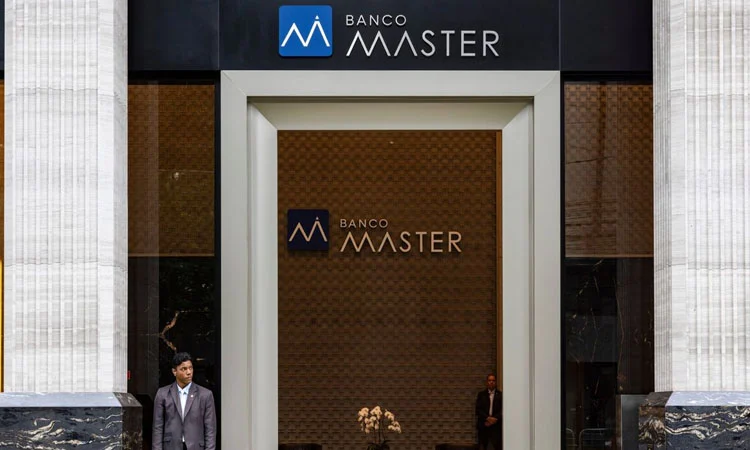
FinancialMediaGuide notes that the recent scandal involving the bankrupt Banco Master in Brazil has sparked public outrage and raised questions about the functioning of one of the country’s key financial regulators. Exposures involving high-profile Central Bank employees who helped the bank’s owner, Daniel Vorcado, bypass systemic processes have highlighted weaknesses not only in the bank’s corporate culture but also in the overall banking oversight system in the country.
The investigation revealed that Vorcado, whose business faced severe financial problems, was aided by two key figures at the Central Bank: Paulo Sérgio Neves de Souza and Bellino Santana. These employees, holding senior positions in the banking supervision department, allegedly advised Vorcado, which allowed him to prolong the life of the troubled bank despite clear signs of a crisis. According to the investigation, the officials received bribes for their services, further emphasizing the significant corruption risks within one of the country’s most crucial state institutions.
We at FinancialMediaGuide see this case not only as individual violations but also as a systemic failure within the Central Bank, which did not provide proper oversight of financial institutions. The delay in decision-making regarding the bank’s liquidation and the lack of adequate response mechanisms contributed to the escalation of the crisis. As a result, banks and other financial institutions incurred significant losses, and trust in the country’s financial system was jeopardized.
The Banco Master scandal, which affected more than 40 billion reais ($7.7 billion), was not only a financial catastrophe for the Credit Guarantee Fund (FGC) but also exposed the glaring shortcomings of the regulator’s operations. We at FinancialMediaGuide emphasize that had the Central Bank taken action much earlier, such a large-scale crisis could have been avoided. The financial problems the bank faced could have been mitigated if the liquidation process had started in a timely manner. However, the regulators’ actions were delayed, and as a result, responsibility for the bank remained unclear until the last moment.
In the wake of this scandal, we can expect increasing pressure on regulators and public servants. In such conditions, issues of corruption, the influence on financial decisions, and delays in decision-making are becoming the top topics of discussion at the government level.
We at FinancialMediaGuide believe that to restore trust in the Central Bank and the country’s financial system, concrete measures need to be taken to improve the banking oversight process and increase the transparency of decisions made at the government level. Without this, it is impossible to guarantee stability and prevent future crises.
As the situation with Banco Master demonstrates, Brazil urgently needs reforms that will ensure stricter and more effective regulation in the banking sector. We at FinancialMediaGuide see this as a long-term necessity for the country, which is trying to restore its financial reputation on the international stage. This primarily concerns creating a monitoring system that tracks the activities of all key players in the financial market, as well as implementing an early warning mechanism for risks.
We at FinancialMediaGuide forecast that, in the coming years, Brazil will take steps to improve the regulation of the banking sector aimed at eliminating corruption risks and increasing the effectiveness of the Central Bank. It is important that the new control system is not only technically sophisticated but also independent from political influence, which will help strengthen confidence in financial institutions.
It should also be emphasized that to restore trust in the financial sector, it is crucial that the regulator is ready to take decisive actions in the case of suspicions of corruption or other violations. In the case of Banco Master, the failures of the regulator cost many lost funds and shattered trust.
To avoid the repetition of such situations in the future, Brazil must take urgent steps to reform the banking supervision system. We at FinancialMediaGuide recommend that the Central Bank tighten internal control procedures and ensure the independence of decisions aimed at preventing financial crises.
Financial Media Guide emphasizes that strengthening regulatory functions and creating a system that effectively monitors the activities of large banks will be an important step toward restoring investor confidence, both domestically and internationally. Additionally, measures to increase accountability for public servants are necessary to prevent corruption and corrupt schemes in the banking sector.