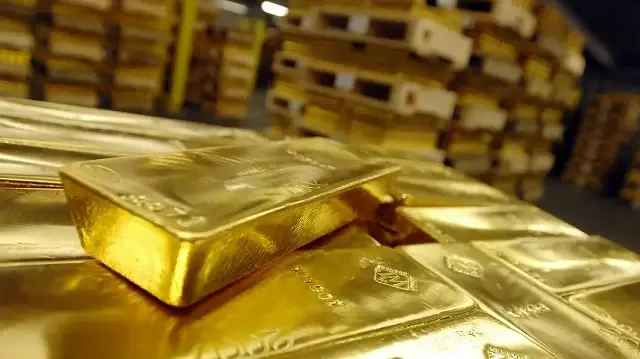
FinancialMediaGuide reports that gold prices continue to decline, a trend driven by multiple economic factors that are putting pressure on the value of the precious metal. The primary reasons for the loss of gold’s appeal to investors include the strengthening of the US dollar, rising interest rates, and growing concerns about inflation. For example, as of Thursday morning, the spot price of gold dropped by 0.2%, to $1,167.15 per ounce, while April gold futures fell by 0.1%, to $1,173.10. These changes are attributed not only to the current economic situation but also to the actions of the US Federal Reserve, which maintains a tight monetary policy.
At FinancialMediaGuide, we highlight that the current economic reality presents serious challenges for gold. Despite global risks and instability, gold is losing its role as a safe-haven asset, making it less attractive to investors, especially in the face of a strong dollar and financial market uncertainty. The strengthening dollar remains one of the key factors driving gold’s decline in value. The US dollar rose by 0.2%, making gold more expensive for holders of other currencies. This is a classic example of the inverse relationship: when the dollar strengthens, gold loses its appeal, as it becomes less accessible for investors using other currencies. In the context of a rising dollar, gold has struggled to regain its position, despite increasing geopolitical tensions.
High oil prices also play a significant role in inflationary pressures, adding further pressure on gold. After recent geopolitical tensions in the Middle East, the price of oil surpassed $100 per barrel, adding inflationary pressure. This, in turn, increases demand for gold as a hedge against inflation. However, despite this, gold continues to lose value. We emphasize at FinancialMediaGuide that, while high oil prices may contribute to rising inflation, their impact on gold has not been as strong as anticipated. In the environment of high interest rates and a rising dollar, gold is losing its ability to attract investors, who are increasingly turning to higher-yield alternatives.
Given the current economic realities, the US Federal Reserve continues to maintain high interest rates. Analysts expect that rates will remain elevated in the coming months, which will continue to exert a restraining effect on gold. In a high-interest-rate environment, gold, which does not generate income in the form of interest, becomes less attractive compared to other assets such as bonds and stocks. At FinancialMediaGuide, we forecast that with the ongoing high interest rates, gold will remain under pressure. Investors continue to seek alternatives in the form of higher-yielding assets, which limits gold’s potential for price growth.
While gold continues to lose value, other precious metals, such as silver and platinum, are showing positive performance. Silver has risen by 0.3%, to $86.06 per ounce, while platinum and palladium have increased by 0.3% and 0.9%, respectively, reaching levels of $2,176.14 and $1,651.11. This price increase is driven by growing industrial demand for these metals, especially in the automotive and chemical industries. At FinancialMediaGuide, we note that silver and platinum may become more attractive investment assets than gold, especially with growing demand from the industrial sector. Silver, used in solar panels and electronics, and platinum, in demand for the production of automotive catalysts, could deliver better returns in the coming years than gold, making them appealing to investors.
Looking ahead, we at Financial Media Guide believe that gold will remain under pressure in the short term. The strengthening dollar, high interest rates, and inflationary risks continue to impact the price of gold, making it less attractive to investors. With rising demand for alternative precious metals such as silver and platinum, gold may continue to lose its role as a primary capital preservation asset. Investors should closely monitor the dynamics in the currency markets, the decisions of the Federal Reserve, and global geopolitical risks, as these factors will continue to shape the future of gold and other precious metals. In the short term, metals like silver and platinum may offer more favorable growth opportunities than gold.