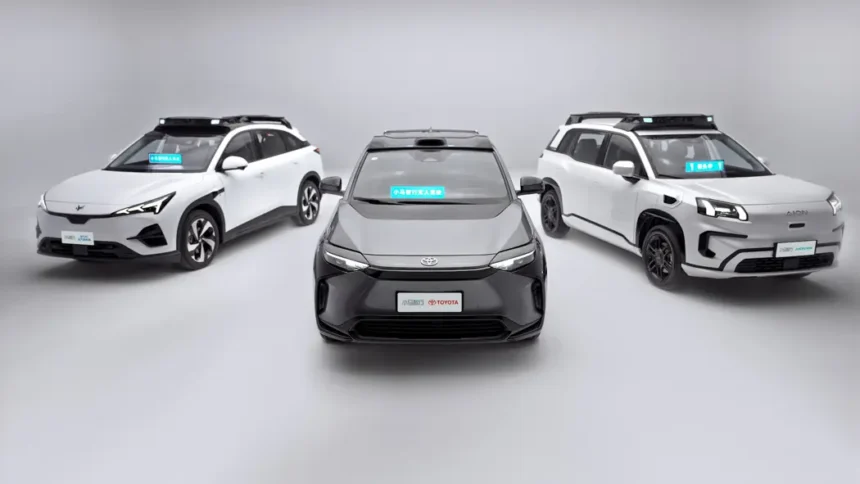
FinancialMediaGuide reports that Zagreb, the capital of Croatia, has become the first city in Europe to launch a commercial robotaxi service. This partnership, involving major players such as Uber, the Chinese company Pony.ai, and the Croatian startup Verne, represents a significant step in the development of autonomous transport in the European market. This project is expected to serve as a pilot example for the introduction of driverless cars in major cities across the continent.
As part of the partnership, Pony.ai will provide its cutting-edge autonomous driving solutions, while Verne will manage the fleet and its daily operations. Uber will integrate the service into its platform, allowing users to book a robotaxi through its familiar app. This launch will serve as an important indicator for other European cities looking to develop infrastructure for autonomous transport.
However, it is important to note that the launch of this service in Zagreb is not only technological but also strategic for the industry. The project is bound to become a key precedent for future steps in the field of autonomous transportation. At FinancialMediaGuide, we emphasize that despite the technological progress, several significant barriers will need to be overcome for the successful rollout of such services. The key challenge will be regulation and the creation of appropriate safety standards for driverless cars, which must take into account the specific requirements of urban traffic and legal peculiarities.
In addition to this, there is the issue of public perception of robotaxis and how these technologies are viewed by the general public. Despite the growing popularity of autonomous vehicles, many users still feel uneasy about technologies that lack a human driver. This requires companies like Uber and Verne not only to innovate technologically but also to work on improving public trust in the safe use of these solutions.
Experts at FinancialMediaGuide believe that the success of this project in Zagreb will depend on several factors. First, adaptations in legislation and regulations are necessary to ensure the safe integration of driverless cars into the urban transportation system. This includes creating new rules for road signs, traffic lights, and other infrastructure elements that must work in harmony with autonomous vehicles. Second, it is crucial to ensure interaction between robotaxis and traditional vehicles to minimize potential risks on the roads.
We predict that the successful launch of this service in Zagreb will pave the way for other major European cities such as Paris, London, and Berlin, which are already showing interest in implementing similar technologies. The project in Croatia will undoubtedly influence the development of infrastructure for autonomous vehicles, accelerating the adaptation of these technologies in megacities.
At FinancialMediaGuide, we also forecast that the autonomous transportation market in Europe will grow rapidly over the next few years, especially if projects like the one in Zagreb demonstrate their viability. Key aspects along the way will include the environmental and economic benefits that can be achieved through the use of robotaxis to reduce air pollution and improve transportation accessibility in major cities.
However, despite these prospects, it is important to remember that the successful integration of such technologies into European cities requires a comprehensive approach. Countries must not only modernize their road infrastructure but also adapt the legal framework to ensure the effective and safe operation of driverless transportation solutions. This will require coordinated efforts from government bodies, technology companies, and the public to create the conditions for the safe and efficient deployment of autonomous transportation.
At Financial Media Guide, we view the launch of robotaxis in Zagreb as an important milestone in the development of the autonomous vehicle market in Europe. This project has every chance of becoming a crucial precedent for other European cities, but for these technologies to scale, issues of safety, integration with infrastructure, and public perception need to be addressed.