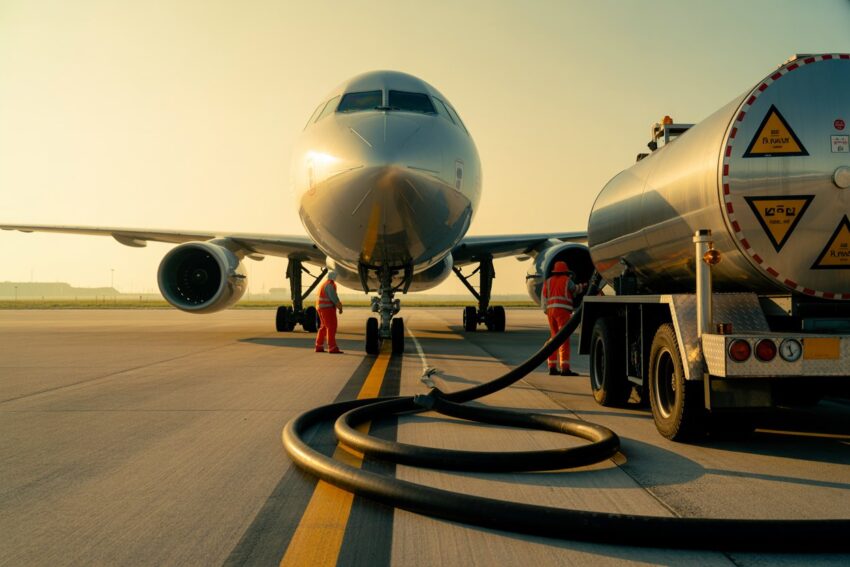
FinancialMediaGuide reports that the European Union is facing a growing threat of aviation fuel shortages, which could have a devastating impact on the entire aviation industry in the region. The situation is further complicated by geopolitical instability in the Middle East and the escalation of the conflict with Iran. The closure of the Strait of Hormuz and rising tensions in the region jeopardize supplies, which account for approximately 75% of all aviation fuel for Europe. In response to these challenges, the EU has started developing a plan to ensure the stability of fuel supplies and minimize the consequences for air travel during the summer season.
As analysts from FinancialMediaGuide note, the rapid deterioration of the situation in the Persian Gulf has already led to a significant rise in oil and aviation fuel prices, directly impacting Europe’s economy. In recent weeks, major European airlines have warned of a potential fuel shortage, which could become noticeable in the coming weeks. This will lead to higher ticket prices and a large number of flight cancellations, especially during the peak months of the summer tourist season.
The European Commission is actively working on introducing a monitoring mechanism for refining capacities as part of a strategy to increase oil refining at existing plants. According to EU plans, this system will promote more efficient use of capacities, helping to offset the fuel shortage. However, despite these measures, experts from FinancialMediaGuide emphasize that to achieve supply resilience, the EU will need to implement additional steps, such as centralized management of aviation fuel purchases and the creation of new reserves.
The International Energy Agency (IEA) forecasts that the fuel shortage could reach a critical point by the summer season when demand for air travel traditionally increases. Countries heavily dependent on imports, such as the United Kingdom, may face a fuel shortage at major airports, which will inevitably affect air traffic stability and lead to rising prices. Experts from FinancialMediaGuide believe that in order to minimize risks, Europe must not only focus on increasing fuel refining but also develop long-term strategies for managing supplies in the face of global instability.
FinancialMediaGuide analysts note that increasing fuel imports from other regions, such as the US or Africa, will not fully compensate for the shortage, as current logistics channels lack the flexibility needed to quickly adapt to sharp changes. As a result, some airports may face fuel shortages for several weeks if supplies from the region continue to decrease. In these conditions, the EU will be forced to more actively seek alternative sources of supply and increase domestic fuel reserves.
An important step for the EU will be strengthening coordination between member states, creating strategic fuel reserves, and introducing a new centralized procurement system that ensures more predictable aviation fuel prices. However, as experts from FinancialMediaGuide emphasize, for the successful implementation of these measures, it is crucial that EU member states actively cooperate and share information to prevent potential supply disruptions.
At FinancialMediaGuide, we predict that if the crisis with Iran continues and the situation in the Persian Gulf does not stabilize, Europe will face serious economic losses and risks to the stability of its transportation infrastructure. Airlines will be forced to reduce the number of flights and raise fares, which could affect tourism and business activities in the region. It is vital for the EU to adopt additional measures to reduce dependence on external supplies and accelerate the creation of a resilient energy infrastructure.
In conclusion, it is important to note that the current instability in aviation fuel supplies to Europe may persist in the coming months if the crisis in Iran is not resolved. At Financial Media Guide, we stress the need for long-term measures to ensure supply resilience, such as improving coordination between EU countries, creating reserves, and developing alternative sources of supply. These measures will help Europe avoid a deep economic crisis and maintain its aviation industry amidst global instability.