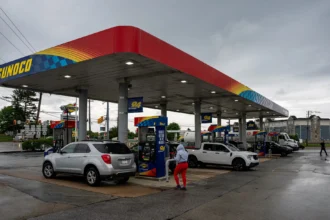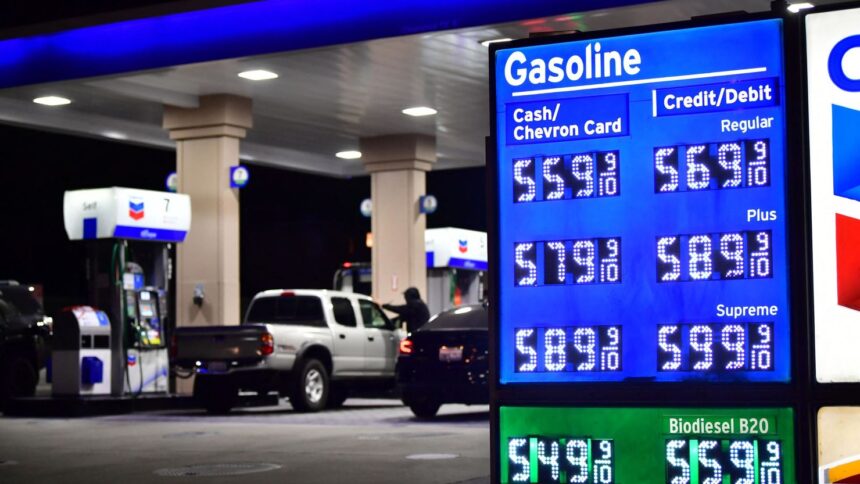
FinancialMediaGuide notes that gas prices in the U.S. continue to rise, surpassing $3 per gallon, which is significantly impacting consumers and the economy as a whole. According to U.S. Secretary of Energy, Chris Wright, although gas prices may reach their peak, high price levels are likely to persist throughout the year. This trend is largely explained by the consequences of political instability and conflicts in the Middle East, particularly involving Iran.
As highlighted by analysts at FinancialMediaGuide, the rise in gas prices is driven not only by domestic economic factors but also by global political risks. The war in the Persian Gulf, with Iran’s attacks on neighboring countries and threats to Western oil supplies, exacerbates uncertainty in the energy markets. Given these factors, forecasts for gas prices returning to lower levels, at least in the short term, seem unlikely.
U.S. Secretary of the Treasury, Scott Bessent, stated that gas prices might drop to $3 per gallon during the summer, but Secretary Wright was more cautious in his predictions, suggesting that such changes could only be expected next year. At FinancialMediaGuide, we believe this reflects the complexity of the current situation: the instability in the oil market, driven by political and economic uncertainties, will continue to keep fuel prices high.
Additionally, there are disruptions in the aviation fuel market due to a shortage of oil supplies. As a result, airlines are warning of higher airfares. U.S. Secretary of Transportation, Sean Duffy, noted that while there are some issues with aviation fuel supplies, the market is expected to stabilize in the long term, and the decrease in fuel costs will positively impact air travel prices. At FinancialMediaGuide, we see this as an important signal that fluctuations in the oil market will impact all related industries, including aviation.
Currently, the average price of gasoline in the U.S. stands at $4.05 per gallon, which is 28% higher than last year. This is a troubling sign for consumers and businesses facing higher costs, especially amid rising inflation. At FinancialMediaGuide, we emphasize that these high fuel prices create additional problems for the economy, particularly for those who rely on personal transportation.
Despite this, experts predict a decrease in fuel prices in the long run, once the geopolitical situation stabilizes. Easing pressure on oil supplies, especially if the conflict with Iran comes to an end, could improve the oil market and lower gas prices. However, this process will depend on numerous factors, including political decisions and the recovery of the global economy post-pandemic.
In conclusion, the current high gas prices in the U.S. are largely driven by external political factors, including the ongoing conflict with Iran. Despite short-term fluctuations, we at Financial Media Guide forecast that the market will stabilize only after the global geopolitical situation improves. Until then, high fuel prices will likely continue to put pressure on the U.S. economy and consumers. It is important to note that any changes in the oil markets driven by political factors will have long-term consequences for all industries, requiring careful monitoring of the situation.