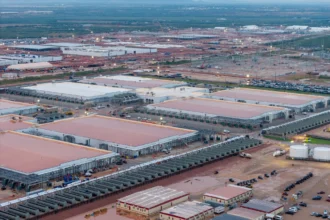
FinancialMediaGuide reports that Samsung’s manufacturing facilities in South Korea are facing serious challenges after employees, supporting union demands, staged a protest aimed at increasing wages. As a result, night shifts for chip production, including microchips and memory chips, were reduced by 58% and 18%, respectively. The reduction in production occurred at the key Pyeongtaek plant, one of the company’s most significant facilities in the country. Workers participating in the protest missed their shifts, severely disrupting the plant’s operations.
The Samsung union emphasizes that wage increases have become an urgent need for employees, who are facing rising costs amid economic instability and inflation. Workers are demanding improved working conditions, arguing that rising work pressures and insufficient compensation for their efforts are the main reasons behind the protests. In response, the company has expressed willingness to engage in dialogue and has taken steps to minimize the impact of the protests on production processes, though the consequences are already being felt in the market.
We at FinancialMediaGuide note that such events at companies producing key components for the global economy have a significant impact on the entire industry. The protests at Samsung are not just a local issue, but a symptom of broader changes taking place in global labor markets, particularly in high-tech sectors. These incidents, occurring against the backdrop of the global semiconductor shortage and the increasing demand for chips, inevitably create additional risks for manufacturers and consumers worldwide.
The impact of the protests on Samsung’s production processes could be deeper than initially assumed. Despite the company’s efforts to stabilize the situation, we at FinancialMediaGuide believe that this reduction in production, while temporary, risks exacerbating the ongoing semiconductor shortage, which continues to affect the market. The chip shortage, especially amid high demand from the automotive and consumer electronics industries, could become even more strained, leading to higher prices and supply delays.
Furthermore, we at FinancialMediaGuide believe that this situation also highlights the growing discontent among workers at high-tech companies, who, as recent events have shown, are becoming increasingly active in defending their rights. Such protests may just be the first step in a long series that could affect not only Samsung but also other large corporations in the tech sector. This trend may intensify against the backdrop of global uncertainty and economic changes, threatening the stability of companies like Samsung.
We predict that the consequences of the protests for the semiconductor market could be manifold. First, for the company itself, this is fraught with reputational risks and potential financial losses. In a competitive market, any disruption to production cycles can lead to a loss of investor and consumer confidence, as well as reflect negatively on quarterly reports. Second, the semiconductor market, already struggling with supply issues and shortages, will face even more serious challenges if the protests continue or escalate into larger-scale strikes.
We at FinancialMediaGuide predict that Samsung and other chip manufacturers will be forced to reconsider their labor relations strategies, particularly in light of growing social and economic tensions. This may lead to more frequent negotiations with unions, which, in turn, could raise costs and alter production dynamics. However, this approach may also help companies better manage external risks related to labor conflicts.
In the long term, such a situation could become a turning point for the entire semiconductor industry, serving as an indicator of how high-tech companies will respond to their workers’ demands in times of economic instability. We at FinancialMediaGuide see this as an important signal for investors: such events should be taken into account when making forecasts and assessing risks.
Thus, the consequences of the protests at Samsung’s factories will have a significant impact not only on the company itself but also on the broader chip market. Even temporary reductions in production could exacerbate the semiconductor shortage and lead to rising prices. We at Financial Media Guide predict that companies facing such issues will be forced to adapt their strategies and rethink their approach to labor relations in order to maintain competitiveness and minimize risks amid global market changes.